Shifting UK car exhausts to the right could dramatically cut roadside air pollution, new research reveals
Posted on Wednesday 2 July 2025
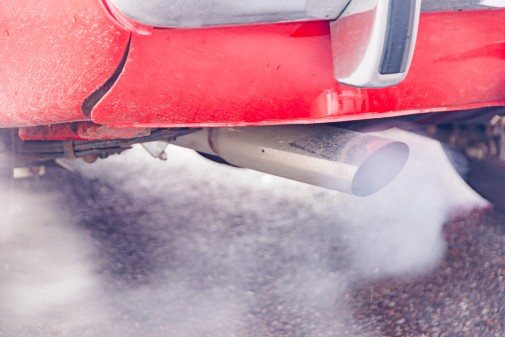
The research, led by the University of York, reveals passenger cars with exhaust pipes on the left side contribute to pollution concentrations at the kerbside that are 40% higher than those with right-sided exhausts.
The researchers used advanced "plume regression techniques" to understand the factors which influence near-road traffic-related air pollution (TRAP) in urban environments. These methods allowed them to model concentrations of pollutants, especially nitrogen oxides (NOx), under different conditions, leading to their discovery of the startling difference based on tailpipe position.
Kerbside contribution
The researchers calculate that if all diesel cars in the UK were equipped with right-positioned exhausts, it would cut kerbside contribution to NOx pollution levels from these vehicles by one-third.
The findings are particularly relevant in the UK, where the research highlighted that only 20.1% of diesel passenger cars – the primary contributors to NOx emissions – have their exhausts positioned on the right, the side typically furthest from the kerb in a country that drives on the left.
In an unexpected discovery, the study also uncovered a previously unrealised benefit of electric vehicles (EVs). Beyond their zero tailpipe emissions, EVs were found to actively dilute the exhaust plumes of nearby fossil-fuelled vehicles. This phenomenon is attributed to vehicle-induced turbulence, effectively helping to reduce near-road TRAP exposure for pedestrians and cyclists.
Substantial impact
Lead author of the study, Professor David Carslaw from the Department of Chemistry at the University of York said: "These findings demonstrate that even seemingly small details in vehicle design can have a substantial impact on air pollution close to roads.
"The data on tailpipe placement offers a tangible and relatively simple modification that manufacturers could implement to reduce roadside pollution. Furthermore, the 'accidental' benefit of EVs in diluting existing pollution adds another compelling reason to accelerate their adoption."
Health challenges
To gain a detailed understanding of the air quality near roads, the researchers used a recently developed method of taking rapid measurements at the roadside. This allowed them to analyse in detail how factors like the amount of exhaust from vehicles, what's in that exhaust, and how it moves through the air all play a role in what pavement users are exposed to.
"This study highlights the complex connections between all the different elements that impact air quality in our cities," Professor Carslaw added. "And that's important, because it gives us new ways of thinking for both our politicians and the car industry to tackle the health challenges we face from traffic pollution."