York to lead effort to provide solar energy in Africa
Posted on Wednesday 18 December 2024
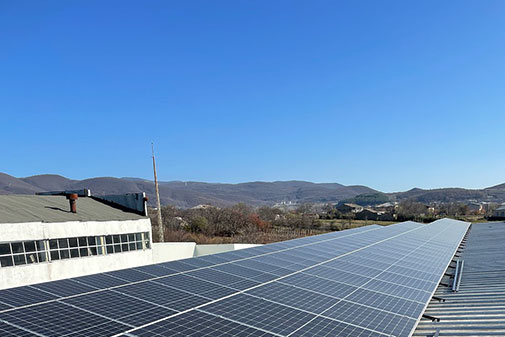
The Co-Designing Clean Energy for Rural Africa with Service Innovations and Digital Twins (CREDIT) project will see the deployment of off-grid solar ‘mini-grids’ in three rural African communities. It’s one of 13 UK research initiatives funded through the UKRI Ayrton Challenge Programme.
Collaboration
Professor Suresh Perinpanayagam, of the School of Physics, Engineering and Technology, is leading the project at York, which will run in collaboration with Technical University of Mombasa (Kenya), Coastal and Marine Resource Development (Kenya), Lilongwe University of Agriculture and Natural Resources (Malawi), and the United Church of Zambia University, as well as other industry and developmental partners.
He says the project will deploy innovative approaches to solar energy provision in rural areas which often face energy challenges despite having abundant solar resources.
“CREDIT will deploy off-grid solar mini-grids in three key African communities: Mayungu Beach in Kilifi, Kenya; an agricultural village near Kasinthula, Malawi; and an agricultural college community in Chipembi, Zambia,” he says.
Challenges
These communities face common challenges including energy affordability, inadequate maintenance expertise, and minimal community participation in project design, says Professor Perinpanayagam. Existing solar solutions often fail due to undersized installations, technical inefficiencies, and a lack of sustainable business frameworks.
Professor Perinpanayagam explains: “Our approach will integrate participatory technology development with service-oriented business models, supported by digital twin platforms. These tools will combine advanced predictive analytics, ‘Internet of Things’ sensors, and remote monitoring to optimize energy usage, forecast demand, and enhance maintenance efficiency. Most importantly, we will actively include communities in the design and management of these technologies to ensure their long-term success.”
Impact
He adds: “CREDIT aims to deliver lasting impact through scalable solar solutions, addressing challenges such as energy affordability, maintenance expertise, and community involvement. By integrating advanced digital technologies with local knowledge, the project will create resilient, self-sustaining communities and establish a replicable framework for clean energy transition in rural Africa.”
Access to sustainable, clean energy is a crucial aspect of social and economic development in the region, says Professor Perinpanayagam, and yet millions in the region live without electricity, limiting their opportunities for growth.