Plants start their day faster than first thought, scientists find
Posted on Tuesday 8 June 2021
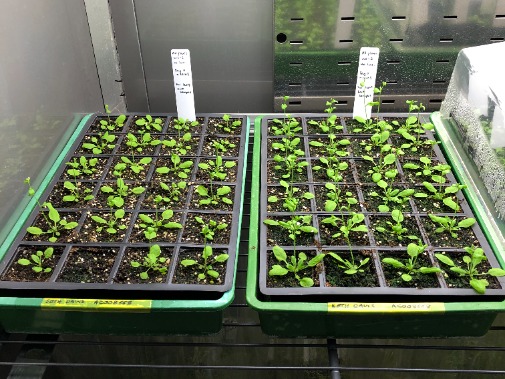
Scientists studying the early morning activity of plants have found they make a rapid start to their day – within minutes of dawn.
Just as the sunrise stimulates the dawn chorus of birds, so too does the sunrise stimulate a burst of activity in plants.
The arrival of light at sunrise plays a vital role in the growth processes of plants and serves as a cue that keeps the inner clocks of plants in rhythm with day-night cycles. This inner circadian clock helps plants prepare for the day such as when to make the best use of sunlight, the best time to open flowers for pollinators and release pollen, and when to get ready to respond to drought conditions.
Many genes that control these processes have extremely rapid bursts of gene activity in the early morning, according to a new study.
Dawn burst dynamics
Researchers from the University of York and the Sainsbury Laboratory, Cambridge University sampled thale cress (Arabidopsis thaliana) every two minutes from dawn to measure their genetic activity.
The research team set out to characterise the ‘dawn burst’ dynamics in detail and found three distinct ‘gene expression waves’ within two hours after dawn. The first of these occurs just 16 minutes after dawn, lasting only 8 minutes.
The authors also identified how some morning genes are controlled by red and blue light sensors within the plant, giving us a first glimpse as to how the plants can respond so rapidly to the sunrise.
Gene networks
Dr Daphne Ezer, lecturer in Computational Biology at the University of York and senior author of the study, said: “By studying gene networks, we can interpret how plants integrate light and temperature signals in the early morning to entrain their circadian clock.”
“We plan to extend the morning gene network to understand how crops respond to light, both under natural conditions and artificial light in greenhouses, and to investigate how different kinds of sunrises (as seen in different latitudes) impact the dawn burst and plants’ longer-term growth.”
The findings are published in the journal Molecular Plant.
Further information
- The research was funded by an Alan Turing Institute Research fellowship under an EPSRC research grant, EPSRC/BBSRC Innovation fellowship and an EMBO fellowship.
- Further information: Dawn Burst Network website