Mothers of Brazil’s Zika babies visit UK to share their stories
Posted on Monday 8 October 2018
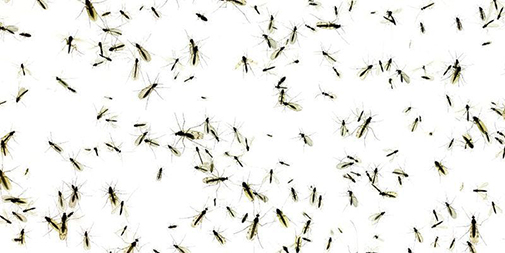
The mosquito-borne virus has had a devastating public health impact in Brazil.
In 2015 and 2016, thousands of babies were born with brain damage in Brazil after their mothers contracted the Zika virus during pregnancy.
The mosquito-borne virus caused a range of disorders in babies, including learning difficulties, autism and microcephaly – a condition where the head is smaller than normal.
The outbreak has had a devastating public health impact in Brazil, particularly among the poorest and most vulnerable people.
Social movements
In the absence of adequate state support, thousands of mothers of children with CZS connected over social media, forming support networks and mobilising social movements.
The women are campaigning for better healthcare, childcare and employment opportunities and aim to hold politicians who are neglecting these issues to account.
Women from several of these groups including the ‘Anjos de Minas’ and ‘União de Mães de Anjos’ are coming to the University of York on Tuesday 9 October to discuss their experiences in the wake of the Zika outbreak.
They will be joined by researchers from the Oswaldo Cruz Foundation (Fiocruz) - the largest public health research institution in Latin America, and academics from multiple disciplines from the Universities of York and Oxford, in addition to Kings College and the London School of Hygiene and Tropical Medicine.
Invisible problem
Researchers from the University of York have organised the workshop as part of a larger project to support and enhance these social movements.
Dr João Nunes, from the Department of Politics at the University of York, said: “Now that the World Health Organisation has declared that Zika is no longer a global health emergency, there is a danger that the struggles of families of children with CZF will become an invisible problem.
“The major thing that the epidemic highlighted in Brazil is that the systems in place for responding to the specific needs of children and their families affected by Zika are inadequate or non-existent.
“As Brazil is a federal state, responsibility for implementing policies falls at the local level. Some municipalities are cash strapped, leading to inequalities in provisions of health and social care.”
Poverty
The challenges posed to mothers and families of Zika babies are huge. Single parents are common in Brazil where some studies show as many as 1 in 3 children from poor families grow up without their biological father. Many mothers of babies with CZS have been abandoned by their partners.
With abortion prohibited and poor areas with inadequate sanitation infrastructure hit hardest by the disease, many Brazilian women have slipped further into poverty after having to give up their jobs to care for children with CZS.
The women are participating in the workshop in York to take up a prominent role in the research community’s discussion of the aftermath of the Zika crisis.
Research ethics
Dr Nunes added: “In the middle of the media storm that surrounded the Zika epidemic many women feel that they were almost harassed by researchers desperate to study them and their children. Now the world’s attention has moved on, many have been left feeling used.
“It is very important that the people who are experiencing the effects of Zika first-hand are able to participate in research rather than being mere objects of study.
“Part of our project is to set out guidelines for how the research community can respond to other epidemics in the future – we are exploring how researchers give back to communities and what a good ethical relationship between researchers and social movements should look like.”
The afterlives of Zika: Policy, science and civil society in public health is a free, public event. To register for tickets visit: https://www.eventbrite.co.uk/e/the-afterlives-of-zika-policy-science-and-civil-society-in-public-health-tickets-50855633569