CfAA newsletter
Sign up to receive the latest news, research and events related to the CfAA

Posted on Tuesday 27 October 2026
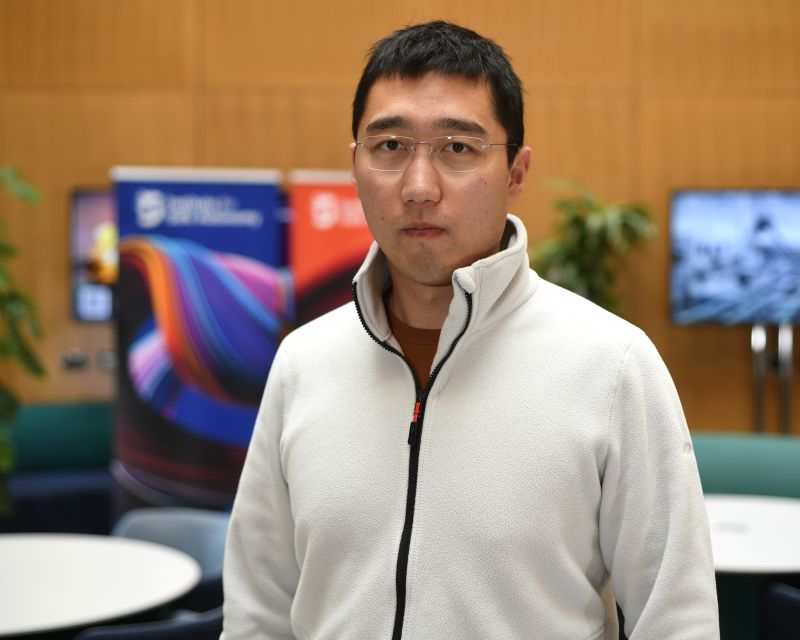
My background is in Computer Science, with research interests spanning autonomous systems, data science, machine learning and uncertainty management.
A central theme in my research is understanding how complex systems can make reliable decisions when the information available to them is incomplete, uncertain or noisy. In real world environments, sensors may produce imperfect measurements, data may be missing, and systems may encounter situations that were not anticipated during development. I am interested in how we can identify these issues, capture uncertainty and use the available information more effectively.
My work therefore covers areas such as data collection and analysis, decision making, and system verification. More recently, I have also been exploring how emerging technologies, including large language models, can support and enhance established engineering processes, improving both their efficiency and effectiveness.
At the CfAA, I am particularly interested in bridging the gap between developing autonomous technologies and ensuring they can be trusted to operate reliably in real-world environments. My research focuses on some of the practical challenges that arise when autonomous systems must interpret imperfect information, make decisions and respond to unexpected situations.
One area I have been working on is understanding how uncertainty in sensor data can affect the behaviour and performance of autonomous systems. This involves investigating ways to identify unreliable or unusual information, assess its potential impact on system decisions, and develop approaches that help systems respond more appropriately. I am also interested in detecting unexpected system behaviour and exploring how data-driven techniques can support system monitoring, verification and decision-making.
More recently, I have been exploring how machine learning and large language models can be integrated into established engineering processes. I am particularly interested in their potential to support tasks such as analysing complex information, identifying potential issues and improving the efficiency of system development and verification.
Traditionally, students often associated autonomy with areas such as robots, drones and self-driving vehicles. These remain very popular, but students are now interested in a much wider range of applications, including intelligent manufacturing, cyber security, healthcare, smart infrastructure and automated software systems.
There is also much greater awareness of the questions that come with autonomy. Students are increasingly interested not only in what a system can do, but also in how safe it is, whether its decisions can be trusted, how failures are handled and who remains responsible for important decisions.
The rapid development of generative AI has also contributed to this. It has made students more familiar with systems that can perform tasks with a degree of independence, while also making the limitations of such systems much more visible. It has placed greater emphasis on trustworthiness, validation and understanding the limitations of autonomous systems.
In teaching, I try to encourage students to look beyond whether a system simply produces the correct result in a particular example. They also need to consider questions such as how the system behaves when the data change, what happens when information is missing or incorrect, and how we can recognise when the system is uncertain.
This is equally important in my research. I am increasingly interested in approaches that combine different sources of evidence and use independent checks to support decision making. This is similar to how humans use different senses to understand their surroundings. For example, we may not see anything obviously wrong, but hearing an unusual noise can alert us that something is not quite right. I am interested in applying a similar principle to autonomous systems.
Outside of work, I enjoy spending time with my family, particularly going on hikes and exploring new places together. It's a great way to relax, enjoy nature and take a break from the usual routine.