Reports made by students about staff conduct
Informal and formal options are included in all policies and procedures associated with protecting dignity at work and study and raising concerns.
Procedure for dealing with reports made by students about staff conduct relating to bullying, harassment, and hate incidents
Before raising a concern, students may wish to explore options before deciding whether formal or informal action is appropriate.
Informal options
Informal action is encouraged where appropriate, and could involve speaking to the staff member directly in the first instance, with or without support.
Informal options for resolution are outlined in the Non-academic Misconduct Disciplinary Procedure.
Formal options
Students may feel that informal resolutions are not appropriate because of the nature or seriousness of the concern, or attempts at reaching an informal resolution may have been unsuccessful and they may wish to raise a concern formally.
Information and guidance on taking formal action against a staff member is available in the University’s Complaints of Misconduct Procedure. Reports can be made via Report and Support.
Making a report
Students reporting staff members can make a report in two ways:
- Through Report and Support
- Directly through the Complaints of Misconduct procedure
When a student makes a report through Report and Support, initially they will be contacted by an appropriate adviser to explore both informal and formal options for resolution. Advisers may be based within the Conduct and Respect team or within the University’s Complaints team, according to the situation.
Unless there are overriding safeguarding concerns, this nature of the discussion will not be shared with others and no action will be initiated without the consent of the reporting student. See Report and Support Confidentiality and Duty of Care Guidance for further information.
If the reporting student decides to take the matter further, the Complaints of Misconduct Procedure will be followed.
Anonymous reports can also be made through Report and Support. When anonymous reports are submitted, contact with the reporting person is not possible. If a reporting person selects the option to make an ‘anonymous’ report but then leaves information to identify themselves (ie full name or email address), this may then be treated as a report with contact details. Anonymous reporting will normally be used for monitoring trends, informing campaigns and resources, and proactive preventative work, but an anonymous report will not typically lead to a disciplinary investigation being launched. See section 5 of this policy for further information about anonymous reporting and what the information is used for.
In some cases, a report may be initiated by someone other than the student themselves, for example when someone has witnessed an incident, or when someone is very concerned about a situation they have been told about.
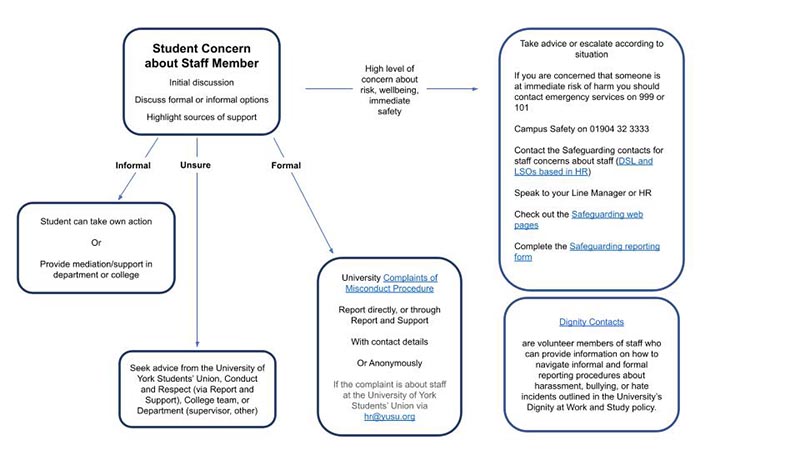
Procedure flowchart
We've put together this flowchart to illustrate the procedure described above: there's also a Google slide version available.