
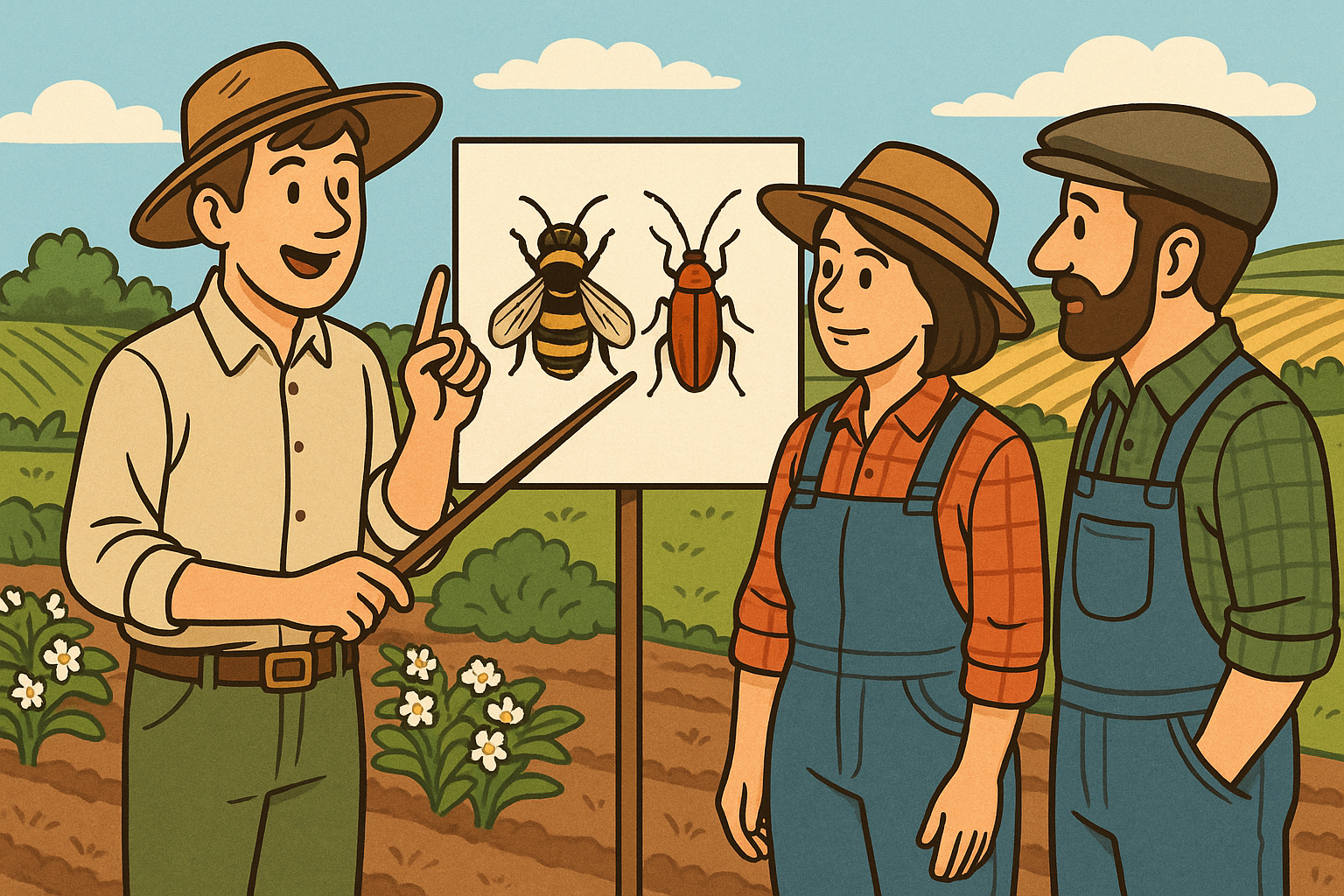
Translating Ecological Evidence into Local Action
This fellowship opened the door to a rapidly emerging field of research (artificial intelligence) which I would never have been able to enter otherwise. This experience, along with the wide network of new collaborators I have developed, allows me to develop funding bids for much larger projects which would not have previously been accessible to me.
- Tom Timberlake
Project Outputs
A core focus of this Discipline Hopping fellowship has been to investigate whether artificial intelligence can translate complex ecological evidence into locally relevant, scientifically sound advice for farming communities. Led by Tom Timberlake alongside Dimitar Kazakov (Computer Science) and Jamie Carr, the project uses pollination management as a key case study to assess both the practical benefits and potential risks of AI tools in supporting sustainable agriculture. The project findings were presented at the International Conference on Computational Linguistics in Bulgaria (CLIB 2026) and a co-authored journal article on key priority actions for agricultural AI is currently in preparation.
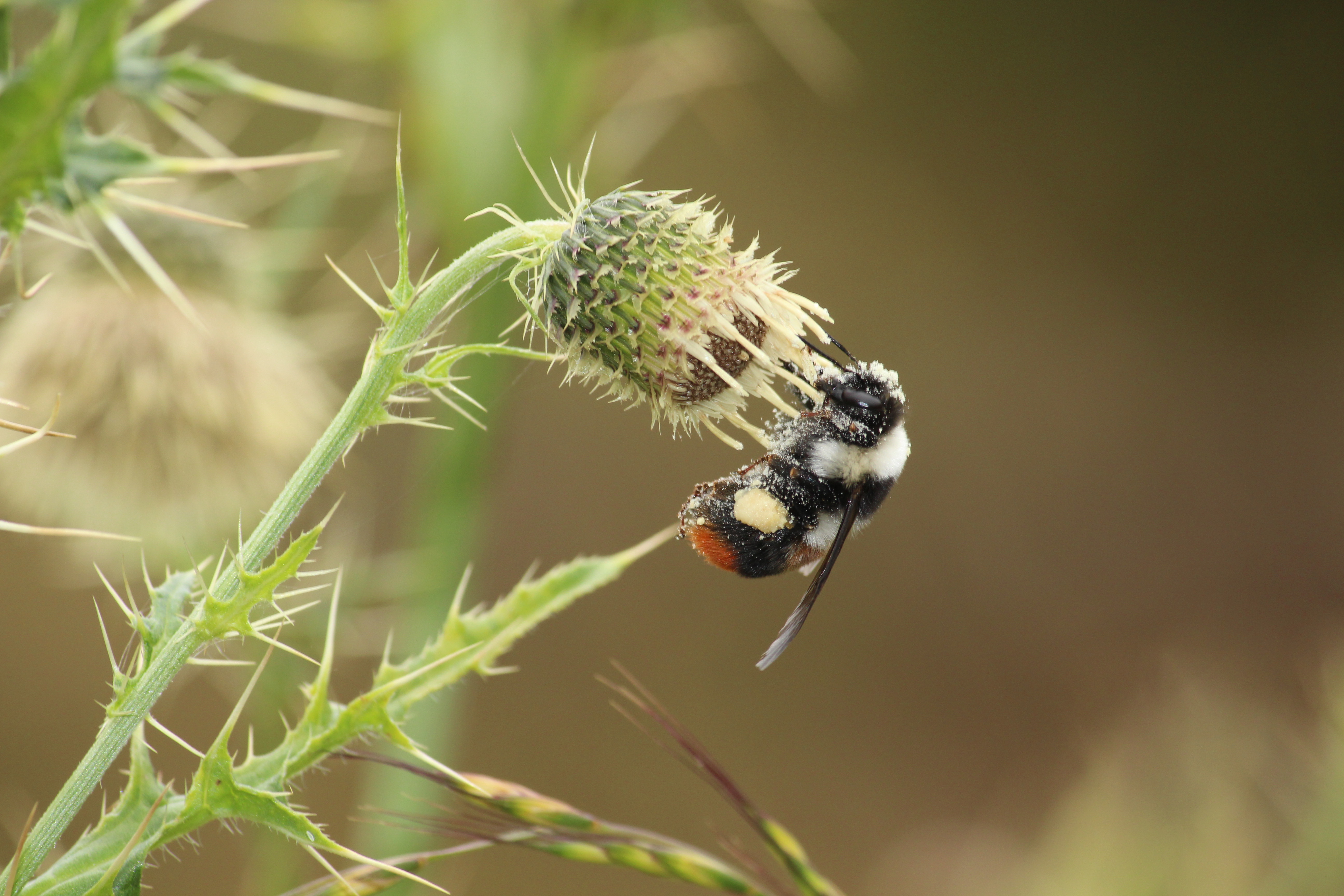
Credit: Tom Timberlake
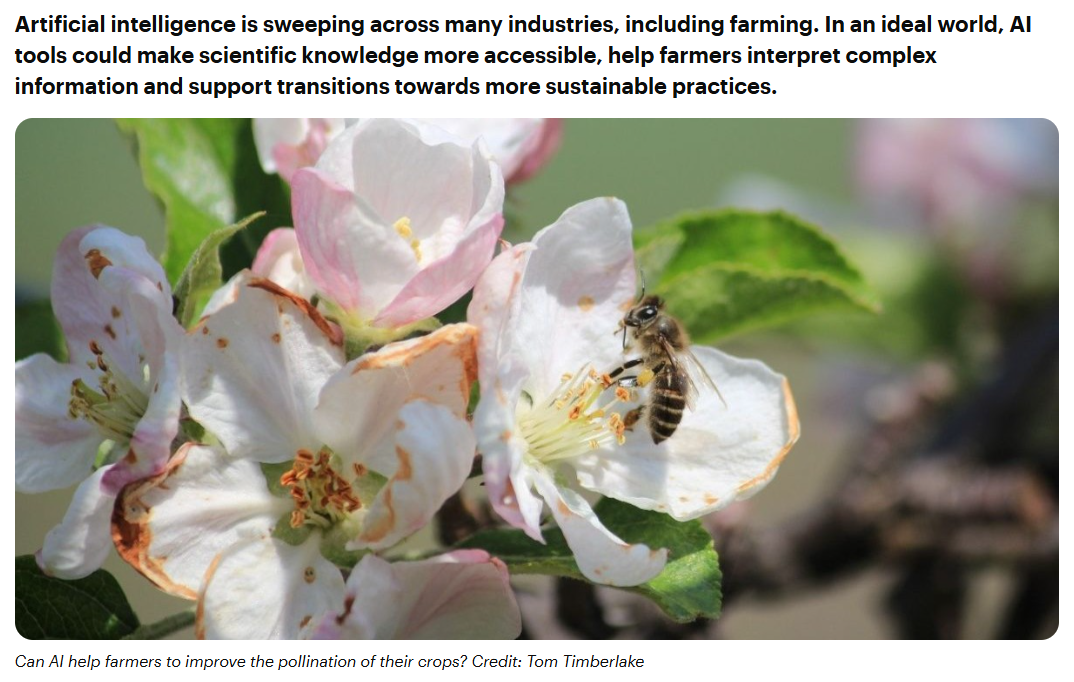
Can AI help farmers improve crop pollination?
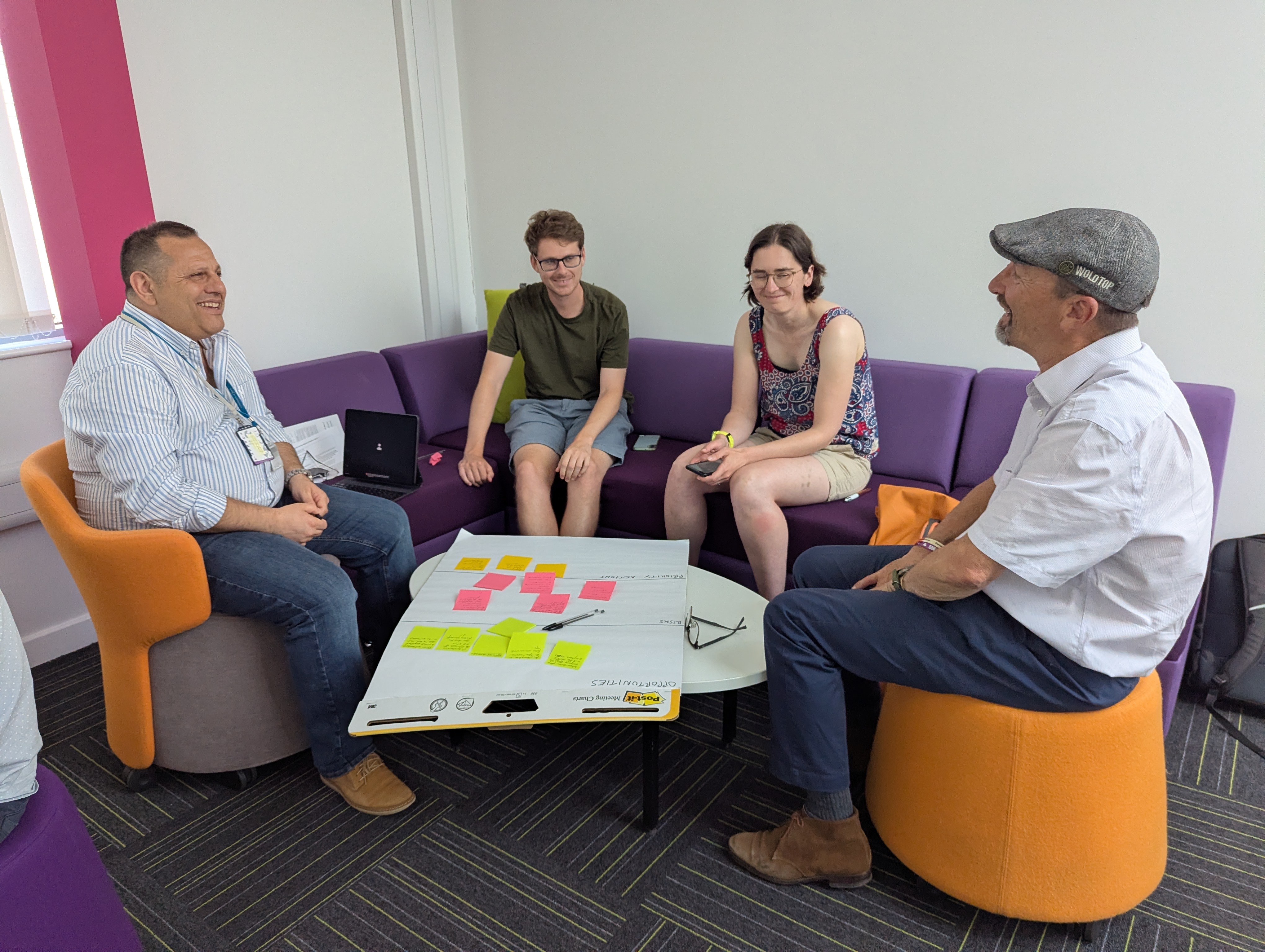
Participants working through small-group discussions during the project workshop to map out the practical risks and opportunities of AI in decision-making.
Effective management relies on balancing crop types, landscape features, and local farming practices.
To ensure the research reflects real-world perspectives, the team conducted targeted questionnaires, interviews, and a collaborative workshop with farmers, ecologists, and agricultural advisers. These activities explored current AI usage, concerns around data security and farmer autonomy, and key opportunities to steer AI tools towards supporting biodiversity and resilient food systems.
Alongside this engagement, the team is developing and testing a structured approach to AI-generated pollination advice, designed to complement human judgement by bridging the gap between ecological research and local farming expertise.
Farmers, ecologists and agricultural advisers unite at the 'Workshop on Artificial Intelligence (AI) in Sustainable Agriculture' to explore collaborative solutions for resilient food systems.
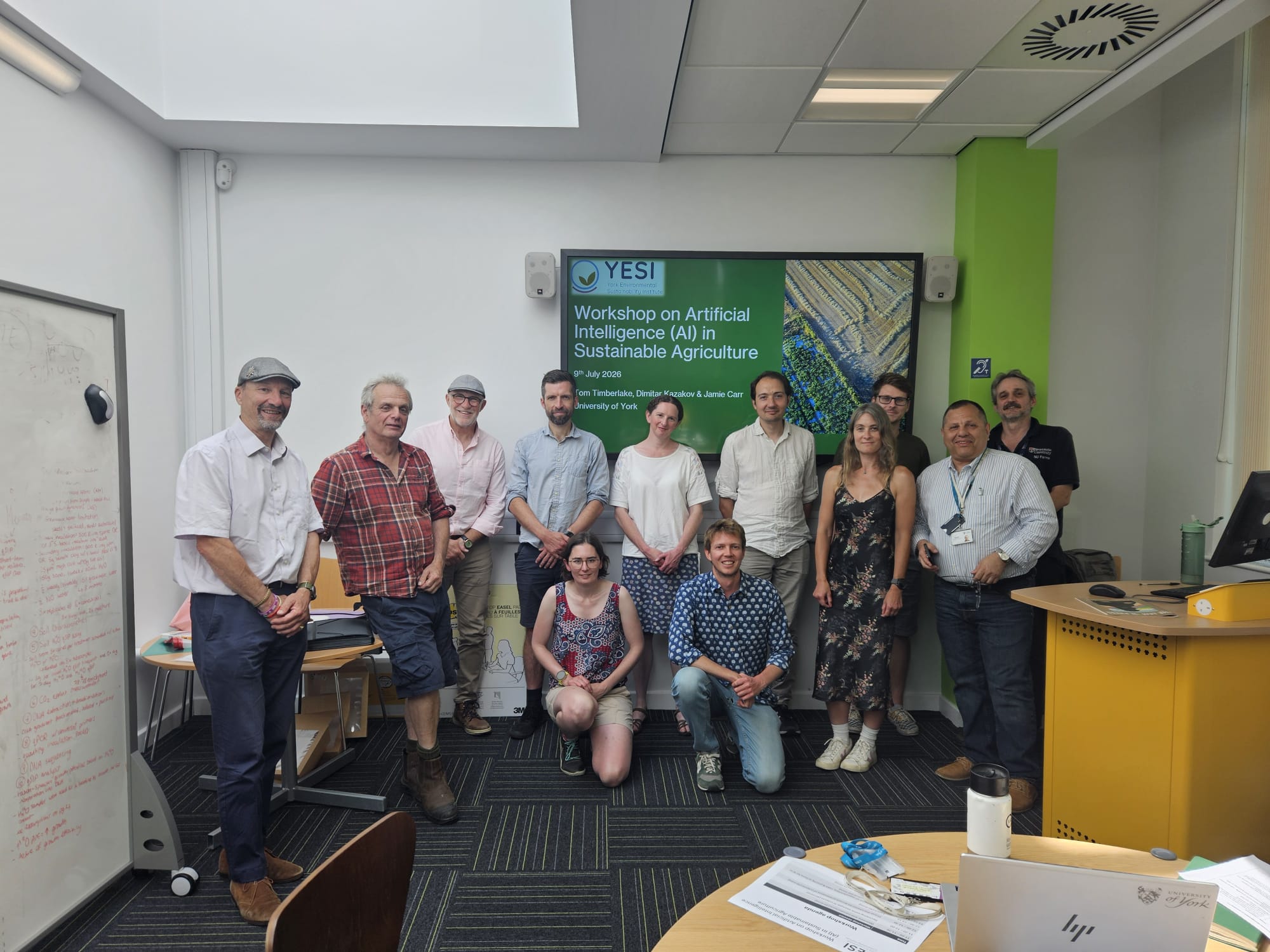
Credit: Jamie Carr
Principal and Co-Investigators
Principal Investigator
Dimitar Kazakov, Computer Science
Co-Investigator
Thomas Timberlake, Leverhulme Centre for Anthropocene Biodiversity