
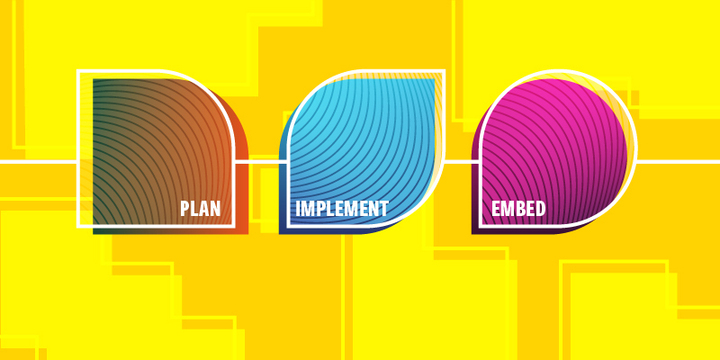
Our approach to change
Plan a change
During the plan phase of a change, time should be spent understanding the problem or issue you are trying to solve, alongside considering the impact on staff.
Key factors to consider
- Explore the information available to you to clarify the purpose of change and what needs to be changed, alongside generating ideas for solutions.
- Ensure you have clarity on scope and resources, including who should be involved to enable you to create the conditions for change to be initiated.
- Consider any potential impact on people such as staff, students and partners etc.
- Consider the need for an equality impact assessment to ensure your change does what it intends to do and is inclusive for staff and students.
- It is crucial to consider both the practical and emotional impact on disabled staff:
- You must ensure any Individual Adjustment Plans for impacted staff are revisited to explore what support may be needed.
- Explore our resources on change and the impact on disabled staff for further support.
- Consider all aspects of the Community Without Limits framework.
Implement a change
Once you start to see action it can often be the most gratifying stage of the process, but as you move into implementation it’s important that you continue to keep the Community Without Limits framework in mind.
Key factors to consider
- Continue to be insight-led to help you monitor impact, deliver the task elements of the change and ensure you continue to make progress as planned.
- Don’t stop innovating and keep on top of communication to ensure you maintain engagement.
- Ensure you are managing the people and emotional aspects of change to support staff.
Embed a change
The embed phase is integral to moving change to a successful state of business as usual. In this phase, remember to keep supporting staff through the transition, embedding change takes time.
Key factors to consider
- An opportunity to review and celebrate successes, alongside reflecting on lessons learned to ensure that staff feel supported, inspired and empowered to continue to work towards the vision for the change.
- Just like day-to-day working, you should continue to foster a culture of openness and innovation, so changes and processes can be review and improvements made. A culture of continuous improvement can thrive when teams are able to share ideas and take risks.
- Consolidate the change with the team and stakeholders, and ensure working habits and processes are realigned to support the change.
More information
Explores resources to look after yourself and your team during change.