Skip to content Accessibility statement

Underwater Information Systems
Most of the planet is covered by ocean but our understanding of this complex and hostile environment remains limited. Advanced technologies are required to support a wide range of data gathering applications, with acoustic waves of particular use in this challenging environment where electromagnetic waves have limited application. Our research focuses on acoustic sensing and communication, with specific interest in remote data gathering based upon networks of devices. Applications of interest range from general purpose environmental monitoring to underwater mapping and exploration, from offshore infrastructure monitoring to aquaculture and port/harbour security.

AREAS OF EXPERTISE

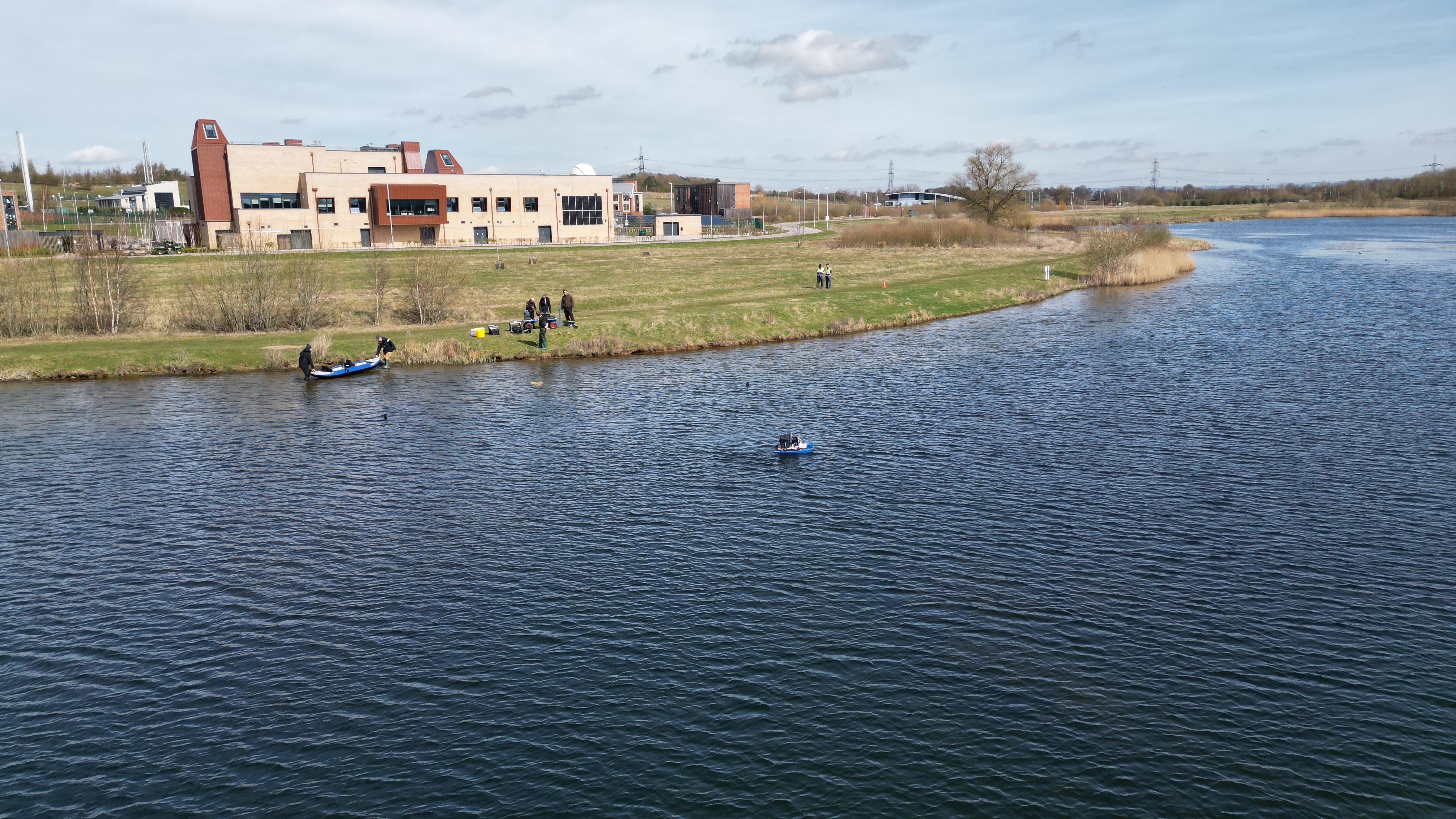
We are a team of specialists in underwater acoustic communication and sensing, from signal processing to networking. Our work combines theory and computer modelling with practical experimentation. We develop our own devices in-house, testing them in our specialist anechoic water tank and our University lake through to larger scale trials. Our expertise includes:

  • Underwater acoustic channel modelling
  • Point to point underwater acoustic communication
  • Underwater networking
  • Underwater acoustic sensing

We have detailed knowledge of underwater acoustic communication systems, from point- to-point links to mobile ad hoc mesh networking. Our technical expertise spans waveform design, coding, channel estimation and equalisation, Doppler compensation, localisation, medium access control, multi-hop routing, error and flow control including end-to-end quality of service provision.

A key strength of our group is our ability to take ideas from theory through to working devices. We design and build our own hardware platforms in the Institute for Safe Autonomy, allowing us to develop and test complete acoustic communication systems with integrated sensing capability.

Among our research highlights, we have pioneered full duplex underwater acoustic communication, simultaneous transmission and reception in the same frequency band, through novel adaptive interference cancellation algorithms. Our knowledge and experience in developing advanced underwater acoustic networking capability is timely given the rapid development of low cost autonomous underwater vehicle technology and the need for reliable and highly adaptive networked communication.

Recent applied work includes joint sensing and communication, development of an acoustic Doppler current profiler and networking solutions for aquaculture monitoring.


a communication node

Facilities

Dedicated laboratory and fabrication workshop

  • 3m x 3m x 1.8m anechoic fresh water test tank
  • 1200m x 200m x 4m fresh water lake
  • Experimental equipment (including acoustic transducers, hydrophones and recorders; bespoke electrical drive and interfacing circuits; FPGA and CPU based development boards; underwater housings; equipment for deployment of underwater moorings).

Read more about our labs and test spaces.

Projects

Smart dust for large scale underwater wireless sensing (USMART)

We developed low-cost underwater acoustic sensor networks for long term subsea data gathering. We led the development of the network protocol stack. It was funded by EPSRC and was undertaken in collaboration with Newcastle University (lead partner) and Heriot-Watt University.

Cooperative underwater surveillance networks (COUSIN)

We investigated the feasibility of underwater target detection using an acoustic communication network. We developed the capability to detect targets based on the identification of anomalies in the measured channel impulse response as captured by a network of devices. We coordinated this £1.5m project funded by EPSRC, working with Newcastle University and the University of Sheffield.

Work with us

We welcome opportunities for partnership with industry, academic institutions, funding bodies, policy-making organisations and individual and institutional donors.

Find out about ways you can work with us.