Skip to content Accessibility statement

What is Psychology?

Psychology is a scientific discipline concerned with the mind, brain and behaviour. It has broad applications in areas such as healthcare, education, industry, public policy and everyday life. 

Psychology graduates find work in a wide range of organisations that seek to understand, predict, explain or change people’s behaviour. Students gain a unique combination of:

  • scientific methods
  • computational skills
  • critical analysis and communication.

Psychologists seek to understand:

  • our sensations, actions and the processes that underline behaviour (cognitive psychology)
  • how we develop over the course of a lifespan (developmental psychology)
  • interactions between people (social psychology)
  • what makes humans unique and what makes us similar to other animals (comparative psychology).

Many psychologists are involved in applications of the science, for example to work (occupational psychology), to criminal justice (forensic psychology), to teaching and learning (educational psychology) and to mental and physical health (clinical psychology and psychology of health). A degree in Psychology provides an excellent background from which to pursue a career in wide variety of areas including research, counseling, teaching, marketing, data analysis, and health care.

Mind or brain?

Psychology was originally thought of as the science of the mind. We now know that our subjective experiences provide just a rather misleading view of what is going on inside our heads. Psychologists seek an objective understanding of these processes, and this leads us to measure aspects of behaviour and to investigate the brain in action.

Studying behaviour

For much of its history, psychology examined the mind indirectly, not by studying the brain itself, but by designing careful experiments that revealed mental processes through their effects on behaviour. A psychologist investigating reading, for instance, might measure how quickly people respond to different types of words, using response times as a window into underlying cognition. This behavioural approach wasn't simply a workaround for the technical limitations of the time; it reflected a genuine insight that many fundamental questions about human nature can be answered without knowing the precise neural machinery behind them. Even now, with powerful brain imaging technologies widely available, behavioural methods remain the tool of choice for a great many unsolved problems.

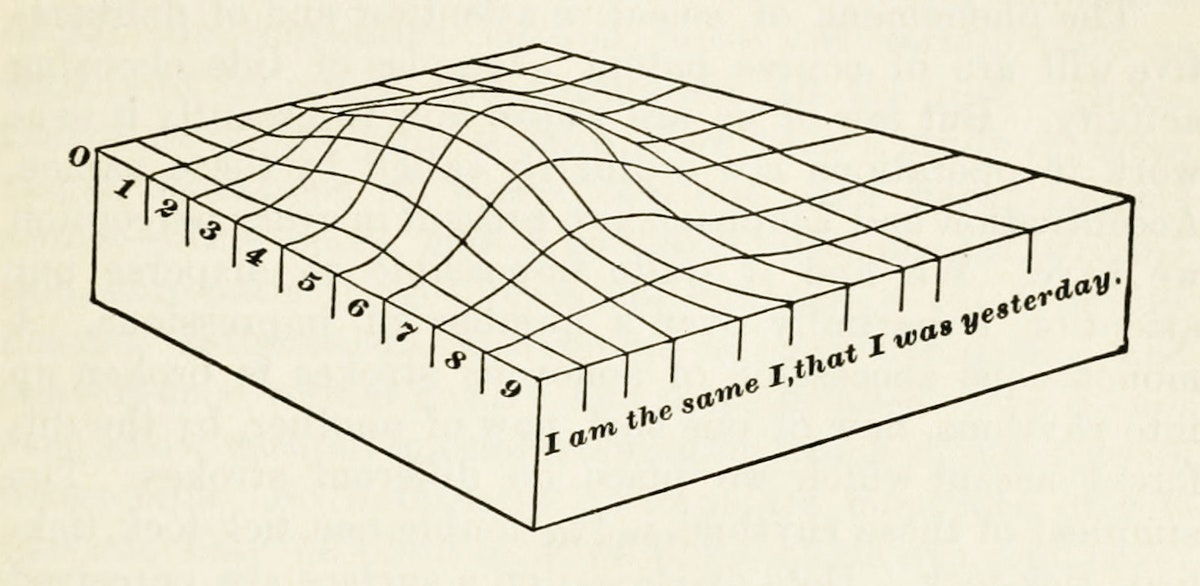
'I am the same I, that I was yesterday' by William James (1890) from 'The Principles of Psychology'

Studying neuroscience

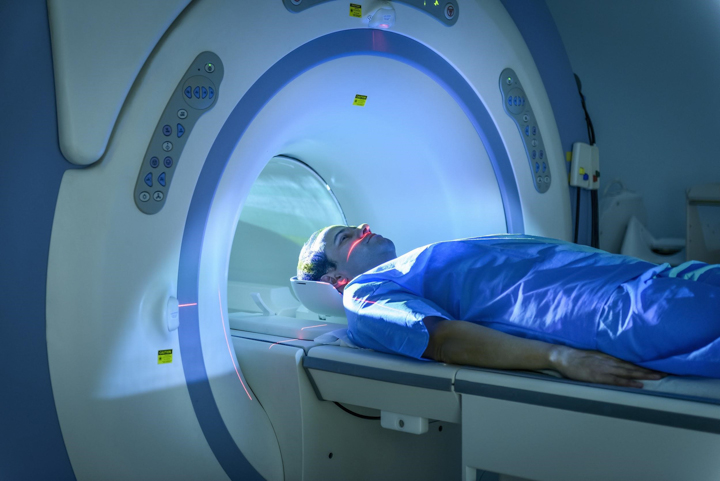
Neuroscience, the study of the brain and central nervous system, plays an increasingly important role in modern psychology. It is particularly important in explaining the biological basis of human behaviour and cognition. A central question drives this work: how do our actions, perceptions, thoughts, feelings and memories emerge from networks of brain cells and the signals they exchange?

Find out more about routes to neuroscience

Example questions in psychology and human neuroscience

  • How do we interpret and use the information gathered by our senses?

  • How are different types of information organized and processed in the brain?

  • In what ways do our intellectual and perceptual faculties break-down following brain damage or disease?

  • How do we learn and remember?

  • What causes depression and how can it be treated?

  • How and why are some things forgotten?

  • How do we acquire language?

  • What activity in the brain correlates with conscious experience?
  • How do we communicate verbally and non-verbally?

  • How do disorders like dyslexia and autism arise?

  • How does sleep effect the integration of memories?
  • What is prejudice and where does it come from?

  • What are the psychological causes of antisocial and criminal behaviour, and how can they be prevented?

  • How do therapeutic and recreational drugs affect the brain?

Open Days
Applications
Scholarships
Study with us