
Scientific Progress and Artificial Intelligence:
A Capabilities-Based Ethnographic Epistemology
Science is famous for its tools, which focus or empower abilities like seeing, calculating, remembering, manipulating, and predicting. Yet, despite centuries of organized science and decades of science studies, there is still very little written about what scientific abilities are, or how tools extend them. This is striking, because scientific progress is clearly tied to scientists' increasing ability to solve problems.
PACE proposes an interdisciplinary comparative study of what is being called a revolution in scientific ability: the introduction of artificial intelligence (Al) methods.
The project will produce the first general philosophical account of scientific ability, and the first ethnography of Al use in science. These will reveal new details about science as it is currently practiced, and it will produce a pragmatist ability-focused epistemology of science.
Key questions:
- What scientific problems is Al being introduced to solve. and Why?
- Which abilities are being empowered, depowered, or otherwise changed by Al, and how?
- How should abilities be conceived to enable more efficient and ethical scientific education/practice?
- How do improved abilities constitute and/or work together with more traditional signs of progress like knowledge and understanding?
pace-project@york.ac.uk
The Team
 |
Principal Investigator
I combine qualitative and quantitative approaches with traditional philosophical methods to investigate scientific reasoning (especially scientific imagination and creativity), scientific tools (especially thought experiments, models, visualizations), and the impact of artificial intelligence on science.
My PhD is from the University of Toronto in the history and philosophy of science (2015). I have held postdoctoral and research fellowships at the Universities of Pittsburgh, Cambridge, Geneva, Zurich, Tübingen, and the LSE. Most recently, I was an Associate Professor at the National Yang Ming Chiao Tung University in Taipei. I am currently also a research fellow at the Center for Philosophy of Science at the Hong Kong University of Science and Technology.
|
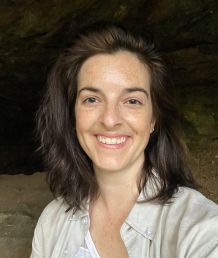 |
Kelli Barr
Postdoctoral Researcher
I study the nature of institutions to learn how they enable and constrain scientific goals and values. At York, I am investigating how the institutional integration of AI as a scientific research and education tool affects scientists’ defining abilities. Previously I worked on the Sociology of the "Purpose Project" at UC Davis, on the integration of interdisciplinary spaces in biological research, and for the Geography of Philosophy project at Pitt HPS on the cross-cultural study of core philosophical concepts. I trained as a marine biologist (B.S.) and philosopher (M.A. & Ph.D.) with a focus on science and technology, the theory and practice of interdisciplinarity, and research policy. My research interests touch on social epistemology, feminist philosophy of science, STS, political economy, environmental philosophy, philosophy of technology, and critical higher education studies.
|
 |
Oscar Westerblad
Postdoctoral Researcher
I'm a philosopher of science studying the nature of understanding and its relation to capabilities, instrumentation, and methods. On the PACE project I am drawing on work on instruments and calibration to think about how capabilities are developed, extended, and enhanced through AI methods. Prior to coming to York, I was a postdoctoral researcher at the University of Iceland, working on the social epistemology of understanding and abilities. I completed my PhD in History and Philosophy of Science at the University of Cambridge, towards the end of which I was a visiting fellow at the Institute Vienna Circle. My broader philosophical interests have also led me to do research in the history and philosophy of experiments, philosophy of logic, pragmatism, and the nature of scientific progress.
|
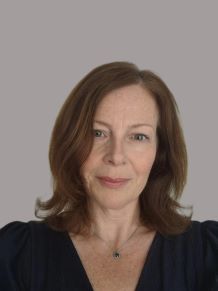 |
Liz Greensted
Project Coordinator
I have many years' experience providing senior administrative support within the higher education sector, alongside more than 10 years’ experience coordinating and managing a diverse range of complex projects. These include clinical trials based in East Africa, as well as collaborative projects with partners across India, Brazil and Sri Lanka, and multidisciplinary teams within the NHS.
|
