Researchers call for automatic reviews of convictions linked to imprisoned police officers
Posted on Thursday 10 September 2026
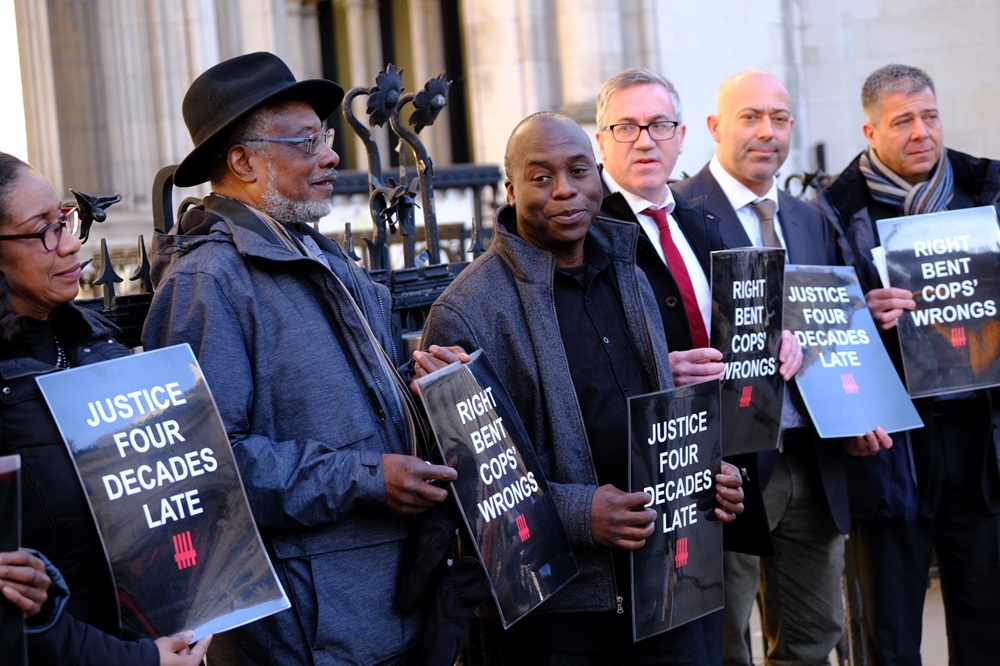
A new report by York Law School, the Centre for Applied Human Rights and miscarriage of justice charity APPEAL reveals that at least 64 police officers went to prison between 2023 and 2026. Their offences included corruption, physical violence and sexual abuse.
Despite these custodial sentences, there is currently no legal duty for authorities to review previous convictions where these officers played a key role. Researchers warn that this oversight leaves innocent people wrongfully convicted, facing long battles to prove their convictions were unsafe.
Trew's Law
The proposed reform, Trew's Law, takes its name from Winston Trew. Mr Trew spent nearly 50 years fighting to clear his name after a court wrongfully convicted him on the evidence of racist and corrupt British Transport Police officer, Detective Sergeant Derek Ridgewell.
Since 2018, 13 people have had convictions linked to Ridgewell overturned by the Court of Appeal. Together, they spent 623 years living under wrongful convictions.
Winston Trew, member of the Oval Four, said: “When my convictions were finally quashed in 2019, it came after nearly fifty years of fighting to clear my name. No one should have to spend decades uncovering the truth about police wrongdoing. Justice shouldn't depend on luck, or on victims fighting for years to expose miscarriages of justice. Trew's Law would place responsibility where it belongs: with the state.”
History repeating
Dr Joanna Gilmore, from York Law School at the University of York, added: “The British Transport Police have acknowledged that failing to review Ridgewell’s casework on his imprisonment was ‘simply inexcusable’, however when we began researching this issue, we were struck by how little exists in law today to prevent history from repeating itself.
“In many of the cases we examined, judges noted in sentencing remarks how officers had used their police position to facilitate serious offending - and yet, the decision to review their past cases remains discretionary, opaque, and unpredictable.
“The burden of uncovering state wrongdoing should fall on the state, not on victims, who often lack the funds, legal resources, or access to investigate these cases themselves. A statutory duty would replace the existing discretionary system with mandatory post-conviction triage and review.”
Freedom of Information requests conducted for the report revealed that no central system records when police officers go to prison. There is also no system tracking whether authorities review their previous cases or what those reviews find. Consequently, affected individuals are left to identify potential miscarriages of justice themselves, often decades after the conviction.
Trew's Law would close this gap by introducing a mandatory, independent triage and review of an imprisoned officer's past casework.
Innocent people
Dr Mattia Pinto from the Centre for Applied Human Rights at the University of York, said: “The Oval Four happened more than 50 years ago, yet even today it is far too common for the lives of innocent people to be completely ruined by convictions based on unchecked evidence from corrupt officers. What's more, the legal system lacks an automatic process to review these convictions even when the police officers involved are themselves imprisoned.
“The UK's human rights obligations require moving beyond ad hoc, reactive appeals driven by victims. They demand proactive, institutional safeguards that identify and rectify miscarriages of justice automatically, ensuring scandals like the Ridgewell cases never happen again. The state must not only acknowledge past injustice; it must establish institutional safeguards to ensure non-repetition."
The report sets out five main recommendations for legislative change:
- Require an automatic review when a serving or former police officer receives an immediate prison sentence.
- Require police forces and the Crown Prosecution Service to identify all finalised cases where the officer played a material role, such as giving witness evidence or handling disclosure.
- Establish independent oversight for all decisions regarding risk, disclosure and notification to mitigate institutional bias.
- Require affected individuals to receive notification and disclosure where a material risk to conviction safety exists.
- Require annual Home Office reporting on the number of officers imprisoned, cases reviewed and notifications issued.
Matt Foot, Co-director of APPEAL said: “The criminal justice system takes far too long to correct miscarriages of justice. In the case of the victims of Detective Sergeant Ridgewell and his squads, it has taken an eternity. I believe there are many more victims out there still. It's high time for Trew's Law so that officers that are doing harm who are imprisoned have their files investigated immediately to stop delay for those that have suffered enough”.
Further information
The report, Trew’s Law: The Case for Automatic Reviews of Imprisoned Police Officers' Files for Miscarriages of Justice, was co-authored by Dr Joanna Gilmore, Mya Imadojemun and Dr Mattia Pinto. The full report is available at www.appeal.org.uk/trews-law .