York researcher contributes to Hollywood director’s operatic vision
Posted on Thursday 23 April 2026
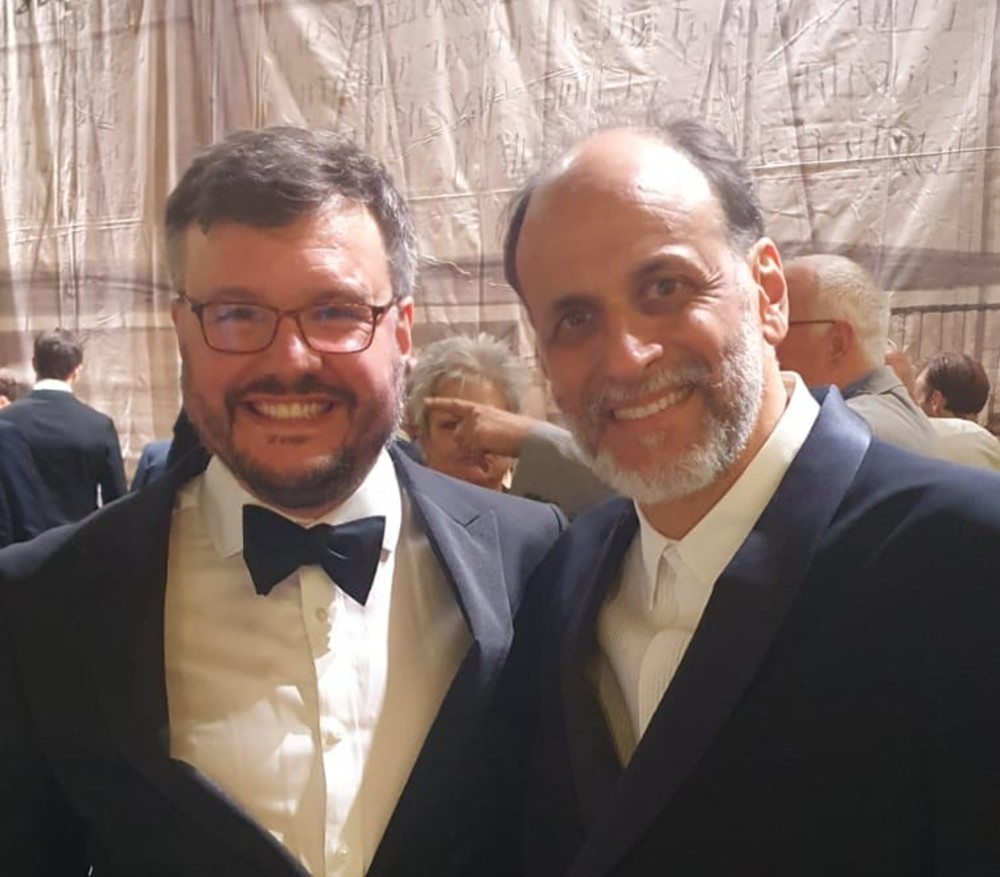
The celebrated filmmaker, Luca Guadagnino, director of major cinematic hits such as Call Me by Your Name and After the Hunt, reached out to Professor James Williams after reading his introduction to the book History is Our Mother by poet Alice Goodman.
The book included the texts of the operas Nixon in China and The Death of Klinghoffer, written with the composer John Adams, alongside a translation of The Magic Flute.
The director wanted a deeper understanding of The Death of Klinghoffer, which has drawn mixed reactions, and sometimes protests, from audiences since its first staging more than 30 years ago due to its depiction of the murder of a disabled American Jewish man by Palestinian terrorists. It has rarely been staged since due to these controversies.
Allusions and meaning
Whilst Luca Guadagnino was making the movie Artificial with Andrew Garfield, Professor Williams deconstructed the poetic text of the opera, producing a 23,000-word commentary and a line-by-line breakdown of allusions and multiple meanings which he presented to the director once he was ready to begin the development of his new stage project.
The document, and several meetings between the director, Professor Williams, and Alice Goodman, went on to directly influence how Luca and the cast approached bringing the opera back to the stage in Florence at the Maggio Musicale Festival.
Brave and bold
Professor Williams, from the University of York’s Department of English and Related Literature, said: "The invitation to work with such a renowned Hollywood director on the greatest English-language opera of the twentieth century was far too exciting and intriguing to refuse. Our partnership involved several online meetings and detailed clarifications to ensure the production stayed true to the libretto's complexities.
“We knew that it would take a brave and bold vision to bring this opera back to the stage, after being labelled as ‘controversial’ for so many years. It was important that what came through to audiences was the nuance and value of the piece as a work of art.
“It stages a human tragedy in its full complexity, with every character a fully realised human being and all of them presented with sympathy and eloquence, whether you ultimately oppose their actions and views or not.”
Unifying the arts
Professor Williams' analysis was shared by Guadagnino with the cast and the wider creative team, which included the choreographer Ella Rothschild and the conductor Lawrence Renes.
Professor Williams’s work has also influenced the audience’s understanding of the piece through an essay he wrote and an interview he conducted with Alice Goodman, both translated into Italian for the opera programme and included in English on the production website.
Professor Williams said: “Luca recently commented on how professionals in this space should unify the arts, and this really is on full display in this production, where cinematic visual intelligence meets poetry, music, dance, history, and literary scholarship.”
The production premiere was broadcast live on Italy’s Rai TV and is available to watch online; it continues its run until Sunday, 26 April 2026.
Professor Williams added: “Alice and I were invited to join Luca and the production team at the opening night of the opera in Florence, and the performance, which received a 13 minute standing ovation, is, in my opinion, the best realisation of the work to date.”