Evolution has reused the same genes for 120 million years, study shows
Posted on Thursday 30 April 2026
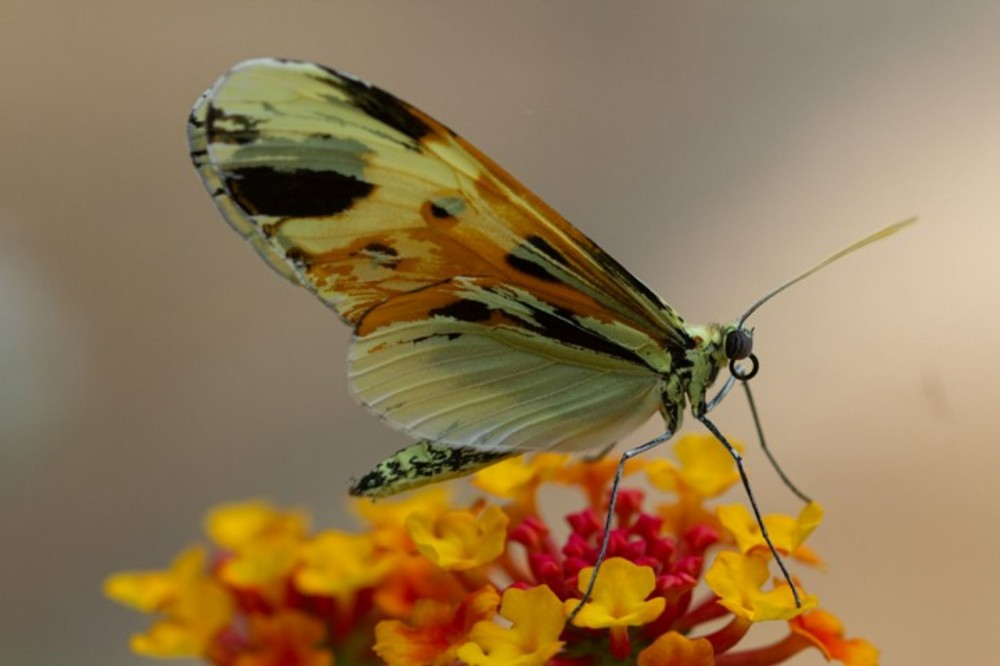
The international team, led by scientists at the University of York and the Wellcome Sanger Institute, studied several distantly related South American rainforest butterfly and moth species that sport similar wing colour patterns that warn away predators, a phenomenon known as mimicry.
The aim of the study was to discover the genes controlling these similar mimicry colour patterns among seven distantly related species.
The scientists, including researchers from a number of South American countries, found that despite being very distantly related to each other, the various butterfly and moth species reused the same two genes - ivory and optix - to evolve near identical colour patterns.
Genetic trick
The genetic changes in the different butterfly species did not happen in the genes themselves, but in similar ‘switches’ that turn the genes on or off. The moth species surprisingly used an inversion mechanism - a large chunk of DNA flipped backwards - a near identical genetic trick used by one of the butterflies.
Professor Kanchon Dasmahapatra, from the University of York’s Department of Biology, said: “Convergent evolution, where many unrelated species independently evolve the same trait, is common across the tree of life. But we rarely have the opportunity to investigate the genetic basis of this phenomenon.
“Investigating seven butterfly lineages and a day-flying moth, we show that evolution can be surprisingly predictable, and that butterflies and moths have been using the exact same genetic tricks repeatedly to achieve similar colour patterns since the age of the dinosaurs.”
The research, published in the journal PLoS Biology, shows that evolution isn't always a roll-of-the-dice, but can be more predictable than previously thought.
Adaptation
Professor Joana Meier, from the Wellcome Sanger Institute, said: “These distantly related butterflies and the moth are all toxic and distasteful to birds trying to eat them. They look very much alike because if birds have already learned that a specific colour pattern means “do not eat, we are toxic”, it is beneficial for other species to display the same warning colours.
“Here, we show that these warning colours are particularly ideal as it seems quite easy to evolve these same colour patterns due to the highly conserved genetic basis over 120 million years.”
Knowing that nature follows a particular route, and is not as ‘random’ as once thought, helps scientists predict how other species might adapt to their environments, or climate change.