Rare imperial purple cloth found in Roman infant burials in York
Posted on Thursday 30 April 2026
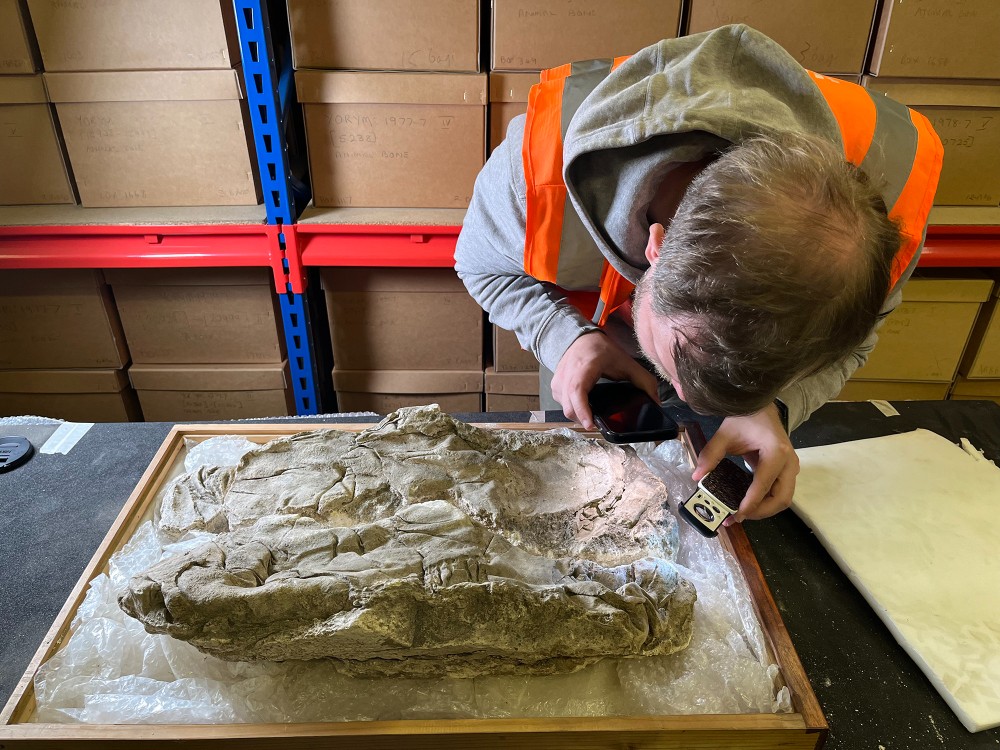
The babies were wrapped in a fine textile of Tyrian purple embellished with gold thread – a cloth of the highest possible status and luxury known in the Roman world.
The discovery, by archaeologists and scientists at the University of York, is the first time traces of the dye have been found on Roman textile remains in York. It’s one of only a handful of examples of the dye found in the UK.
The rare find suggests the babies were from families of significant social standing. During the Roman period, the dye was a commodity valued at up to three times the price of gold.
Traces of the colourant were identified in two gypsum burials held in the collections of York Museums Trust. They date from nearly 1,700 years ago, from the late third or early fourth century A.D. One infant was buried with two adults in a stone coffin (which is on display in the Yorkshire Museum), while the second was interred in a lead coffin.
The textiles were preserved by the Roman ritual of pouring liquid gypsum over the clothed and shrouded bodies of the dead. The gypsum gradually hardened, protecting imprints and fragments of textiles as well as the dyes and substances originally present in the fabrics.
Researchers from the “Seeing the Dead” project say the discovery provides invaluable insights into the grief felt by Roman families and the wealth of those who could afford such luxury in life and death.
The findings add to a growing body of evidence challenging the assumption that the Romans did not grieve infant deaths. Roman tradition and early legal codes forbade parents from publicly mourning babies, at a time when three in ten infants did not survive their first year.
Professor Maureen Carroll, Project Director from the Department of Archaeology at the University of York, said: “For the first time we now have confirmation of the use of this costly dye in Roman York, indicating that the city’s wealthy inhabitants had access to expensive and exotic commodities from the other end of the empire.
“This remarkable discovery tells us a lot about the importance of children in Roman York and the willingness of the family to give their baby the best possible send-off in tragic circumstances.”
Tyrian dye was manufactured by crushing thousands of murex marine molluscs to extract small amounts of purple colourant. It takes its name from the city of Tyre in Phoenicia (modern Lebanon) where it was primarily produced. Until now, one of the only occurrences of the textile in Roman Britain was found in the burial of the Spitalfields woman in London.
Dr Jennifer Wakefield, a postdoctoral research assistant in the Department of Archaeology who conducted the lab analysis, said: “Traces of purple were not always visible on the gypsum surface but chemical analysis has rewarded us with surprising results.”
The discovery highlights the University’s ongoing collaboration with regional partners like York Museums Trust to unlock the City's rich heritage. Further sampling for dye residues on gypsum casings from York and other sites in North Yorkshire will continue in the coming months.
Dr Adam Parker, Curator of Archaeology at the Yorkshire Museum, said: “Taking part in this multidisciplinary project with the University of York has been a truly rewarding experience. Its innovative approach has uncovered remarkable new details within the Yorkshire Museum’s Designated Archaeology collection, including evidence we have never been able to see before. The discovery of the purple dye, and the research it inspired, is providing exciting new insights into Roman York.”
The Seeing the Dead project is funded by the Arts and Humanities Research Council.
Further information
For more information on this discovery, visit: https://seeingthedead.ac.uk/blog/discovery-tyrian-purple-textiles-roman-gypsum-burials-york