Why vague conservation targets are failing some vulnerable species
Posted on Wednesday 10 June 2026
Conservationists are often faced with difficult decisions about where to put their financial resources; invest where populations are largest or where declines are fastest? Or invest in multiple smaller sites to maintain a species' range?
According to the findings of the study, seemingly small differences in what a conservation programme aims to achieve can lead to dramatically different decisions about which protected areas receive critical funding.
The authors of the study recommend that future international investors, donors, and governments abandon top-down ranking lists and instead adopt a sophisticated "portfolio approach" to funding. Crucially, global stakeholders must first agree on precise definitions of success before allocating finite funds.
Donor money
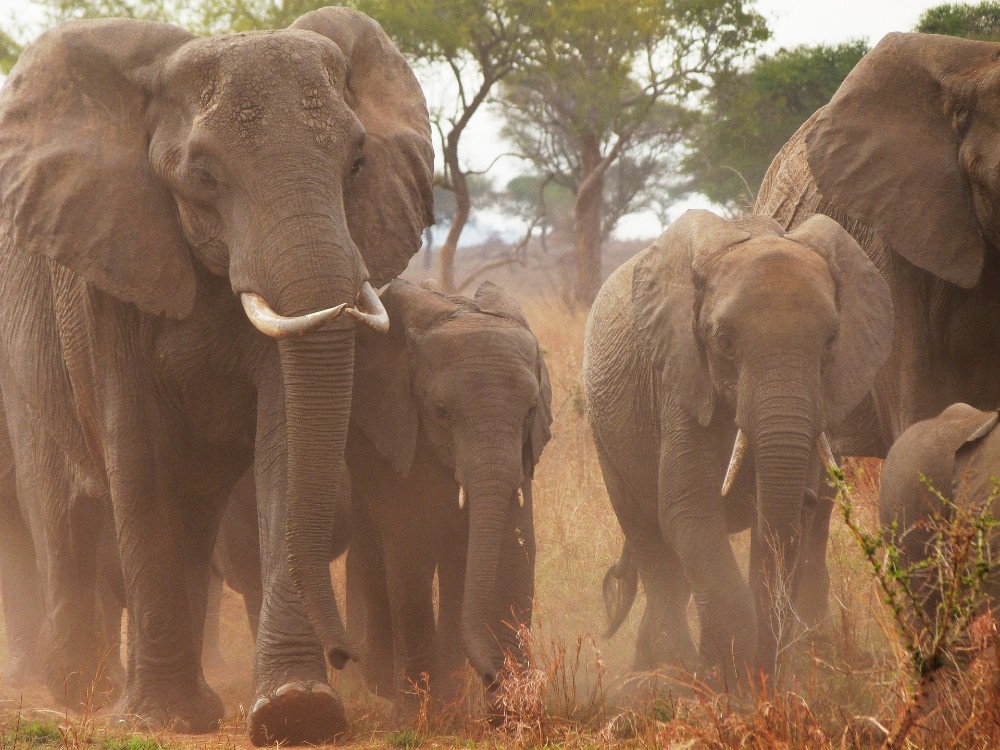
Published in the journal Conservation Science and Practice, the study focused on African elephants to examine how donor money is distributed. The researchers found that optimising a funding strategy for one specific goal – such as maximising the total number of elephants across the continent – is completely suboptimal for alternative goals, such as maximising the number of geographically stable, viable populations.
The research team compiled population and financial data from 79 protected areas across 24 African countries, covering roughly half of the continental elephant population. Their analysis found that recent business as usual allocations of funding have rarely been the most efficient use of limited financial resources.
Instead, the study notes that funding strategies must change dynamically according to the total available budget. When budgets are small, it is more efficient to fund several smaller, tractable sites to secure individual populations. As budgets grow, funding should then switch toward reversing declines in much larger protected areas. This finding directly challenges the common practice of simply ranking sites from top to bottom and funding them downwards until money runs out.
Measurable goals
"Conservation plans often set out broad visions, but this work shows that defining more precise, measurable conservation goals could mean more sustainable and better-funded conservation actions," said Dr Rob Critchlow, co-author from the Department of Biology at the University of York.
"Donors, governments, and NGOs need to be explicit about what conservation success looks like before deciding where to spend."
The researchers warn that current elephant funding is poorly strategised globally, largely driven by the varying spending abilities of local governments and the highly unpredictable nature of alternative philanthropic, non-governmental funding.
With limited resources, apparently sensible but un-strategised choices can result in slowing down species declines rather than securing healthy populations for the future.
Scarce resources
Co-author, Colin Beale, Professor of Ecology & Conservation Biology, University of York, added: “If funding for flagship species such as elephants is being inefficiently allocated currently, how likely is it that conservation in general is being funded in an efficient and effective manner?
“As the urgency of tracking biodiversity decline grows, our work shows that reviewing and redirecting scarce conservation resources based on clearly defined objectives is essential.”
“Evaluating how spend may achieve different results in a return on investment framework forces conservation practitioners to be much clearer about what they actually hope to achieve”, added Dr Andrew Plumptre, Head of the Key Biodiversity Areas Secretariat, “Most species plans do not identify what they really aim to achieve and as a result cannot allocate funds optimally."
The authors say the implications of this paper extend far beyond elephants. Similar funding and structural challenges are faced when planning investments for other high-profile flagship species, such as great apes and large predators, as well as the broader global goal of conserving "biodiversity" – a target for which no single agreed-upon metric currently exists.