Scientists identify bat coronavirus capable of entering human cells
Posted on Wednesday 22 April 2026
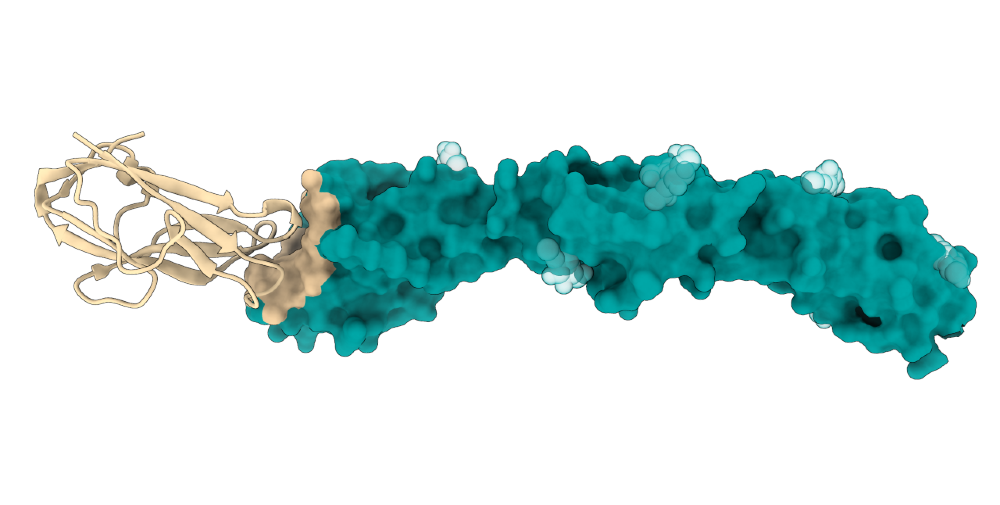
Professor Gavin Wright was part of an international team of researchers which made the discovery, with the findings published in the journal Nature.
Field evidence
The virus - Cardioderma cor coronavirus (CcCoV) KY43, or CcCoV-KY43 – can bind to a receptor cell found in the human lung, but field evidence in Kenya suggests it has not spilled over into the local human population.
Rather than work on ‘live’ viruses, the scientists used a public database of known genetic sequences, Genbank, to select and synthesise alphacoronavirus ‘spike’ proteins, including 27 viruses originally isolated in bats, and screened these against a library of coronavirus receptors found in human cells.
Spike proteins protrude from the surface of coronaviruses, including SARS-CoV-2, and bind to specific receptors on human cells, triggering infection.
Funded largely through UK Research and Innovation’s Biotechnology and Biological Sciences Research Council (BBSRC), the study brought together UK and Kenyan expertise to show CcCoV-KY43 binds to the human glycoprotein CEACAM6.
Future threat
A receptor cell found over-expressed on a range of human cancers, CEACAM6 can stimulate the proliferation of solid tumours and can be resistant to chemotherapy, posing a potential future threat to health if CcCov-KY43 spilled over into humans.
The team, from The Pirbright Institute, the University of Cambridge, the KEMRI-Wellcome Trust Research Programme, the University of York and the National Museums of Kenya say their findings show alphacoronaviruses (alphaCovs) can use various receptors to enter human cells.
Dr Dalan Bailey, Group Leader at The Pirbright Institute, said: “Before our study, it was assumed all alphacoronaviruses used just one of two possible receptors to enter their host, and the only difference was which species they could enter. We now know alphaCovs might use a whole variety of different receptors to open cells.”
Stephen Graham, Professor of Virus: Host Interactions at the University of Cambridge, said: “Viral spike proteins are keys that fit into locks (host receptors) to open the door and enter a cell. So far, we have identified one alphaCov receptor. The challenge now is to find the others.”
Dr Giulia Gallo, a viral glycoproteins specialist and lead author, said: “Not only did we find the new coronavirus receptor in human cells ahead of any virus spillover into the human population, but the study was performed using just a piece of the virus (the spike) rather than the whole pathogen, negating the need to import a live virus into the UK.”
Vaccines and antivirals
Professor Wright, from the University of York’s Department of Biology, added: "We are delighted that the human receptor discovery platform that we have developed at the University of York identified a new coronavirus receptor. We are confident that this exciting technology will be very useful to identify receptors for other important viruses."
CcCoV-KY43 is found in heart-nosed bats, or Cardioderma cor, an important ecological species found mainly in eastern Africa between eastern Sudan and northern Tanzania.
The researchers say the zoonotic (animal-to-human) and pandemic potential of alphaCoVs has remained relatively unchartered – to date, only two cellular receptors have been characterized for alphaCoVs.
Dr James Nyagwange, KEMRI-Wellcome Trust Research Programme, who was part of the study, said: “Our paper identifies the need for further study in East Africa to better understand the risk from the family of viruses that can use the human receptor we’ve discovered. This will help humanity prepare for any spillover in future and potentially begin to start developing human vaccines and antivirals.”
During the study, partners provided specific expertise. Pirbright identified CcCoV-KY43’s ability to infect human cells and confirmed CEACAM6 supports human cell entry. York screened the CcCoV-KY43 spike against a panel of human receptors, identifying CEACAM6 as a ‘hit.’ Pirbright and Cambridge measured how strongly CEACAM6 binds to the spike, and Cambridge solved the spike structure and receptor binding in atomic detail. National Museums of Kenya mapped CcCoV across Kenya, and KEMRI-Wellcome showed where CEACAM6s is expressed in the human body, testing serum from people living in CcCoV areas to see if they might have previously been infected by CcCoV-KY43.
Ecological balance
Mammologist Dr Bernard Agwanda, NMK, said: "The heart-nosed bat should not be stigmatised. Other bat and rodent species are known as potential alphaCov carriers, and the heart-nosed bat plays an important role in the ecological balance of East Africa."
Dr Bailey said: “We would like to apply the same computational technology behind this study to find other potential human pathogens, but also to understand the wider drivers of zoonotic potential.
Professor Graham added: “We hope our findings will help better understand the risk from the family of viruses we identified that can use the human receptor: for example, by mapping the prevalence of the virus in bats and looking to see if it has already spilled over in at-risk populations.”