York awarded £2.2m to develop new battery to improve disease detection
Posted on Thursday 5 May 2022
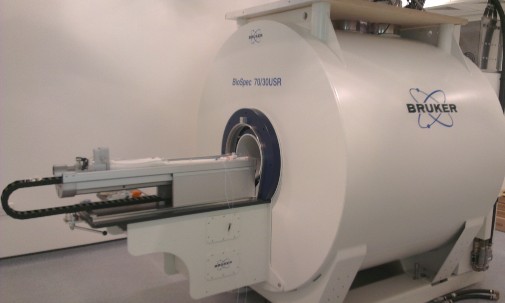
Professor Simon Duckett’s pioneering research develops methods to dramatically improve the quality of pictures associated with medical imaging, in order to help fight diseases like cancer.
He has now been awarded £2.2m from the prestigious Advanced Grant Fund of the European Research Council (ERC) to use molecular catalysis to develop a hyperpolarisation battery.
The interdisciplinary team aims to use magnetic resonance imaging (MRI) to detect diseases.
Dramatic improvements
The project - called Magnify - will seek to make such chemicals more visible to both MRI scanners and nuclear magnetic resonance spectrometers (the chemist's version of an MRI scanner).
Professor Duckett, who is the Director of York’s Centre for Hyperpolarisation in Magnetic Resonance said: "Magnetic Resonance (MR) is used very widely to characterise materials and - through Magnetic Resonance Imaging (MRI) - to diagnose disease. Unfortunately both these methods are very costly and suffer from low sensitivity. We will use molecular catalysis to develop a hyperpolarisation battery in order to power dramatic improvements in their operation."
"By improving our ability to analyse chemical systems we will create opportunities to optimise chemical transformations and thereby create more environmentally friendly outcomes, whilst simultaneously creating methods that improve our ability to diagnose disease."