York picks up International Collaboration of the Year at prestigious THE awards
Posted on Friday 18 November 2022
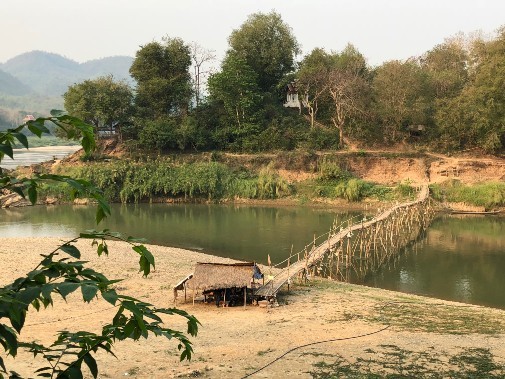
The Global Monitoring of Pharmaceuticals Project is led by Dr John Wilkinson and Professor Alistair Boxall from the Department of Environment and Geography and involves 127 people across 87 institutions located across all 7 continents of the world.
The project established the Global Monitoring Consortium which aims to better understand the distribution and impacts of pharmaceuticals in the aquatic environment.
The researchers faced significant challenges to collecting water from rivers located on all seven continents at more than 1,000 locations scattered across 104 countries.
Global rivers
The project uncovered the ‘pharmaceutical fingerprint’ of about half a billion people worldwide and produced transformative scientific findings.
One study looked at 258 rivers across the globe, including the Thames in London and the Amazon in Brazil, to measure the presence of 61 pharmaceuticals, such as carbamazepine, metformin and caffeine.
The researchers studied rivers in over half of the world’s countries - with rivers in 36 of these countries having never previously been monitored for pharmaceuticals.
Oscars of HE
Other key findings include:
- pharmaceutical pollution is contaminating water on every continent
- strong correlations between the socioeconomic status of a country and higher pollution of pharmaceuticals in its rivers (with lower-middle income nations the most polluted)
- high levels of pharmaceutical pollution was most positively associated with regions of high median age as well as high local unemployment and poverty rates
- the most polluted countries and regions of the world are the ones that have been researched the least (namely sub-saharan Africa, South America and parts of southern Asia)
- the activities most associated with the highest levels of pharmaceutical pollution included rubbish dumping along river banks, inadequate wastewater infrastructure and pharmaceutical manufacturing, and the dumping of the contents of residential septic tanks into rivers.
Known as the ‘Oscars of higher education,’ the award ceremony took place in London on 17 November, attended by leading figures from the HE sector.
Collaboration
Dr Wilkinson said: “This represents a truly collaborative undertaking on a global scale. We worked with partners on every continent of the planet to bring together the most global and largest view of medicinal pollutants in the world to date. I’d like to thank all of our partners around the world and we, as a global consortium, look forward to pushing the science even further in years to come.”
The Global Monitoring Consortium is still intact with several follow-on projects either underway or planned.
The researchers say the power of a truly global consortium means scientists can adapt methods as analytical techniques advance to study the most pressing questions affecting global society.
The University was shortlisted in three categories at the Awards: International Collaboration of the Year, Outstanding Support for Students and Outstanding Technician of the Year.