Ground-breaking trial prevents loneliness among older people during Covid pandemic
Posted on Tuesday 12 October 2021
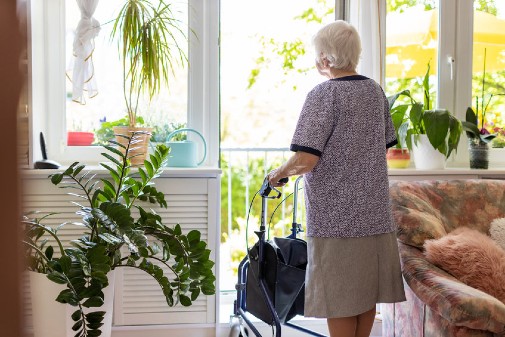
People were contacted weekly and were encouraged to maintain their social contacts and to stick to a daily schedule, which included both routine and enjoyable activities.
The intervention developed in the BASIL-C19 (Behavioural Activation in Social Isolation) study lasted for eight weeks and was designed in partnership with older people who had direct experience of social isolation, loneliness and depression during the pandemic.
Loneliness
The pandemic, and the restrictions that were imposed, has highlighted the importance of good mental health and social connection. Research conducted before the pandemic struck identified 1.4million older adults in England as experiencing significant loneliness with impacts on their mental health. Research since the pandemic shows that rates of loneliness and depression have increased, particularly for those who were self-isolating.
A team of leading researchers and clinicians anticipated the impacts of the pandemic on mental health and re-focussed their research expertise to examine the psychological impact of enforced isolation, disruption to daily routines, loss of social contact and loneliness.
The team included academics from the universities of York, including Hull York Medical School, Leeds, Keele and Manchester, and Tees, Esk and Wear Valleys (TEWV) NHS Foundation Trust, in partnership with leading charity, AgeUK.
They designed a very brief telephone delivered intervention to combat depression and loneliness. Older people appreciated the offer of telephone contact and they found the intervention to be helpful in maintaining daily routines and social contact.
Depression
The preliminary results have now been published in the leading journal PLOS Medicine. The research team found that there was evidence of improved mental health, and a strong indication that rates of loneliness are reduced substantially in the first three months. Building on these exciting early results, a much larger trial follow-on trial is currently recruiting at over 12 sites across England and Wales. The study will include over 600 older people and is the largest study ever undertaken to tackle loneliness and depression in this way.
The study was led from York by Professor Simon Gilbody, Director of the Mental Health & Addictions Research Group (MHARG) at the University of York and Hull York Medical School, and Professor David Ekers, Clinical Director for research and development at TEWV NHS Foundation Trust and Honorary Professor at the University of York.
Professor Gilbody said: “Our University-NHS partnership was ideally placed to respond to societal challenges of COVID-19.
“Older people and those with long term conditions entered enforced isolation, and this was very disruptive to people’s lives.
“We predicted increased rates of loneliness and depression for this vulnerable population, and we knew what might work to prevent this. Care in the NHS must be informed by the highest quality of evidence and we did not waste any time in deciding to set up a clinical trial to test this out.
“The research undertaken in the NHS is acknowledged to be world-leading in terms of its scale, rigour and impact. The NHS has led the way in understanding how best to respond to the pandemic.
“The first results of the pilot trial are now available, and there is now emerging evidence that it is possible to prevent loneliness and potentially improve mental health.”
Isolation
Professor Carolyn Chew-Graham, a GP and leading researcher in the mental health of older people, based at Keele University added: “COVID-19 has unfortunately impacted on the mental health of older people. We know that social isolation can cause people to suffer from loneliness, low mood and anxiety. In this study, we tested how we can maintain older people’s mental health during this difficult time.”
Professor David Ekers added: “We have been researching in this area for the past 10 years, and we are ideally placed to help establish ‘what works’ in maintaining good mental health during the lockdown.
“This represents a great alliance between the Universities and the NHS to address the major challenges posed by COVID. Even as restrictions are lifted, many people remain socially isolated. The results of our research programme will be useful in the future in tackling the epidemic of loneliness.’’
Watch Professor Gilbody discuss the results: