York scientists take global fight against pharmaceutical pollution to landmark UN summit
Posted on Monday 16 November 2026
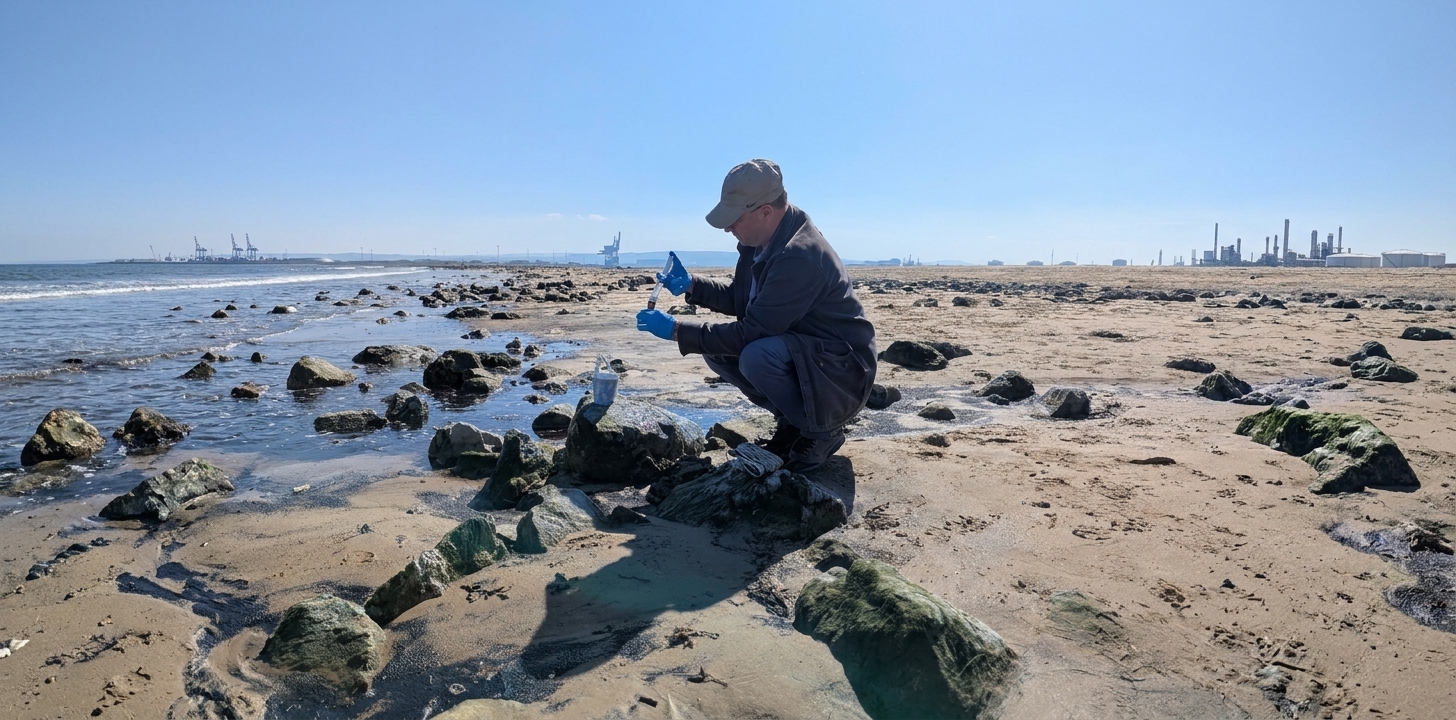
Working alongside partners at the City University of Hong Kong, the York team will present landmark global monitoring data - spanning more than 2,000 sites across 100 countries - at the first International Conference of the Global Framework on Chemicals (16–20 November).
Prevent harm
This is the first meeting of the International Conference of the Global Framework on Chemicals, the global agreement adopted in 2023 to prevent harm from chemicals and waste.
The University of York and City University of Hong Kong lead a worldwide network of more than 220 partner organisations that have measured pharmaceuticals in rivers and estuaries on every continent as part of the Global Pharmaceutical Monitoring Project and the Global Estuaries Monitoring Programme under the UN Decade of the Ocean Sciences for Sustainable Development.
Throughout the week the team from York and Hong Kong will run an exhibition stand showing where pharmaceuticals have been found, which medicines pose the greatest risks, and what can be done about them. Visitors to the stand will be able to explore the data collected using an interactive world map and pick up information sheets for their own country, available in more than 50 languages.
On the Spotlight Stage, the team will host The Big Water Quiz: Pharmaceuticals from Source to Sea'. In this interactive quiz, delegates will be able to test their knowledge against the findings of the global study and learn about the issue in a fun and informative way.
Global problem
Professor Alistair Boxall, from the University of York's Department of Environment and Geography, said: "Pharmaceutical pollution is a global problem that no country can solve alone.
“This conference is the moment to place the problem on the international agenda to catalyze action to bring concentrations of pharmaceuticals in the environment down to levels that are safe for humans and the planet"
Professor Kenneth Leung, from City University of Hong Kong’s State Key Laboratory of Marine Environmental Health, said: “This is a rare international collaboration on this scale, using the same methods to collect and analyse samples worldwide. The results show where pharmaceutical pollution is occurring, where the hotspots are and which contaminants are of greatest concern – much like a thorough health check that identifies problems so they can be treated.”
At the conference, the team will promote two papers published earlier this year that set out how the world can keep the benefits of medicines while cutting their harm to nature.
The first, in Environmental Science & Technology, sets out a framework for an "Environmentally Safe and Just Pharmacy" (Boxall et al. 2026). Written by 13 experts from around the world, it sets four criteria and 12 sub-criteria that need to be met for the pharmaceutical life cycle to be safe for the planet. It finds current practice only partly or poorly aligns with the criteria.
The second, in npj Emerging Contaminants, turns this into action (Boxall 2026). It sets out nine management solutions spanning drug design, regulation, manufacturing, prescribing, agriculture, and waste and wastewater treatment. Six cross-cutting actions support them, with measurable milestones for 2030, 2040 and 2050.
The University of York and Health Care Without Harm jointly nominated "Pharmaceutical pollution and its effects on human health and the environment" as a new Issue of Concern under the Global Framework. It is one of four new nominations that governments will consider in Geneva (UNEP).
Responsible use
If it is adopted, countries and other stakeholders would commit to coordinated international action on the problem. This could include monitoring, better management of manufacturing and wastewater, and more responsible use and disposal of medicines.
The case rests on the Global Pharmaceutical Monitoring Project, one of the largest studies of its kind. It brings together the global river survey led by York and the Global Estuaries Monitoring Programme led by City University of Hong Kong. Between them, these studies cover 2,135 sites on 370 rivers and estuaries in more than 100 countries.
The areas sampled are home to about a billion people.
- At least one pharmaceutical was found at 90% of sites.
- The anti-epilepsy drug carbamazepine was the most widespread, found at 77% of sites.
- At 30% of sites, at least one compound was above a level considered safe for aquatic life.
- At 15% of sites, antibiotics were at levels that could encourage antimicrobial resistance.
- The most contaminated rivers and estuaries were mainly in low- and middle-income countries, where wastewater treatment is limited.
The data can be explored at globalpharms.org and globalestuaries.org.