University donates medical equipment and food to support NHS
Posted on Monday 23 March 2020
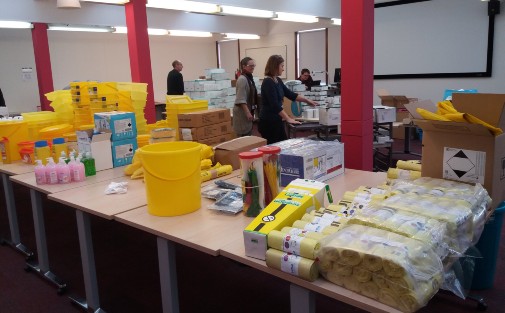
Items included surgical masks, waste disposal bags, cable ties, clinical waste disposal bags, sharp disposal boxes, disposable gloves and sterile needles.
PhD student Andy Langley from the Department of Archaeology initiated the collection from departments of Archaeology, Environment and Geography, Biology, Chemistry, Physics and Electronic Engineering.
The donated items were sent to local NHS providers, including York Hospital.
Food from University catering outlets was also collected and donated to the hospital.
Difficult time
Professor Nicky Milner, head of the Department of Archaeology, said: “I'm so pleased that departments across the University have been able to provide important resources for the NHS at this difficult time.
“Thanks to a brilliant team of technicians and students we have been able to gather items together very quickly and get them to where they need to be.
“We should all be doing everything we can to help support our NHS right now.”
Pull together
Professor Duncan Bruce, head of the Department of Chemistry, added: “It has been fantastic to be able to help out. This shows what can be done when people are prepared to pull together - supporting the NHS and all those charged with caring for us is so important. Well done to all who made this possible.”
Our response to the coronavirus pandemic
We’re working with partners across the region to help support those most in need during the coronavirus (Covid-19) pandemic. Find out more about our civic mission and what we’re doing to help