Scientists map out how to protect third of the world’s oceans by 2030
Posted on Thursday 4 April 2019
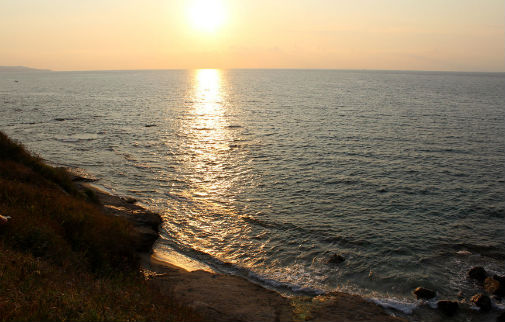
The research explores what it would mean to fully protect 30% and 50% of the global oceans. These targets have been widely discussed as part of negotiations at the UN towards a Global Ocean Treaty to protect oceans outside of national borders, covering 230 million square kilometres.
In one of the largest studies of its kind, researchers broke down the global oceans – which cover almost half the planet – into 25,000 squares of 100x100 km. They then mapped the distribution of 458 different conservation features, including wildlife, habitats and key oceanographic features, generating hundreds of scenarios for what a planet-wide network of ocean sanctuaries, free from harmful human activity, could look like.
The team, which included researchers at the University of York, the University of Oxford, and Greenpeace, showed that targets could be achieved by employing a network of marine reserves across the high seas to protect wildlife hotspots.
Net of protection
Professor Callum Roberts, marine conservation biologist at the University of York's Department of Environment and Geography, said: "Extraordinary losses of seabirds, turtles, sharks and marine mammals reveal a broken governance system that governments at the United Nations must urgently fix.
"This report shows how protected areas could be rolled out across international waters to create a net of protection that will help save species from extinction and help them survive in our fast-changing world.”
Scientists warn that global oceans are at risk from fishing, the emerging threat of deep seabed mining, climate change warming the seas, and other pollution, such as plastic waste.
Unique opportunity
Louisa Casson, Greenpeace UK campaigner, said: "Over the next 18 months, governments around the world have an unique opportunity to establish a global framework for protecting the oceans.
"By working together they can facilitate the protection of 30% of the world's oceans by 2030, via a network of fully protected ocean sanctuaries."
Working together
The scenarios for protection are explored in the report can be viewed using an interactive map.
UK Environment Secretary, Michael Gove, said: “The UK is already on course to protect over half of its waters, and I join Greenpeace in calling for the UK and other countries to work together towards a UN High Seas Treaty that would pave the way to protect at least 30 per cent of the world’s ocean by 2030.”