How much should we spend on the NHS?
Posted on Thursday 14 June 2018
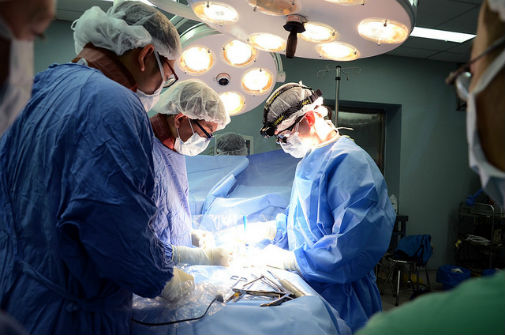
The academics argue NHS expenditure is essentially a political choice
Debate about the ‘right’ amount to spend on the NHS has recurred regularly over the past 70 years.
Professor Karen Bloor, Research Champion for Health and Wellbeing at the University of York and Anita Charlesworth, Director of research and economics at The Health Foundation, debate the issues in an analysis piece for the BMJ.
Spending
The UK currently spends around 10% of its gross domestic product (GDP) on health, which is broadly in line with other European countries and double the proportion of spending when the NHS was founded in 1948.
However, in terms of tangible resources, the UK compares poorly, with below average numbers of doctors, nurses, hospital beds, MRI machines, and CT scanners per head than many of our European neighbours. Measures of process, such as waiting times, have been falling recently, particularly since 2013.
Metrics to determine the ‘right’ amount of funding can focus on inputs (eg, comparing spending with other countries), processes (eg, waiting times), and outcomes (eg, life expectancy).
By any measure, over 70 years the NHS has succeeded in the core objectives at its creation: financial protection and equity of access to care, they say.
Constraints
Some of the current pressures on the NHS and other systems around the world “are a product of the success of healthcare,” they add, while Brexit “is likely to cause further resource constraints, particularly in terms of staff.”
NHS expenditure is essentially a political choice, they write. But regardless of political trends or economic circumstances, public support for the founding principles of the NHS remains high.
And despite recurring debate about the need for a hypothecated (earmarked) “NHS tax,” they believe that general taxation “remains the most efficient and equitable way of generating NHS funds.”