Prestigious Breakthrough Prize awarded to York graduate
Posted on Thursday 11 January 2018
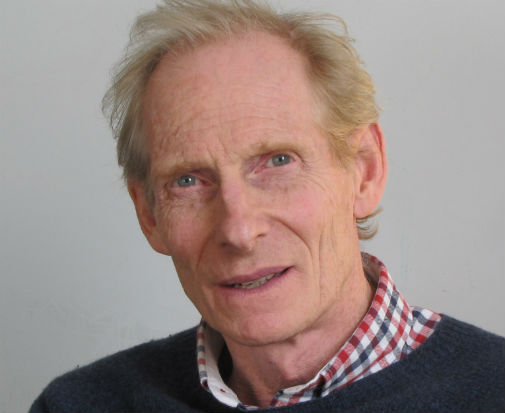
Kim Nasmyth graduated from York in 1974
Kim Nasmyth studied biology at York and graduated in 1974. He received an honorary degree from York in 2003.
He is currently a professor of biochemistry at the University of Oxford and former postdoctoral researcher at the University of Washington.
His scientific work has addressed the mechanisms by which genes are turned on and off during development, how DNA replication is controlled, and how chromosomes ensure their segregation during mitosis and meiosis.
Discovery
Professor Nasmyth co-discovered cohesin, a protein complex crucial for faithful chromosome segregation during cell division.
He recently received the Breakthrough Prize during a star-studded awards show in Silicon Valley, hosted by Morgan Freeman.
According to the prize citation, Professor Nasmyth was honoured “for elucidating the sophisticated mechanism that mediates the perilous separation of duplicated chromosomes during cell division and thereby prevents genetic diseases such as cancer.”
Exploring
Professor Nasmyth said: “Napoleon supposedly said that he would prefer a lucky general to a good one.
“My first luck was the set of chromosomes that I inherited from my parents, not to mention their contributions to my intellectual development.
“I was fortunate to be so bad at writing essays at school that I had to drop my favourite subject, history, and was driven into the arms of science.”
“York gave me the freedom to explore intellectually independently of the syllabus. Meanwhile, Simon Hardy in particular taught me the power of molecular genetics that proved so vital throughout my research career."
Outstanding
Founded in 2013, the Breakthrough Prizes honour scientists for outstanding discoveries in the life sciences, physics and mathematics. The five recipients of the life sciences prize will each receive $3 million.
In addition to Professor Nasmyth, the 2018 recipients for the life sciences include:
- Joanne Chory of the Salk Institute for Biological Studies and the Howard Hughes Medical Institute “for discovering how plants optimize their growth, development, and cellular structure to transform sunlight into chemical energy.”
- Don W. Cleveland of the University of California, San Diego “for elucidating the molecular pathogenesis of a type of inherited ALS, including the role of glia in neurodegeneration, and for establishing antisense oligonucleotide therapy in animal models of ALS and Huntington disease.”
- Kazutoshi Mori of Kyoto University and Peter Walter of both the University of California, San Francisco and the Howard Hughes Medical Institute “for elucidating the unfolded protein response, a cellular quality-control system that detects disease-causing unfolded proteins and directs cells to take corrective measures.”