York researchers named as finalists in Royal Society of Chemistry Emerging Technologies Competition
Posted on Wednesday 11 June 2014
Centre Director, Professor James Clark, and Principal Scientist, Dr Vitaliy Budarin, will attend the competition final at the Royal Society of Chemistry’s London headquarters on Piccadilly on 25 June – where they will pitch their research ‘Dragon’s Den’ style to commercial experts from renowned scientific multinational companies.
They will battle against 19 other teams to win the top prize of one-to-one mentoring from the competition’s multinational partners and £10,000 prize money – to be presented to the winners by the BBC’s ‘Dragon’s Den’ judge, Richard Farleigh.
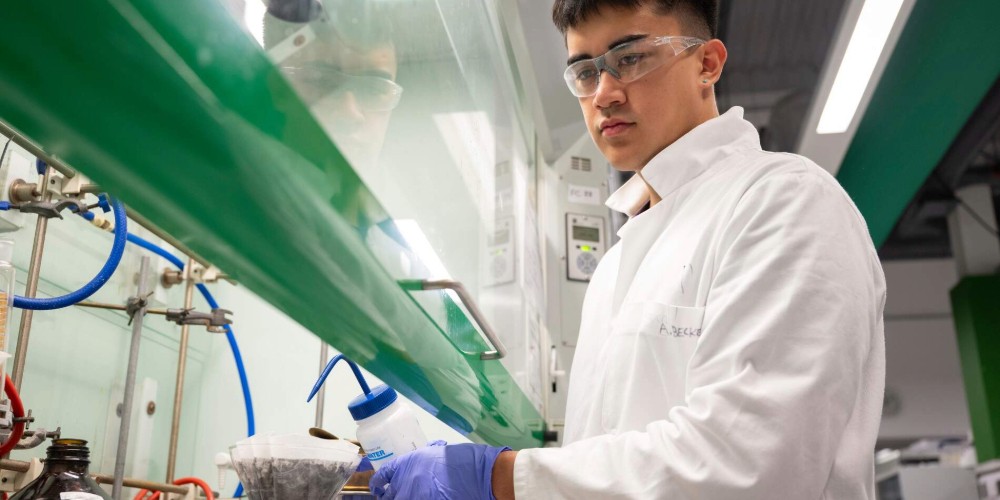
The Green Chemistry Centre has developed a patented, low-temperature microwave technology that enables the conversion of many types of biomass into high value chemicals, energy products and materials.
Dr Aurora Antemir, the Royal Society of Chemistry’s industry programme manager said: “The process of translating a scientific innovation into a product or service that creates value, or that customers will pay for, is difficult.
“The Royal Society of Chemistry recognises the potential of innovators in the chemical sciences to contribute to economic growth in the UK. But we also recognise that it is really hard for innovators to make that jump from the lab bench to market because they don’t have the commercial know-how.
“That is why we set up the Emerging Technologies Competition – to connect the brightest ideas in the chemical sciences with commercial expertise in large multinational companies and to the right business networks to make technologies that have big potential more investment-ready.”
Professor Clark said: “We are delighted that the Royal Society of Chemistry judges have seen the potential in what we believe is a game-changing clean technology in the conversion of waste to valuable chemicals.”
Julian Sturdy, MP for York Outer, said: “It is fantastic news that researchers from the University of York are finalists in the Royal Society of Chemistry’s Emerging Technologies Competition. I am delighted to see local scientific innovation and talent being recognised at a national level and hope to see them do well at the competition final.”
As well as mentoring and cash prizes, the Emerging Technologies Competition winners will benefit from a package of free advertising and access to investor networks.
Further information
- The Royal Society of Chemistry organises the Emerging Technologies Competition to identify and showcase the latest technologies in the chemical sciences with significant potential impact for the UK economy. Winning companies and researchers receive ongoing, one-to-one mentoring from renowned multinational companies, a cash prize up to £10,000 and a further package of benefits to help them transfer their promising technologies into commercial reality.
- The Royal Society of Chemistry is the world’s leading chemistry community, advancing excellence in the chemical sciences. With over 49,000 members and a knowledge business that spans the globe, we are the UK’s professional body for chemical scientists; a not-for-profit organisation with 170 years of history and an international vision of the future. We promote, support and celebrate chemistry. We work to shape the future of the chemical sciences – for the benefit of science and humanity. www.rsc.org
- More on the University of York’s Green Chemistry Centre of Excellence at www.york.ac.uk/chemistry/research/green/