Meet us
Meet us online or on campus


Ask questions about how language develops, or how it is produced and understood in real time, through a detailed, interdisciplinary research project.
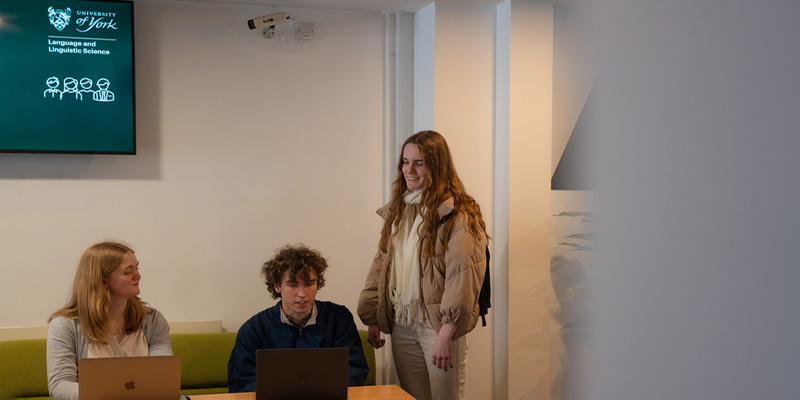
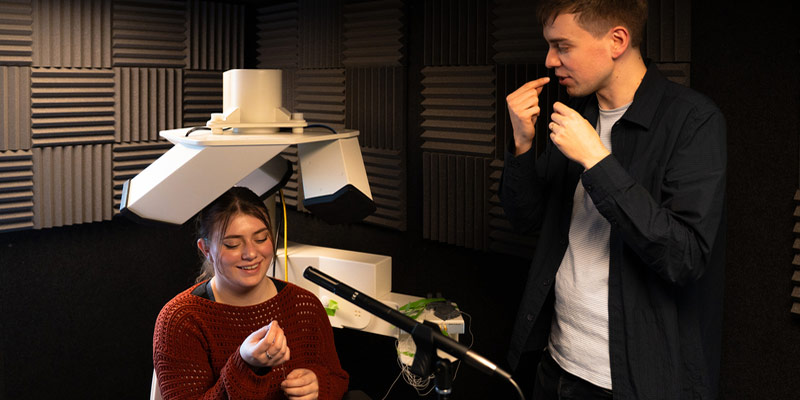
You'll usually work with two supervisors who have expertise in your research topic. You'll meet with them regularly and be supported to carry out your project. You'll be able to sit on MA and MSc modules without needing to complete assessments. This will develop your skills and knowledge to support your research.
You'll have access to the expertise of the Departments of Language and Linguistic Science, Psychology and Education. In your first year, your supervisors will work with you to create a bespoke programme of study, drawing on the expertise of all three departments. These can include psycholinguistic research methods, data science and a range of advanced discipline-specific modules.
You'll also benefit from the rich array of research and training sessions at the Humanities Research Centre.

This course is run by the Department of Language and Linguistic Science.
You'll be based in Vanbrugh College on Campus West.
Our research degrees will equip you with the advanced technical skills needed to make a meaningful contribution to the field of linguistics. You'll gain key skills including use of specialist software, data management and data analysis.
Our dedicated careers team offer specific support including a programme of professional researcher development and careers workshops and 1:1 career support sessions. They will help you to build up your employability portfolio and to engage in activities that will build up your skills and experience within and outside your research work.

You'll need a first class or 2:1 undergraduate degree, as well as a Masters degree in a relevant subject.
We'll also take other relevant experience and expertise into account. You're welcome to include a narrative of any relevant life experiences in your personal statement. For example, you could tell us about caring responsibilities, career breaks, barriers you have faced, or belonging to an under-represented group.
If English is not your first language, you must provide evidence of your ability.
Check your English language requirements
Apply for Psycholinguistics (PhD)
You'll need to submit a 1,500-2,500 word research proposal that includes the background and motivation for your proposed research, as well as information about how you will collect and analyse the data. Include a proposed timetable and information about your training needs, too.
You should also write about how your project fits within the research interests of the psycholinguistics community at York and identify at least one potential research supervisors from Language and Linguistic Science, Education or Psychology. Please email linguistics-pg-admissions@york.ac.uk if you'd like to informally discuss your proposal before submitting.
Have a look at the supporting documents you may need for your application.
Find out more about how to apply.