
Opening the door to planning for later life: Using the Care Confidence website
“Care Confidence often opens doors to those conversations quite early on, even though they don't have care needs at that point, especially in terms of how finances work around social care.” (Social worker)
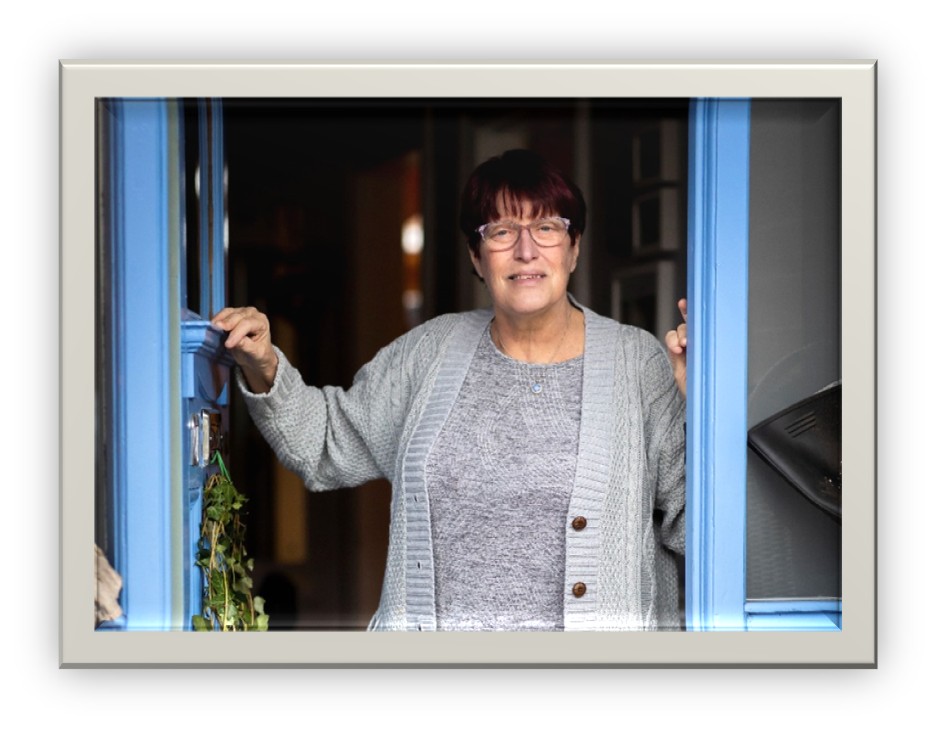
Most of us in later life want to stay at home.
Social care can be a crucial part of this. However, many people only think about care and support when there is a crisis.[1]
We know that early conversations, planning ahead and thinking about how to prevent needs help people to stay where they want, doing the things they want, for longer.
But there is a huge barrier to this: uncertainty.
Uncertainty holds people back from planning for care needs in later life, even when these are likely, for example because of a health problem. This uncertainty covers lack of confidence about having the skills to plan, lack of confidence about knowing what to plan, and lack of confidence even to think about what might happen.[2]
What is needed, instead of uncertainty, is confidence. People plan ahead when they have trusted information, a structure to help them, realistic information, and a constructive way of thinking about the future. This is exactly what Care Confidence provides.[3]
Care Confidence is a free website that supports decision making for people planning and paying for social care in later life. It was developed with people in that situation and follows a structured approach to thinking about care options and money, so they can make a clear plan of action.
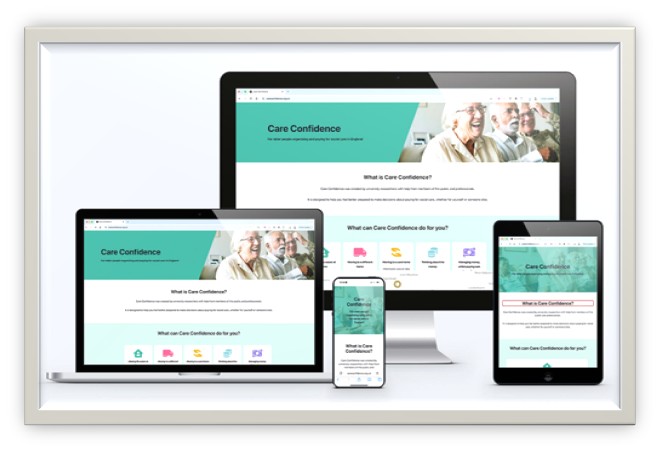
Research to embed Care Confidence into services:
Recently, Care Confidence has been incorporated into information services provided by three local authorities and a dementia charity.[4] This is part of an NIHR School for Social Care Research funded project designed to ensure that anyone who could benefit from Care Confidence has the opportunity to do so. Some interesting learning is already being reported:
- Practitioners are identifying real opportunities to help self-funders plan ahead, think about contingencies and prevent crisis, using Care Confidence to structure those conversations.
- People are making most use of the Care Confidence section on Making life easier at home. This could reflect a desire to know what will help them to keep the life they love as long as possible. The section covers technology, equipment, adaptations and care, along with costs. It gives real-life example from someone who has been through the experience.
“Care Confidence is planning, it's preparation, it's equipment…it is a really good preventative piece, isn't it?.” (Service Manager)
What does Care Confidence offer?
The value of Care Confidence comes from having somewhere reliable to start. Too often people’s experience has been knowing they need to plan but not knowing how to do this. Care Confidence aims to break that uncertainty and open the door to planning.
“And what I would say is…in terms of those people who just want that kind of advice around care and support options, it's working really well.” (Social worker)
The tool could help:
- People approaching, or in, later life to think about what they will need
- Carers and families to have the conversations that matter
- Organisations[5] that provide advice, as a trusted tool to help people make sense of social care.
Using Care Confidence early could help avoid the kind of crisis that makes good planning so difficult.
And reducing that uncertainty will help people feel better about the future.
References
[1] https://swopresearch.wordpress.com/wp-content/uploads/2024/01/swop-report-a4-final-report.pdf
[2] https://www.cambridge.org/core/journals/ageing-and-society/article/role-of-uncertainty-in-planning-for-selffunded-social-care-for-older-people-with-a-diagnosis-of-dementia/8884A7D37CCF362F5D5DA093DF11BD93
[3] https://swopresearch.wordpress.com/2024/10/07/navigation-capital-how-social-workers-can-guide-older-people-with-dementia-through-the-social-care-maze/
[4] https://sscr.nihr.ac.uk/wp-content/uploads/2025/12/BLOG-Building-confidence-How-Care-Confidence-can-plug-the-advice-gap-December-2025.pdf
[5] Free training resources for staff interested in using Care Confidence are available here https://www.york.ac.uk/business-society/research/spsw/care-confidence-in-action/care-confidence-training-resources/
For more information about Care Confidence contact sbs-care-confidence@york.ac.uk