Skip to content Accessibility statement

Investigating the CO₂ concentrating mechanism in diverse algal lineages

Context 

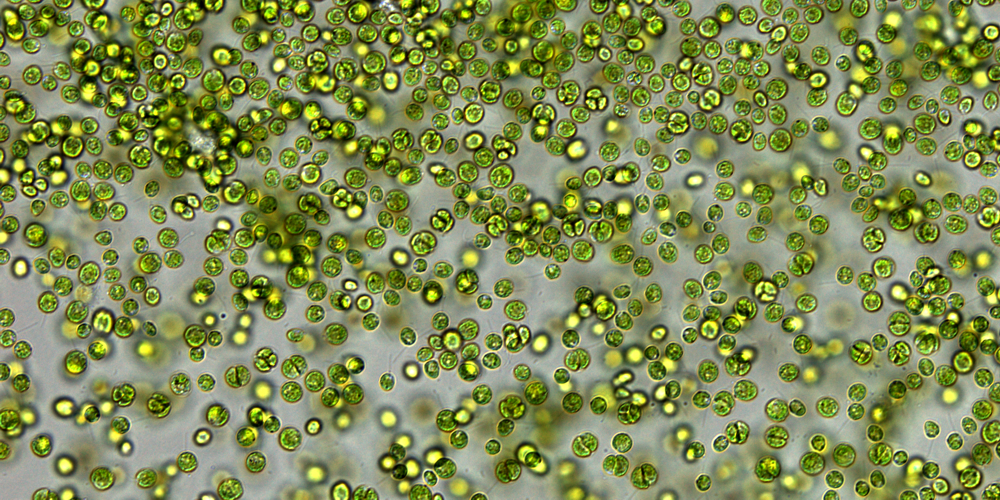
Eukaryotic algae are responsible for up to 30% of all global photosynthesis, the process whereby light and CO2 are converted into O2 and chemical energy, in the form of sugars. This process provides energy for the bottom of the global food web, produces the O2 we breathe and plays an important role in removing the greenhouse gas CO2 from the atmosphere. Algae have evolved a mechanism to boost their photosynthesis making it very efficient, this mechanism is known as the CO2 concentrating mechanism (CCM). 

The research

We study the CCM in diverse algal systems, including the laboratory model green algae Chlamydomonas reinhardtii and brown macroalga Ectocarpus. Our current research is focussed on mediators of inorganic carbon transport, including bicarbonate channels and carbonic anhydrases. We are also exploring the protein contents of the Rubisco-rich pyrenoid, the central component to many algal CCMs. 

Publications

From algae to plants: understanding pyrenoid-based CO2-concentrating mechanisms 

Bestrophin-like protein 4 is involved in photosynthetic acclimation to light fluctuations in Chlamydomonas

Featured researcher

Charlotte Walker

Dr Walker's research focuses on algal biology and biotechnology, in particular on how algae utilise inorganic carbon, through physiological mechanisms such a photosynthesis or biomineralisation.
View profile

Featured researcher

Luke Mackinder

Professor Mackinder's research focuses on understanding the molecular basis of carbon fixation in algae and cyanobacteria. 

View profile