Skip to content Accessibility statement

The hat-trick flies

Engineering biology for sustainable waste, food, and biomanufacturing systems

Sustaining a global population of more than 8 billion people—projected to exceed 10 billion by the mid-2080s—will require robust systems for waste management, food and feed production, and the biomanufacturing of recombinant proteins for biotechnology, research, and healthcare. Black soldier flies offer a unique “hat-trick” potential to contribute to all three areas in a more sustainable manner. They can process waste with lower greenhouse-gas emissions, and they can upcycle organic waste into feed, food, and recombinant proteins (when coupled with genetic engineering technologies), reducing dependence on traditional raw-material- and energy-intensive methods.

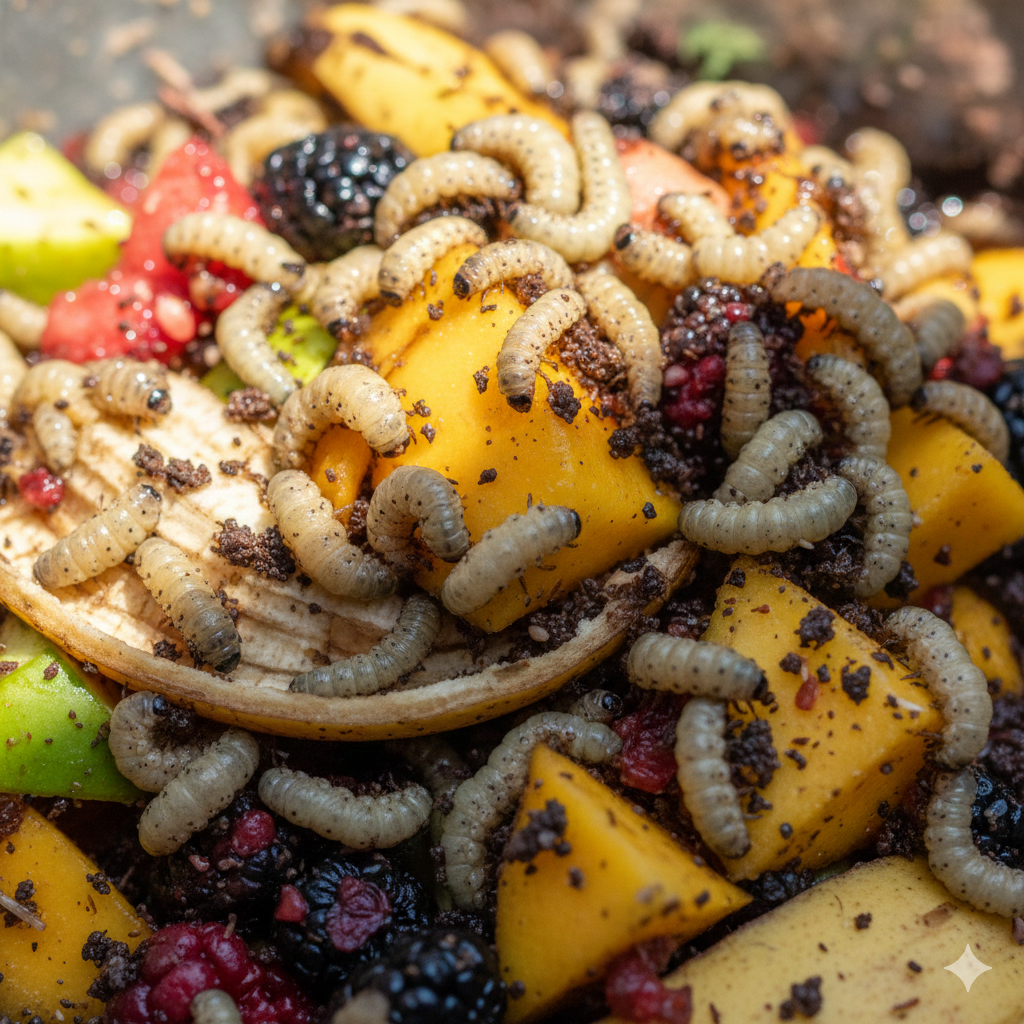
Black soldier fly larvae naturally convert organic waste into biomass rich in lipids and proteins. Advances in genetic engineering now make it possible to enhance multiple aspects of this bioconversion process and to enable larvae to produce recombinant proteins, effectively transforming them into “living bioreactors” that use organic waste as a feedstock.

Although the technology is feasible and likely to generate positive impacts, its exact benefits for current waste-management systems, food and feed production, and recombinant-protein biomanufacturing remain unclear.

Aims and Objectives

This project establishes a new interdisciplinary collaboration that integrates engineering biology, waste-supply-chain management, sustainable consumption and production, and policy engagement to:

  1. quantify the potential improvements enabled by genetically modified black soldier fly larvae, and 
  2. examine the requirements for building a viable business case, embedding the technology within existing supply chains, and aligning it with broader policy frameworks.
Principal and Co-Investigators

Principal Investigator

Dr Joshua Ang, Department of Biology

Co-Investigators

Prof Melanie Kreye, School for Business and Society

Dr Jonathan Green, Stockholm Environment Institute

Prof Luke Alphey, Department of Biology