
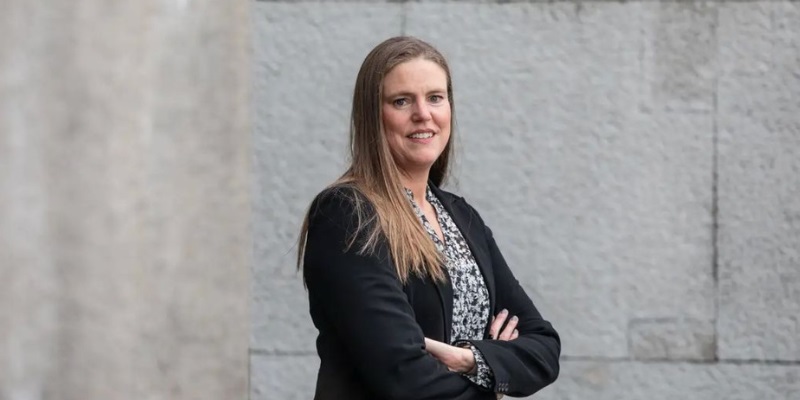
Prof Rowena Jacobs steps down as I@Y Academic Director
After eight years as Involvement@York’s (I@Y) Academic Director, Professor Rowena Jacobs is stepping down from the role to be replaced by the University’s first Faculty Champions for Public Involvement & Participatory Research.
How it started
Rowena described herself as a ‘Sceptical economist’ when it came to patient and public involvement (PPI) in research.
“My research focuses on mental health and big data – large administrative linked datasets, with millions of observations, utilising quantitative econometric modelling. I rather naively couldn’t see how people with Serious Mental Illness (SMI), such as schizophrenia or bipolar disorder, could meaningfully contribute and get involved in economic research like this.
“For my first National Institute of Health & Social Care Research (NIHR) grant on SMI, PPI was not strictly required. In a follow-up grant, I started to include PPI on the project’s steering group, and it opened my eyes to the contribution and value that involving patients with SMI could make. By the end of the grant these individuals had become fully fledged members of the research team, helping to prioritise research areas and design research questions for the third grant. I involved them as public co-applicants for this one (Co-Is), where they undertook parts of the research process with us, such as systematic reviews, interpreting findings, contributing authors to article writing, and disseminating research through attending and speaking at conferences. One of the PPI team members was so inspired by research, they went on to get a PhD themselves which was so rewarding.
“I started to coordinate PPI in research within the Centre for Health Economics (CHE) and across other health departments, and uncovered pockets of good PPI practice across the University. Seeing that there was an appetite, it made sense to try and coordinate PPI at an institutional level rather than individuals always reinventing the PPI wheel. And thus Involvement@York (I@Y) was born! The first of its kind, centrally located in professional services, rather than within an academic department within a University.”
I@Y started as a research capacity building initiative in 2018, with the aim to strengthen the University of York’s public involvement in health and social care research. Over the next few years, under the leadership of Rowena, I@Y would operate as a ‘pilot’ with advisory support provided by an interdisciplinary steering group of senior academics, external partner representatives and patients and the public.
Reflecting on the impact and influence Rowena has had, Sue Rees, a public contributor who was a member of the I@Y steering group at the outset, and a longstanding member of the I@Y Register, said:
“Public and patients having ideas and contributing within academia, especially where research coincided with lived experience, was a novel concept within the University of York. With the creation of I@Y Prof. Rowena Jacobs championed public and patient involvement within the University’s research from the outset. I have been delighted to be part of the I@Y journey. The range of opportunities that are now available come from most of the faculties within the University providing real solutions for real problems. Thank you, Prof. Jacobs.”
How it’s going
I@Y is now a designated, cross-faculty initiative supporting all academic disciplines at the University. We have found there is increasing internal demand for support at the University of York. There is also external expectation from a wider range of research funders than ever before that evidence of meaningful, and fully-costed public involvement is included and described in research grant applications and evidenced across the life cycle of research projects.
Successes under Rowena’s directorship include:
- Supported £13M in new research income grant capture;
- Provided support to a range of projects from approx value £5,000 - £6M;
- Supported University of York researchers and teams to apply for funding from a large variety of funding councils, charities and organisations;
- Established mechanisms for cost recovery from grant capture to make I@Y more financially sustainable;
- Recruited the Head of Public Involvement and Participatory Research role to lead I@Y, as well as I@Y project support officers;
- Established an active ‘Register’ community (of 120 members of the public, nationwide, interested in getting involved in research at York);
- Regular praise and positive feedback received from funders, external reviewers, researchers, partners, and members of the public;
- Developed a University wide policy, supporting processes and guidance for paying people who are involved with research, in collaboration with researchers, staff, professional services and public contributors;
- Established a resource library with guidance, templates, and case studies to support researchers;
- The first University to join a national partnership striving for excellence in public involvement in research.
What Rowena leaves behind and where we’re going next
Rowena leaves Involvement@York as an independent, expert, support service for the research community at York. She also leaves I@Y with the first Faculty Champions appointed for Public Involvement & Participatory Research. Supporting both researchers and public in their day to day working relationships, and bringing to life the University’s commitment to meaningful involvement and collaboration with the public across all research activities. For the University as a whole I@Y has become an authoritative voice in ensuring that York’s research is relevant, accountable, and impactful for the public and communities.
We will continue to realise the University’s Research Strategy 2030 ambition “[to] build our research involvement expertise to support inclusive, ethical, compassionate and reciprocal participatory interactions with communities and the public…”, and ensure I@Y is an example of how York is a ‘University for Public Good’, with visible, tangible collaborations with the public in research.