Skip to content Accessibility statement

Our facilities

Our department houses world-class teaching facilities in one central space, creating a vibrant, connected home for our students and staff.

Designed to support both research and teaching, our facilities encourage collaboration and help maintain our excellent reputation for experimental psychology.
A shared space for learning and research

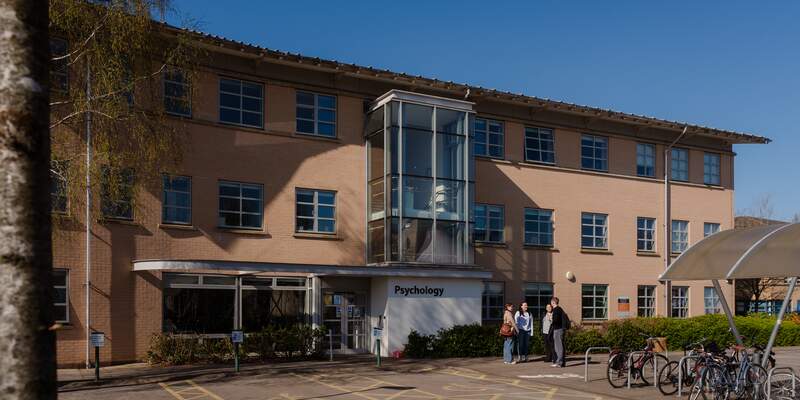
The Department of Psychology is located on Campus West and our teaching spaces, laboratories and specialist equipment are available to students, staff and researchers alike. This shared access ensures a fully integrated academic environment, where teaching and research are closely connected.

Please note that the York Neuroimaging Center is located in the BioCentre on the Science Park.

York Neuroimaging Centre

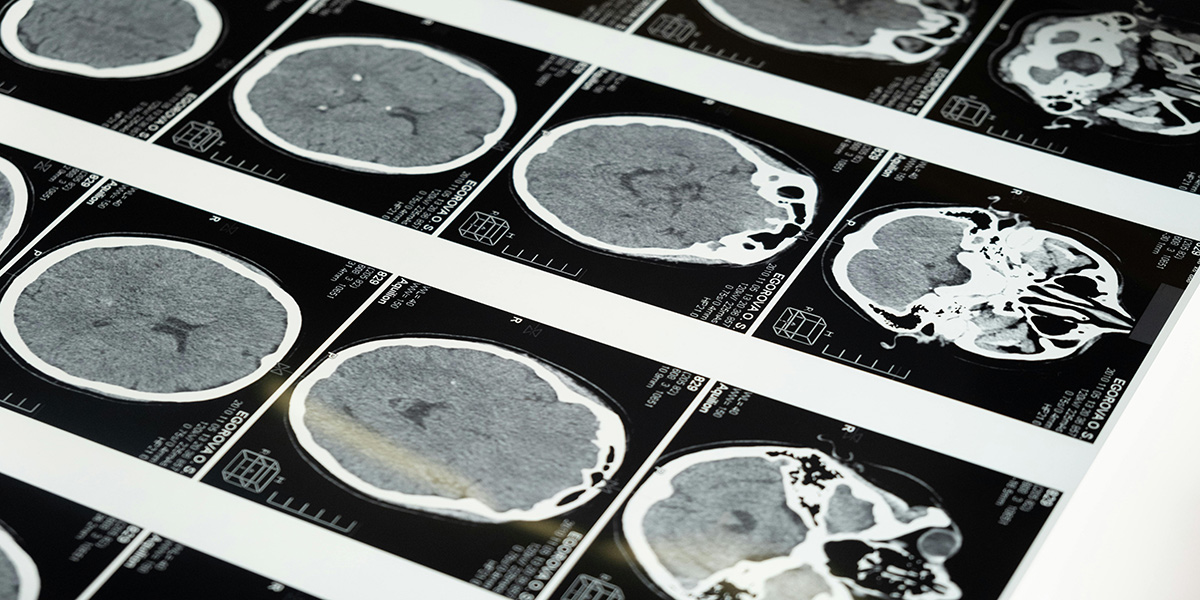
At the York Neuroimaging Centre (YNiC), users gain access to a world-class suite of brain-mapping technologies that provide hands-on experience with advanced neuroimaging methods. This environment supports the development of specialised technical skills and computational expertise that are essential for careers in neuroscience.

As a multidisciplinary hub, YNiC brings together students and researchers, connecting them with leading experts and enabling the direct application of neuroimaging tools to the study of the human brain.

Explore the York Neuroimaging Centre (YNiC)

© John Houlihan

Electroencephalography and Magnoencephalography Labs

High-density MEG and EEG facilities are used to enable the study of brain activity in real time using non-invasive techniques. These facilities provide opportunities to develop practical expertise in analysing neural communication and brain dynamics, supporting advanced training in neural data science and cognitive neuroscience research.

Explore our MEG Lab

Explore our EEG Lab

VR Lab

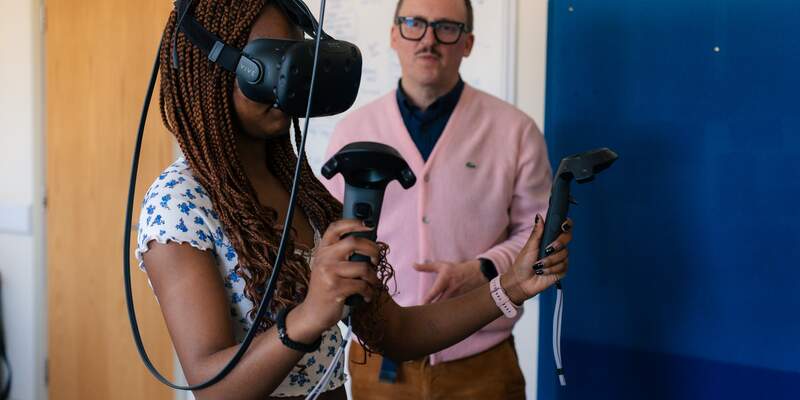
The VR Lab is a state-of-the-art research facility within the Department of Psychology, using immersive virtual environments to investigate how the mind responds to complex, dynamic worlds. By simulating real-time experiences, the lab enables precise study of threat processing, spatial navigation, episodic memory, and the ways in which affect is recalibrated in ambiguous or uncertain environments. This approach allows researchers to bridge tightly controlled experimentation with the richness of real-world behaviour.

Ranked 8th in the UK for research and 2nd for research output quality in the Times Higher Education’s ranking of the latest REF results (2021).
with some of the strongest experimental psychology in the UK.

Transcranial Magnetic Stimulation Lab

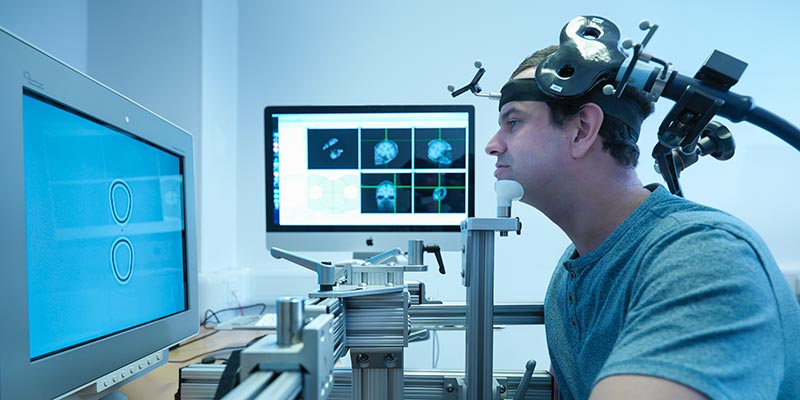
With the Transcranial Magnetic Stimulation (TMS) Lab, researchers are able to move beyond correlational approaches to establish causal relationships between specific brain regions and cognitive functions. The facilities enable the non-invasive mapping of the brain’s functional architecture through electromagnetic induction, which can transiently modulate neural activity and allow its effects on complex processes such as semantic memory and face recognition to be observed.

Explore our TMS Lab

Sleep Language and Memory Lab

The state-of-the-art, three-bedroom sleep laboratory provides a controlled clinical environment for investigating causal relationships between sleep architecture, cognitive consolidation  and long-term health outcomes. Within this setting, researchers are able to deploy a suite of high-fidelity monitoring techniques to capture high-resolution physiological data.

Explore our Sleep Laboratory

Contact us

Department of Psychology