Meet us
Meet us online or on campus

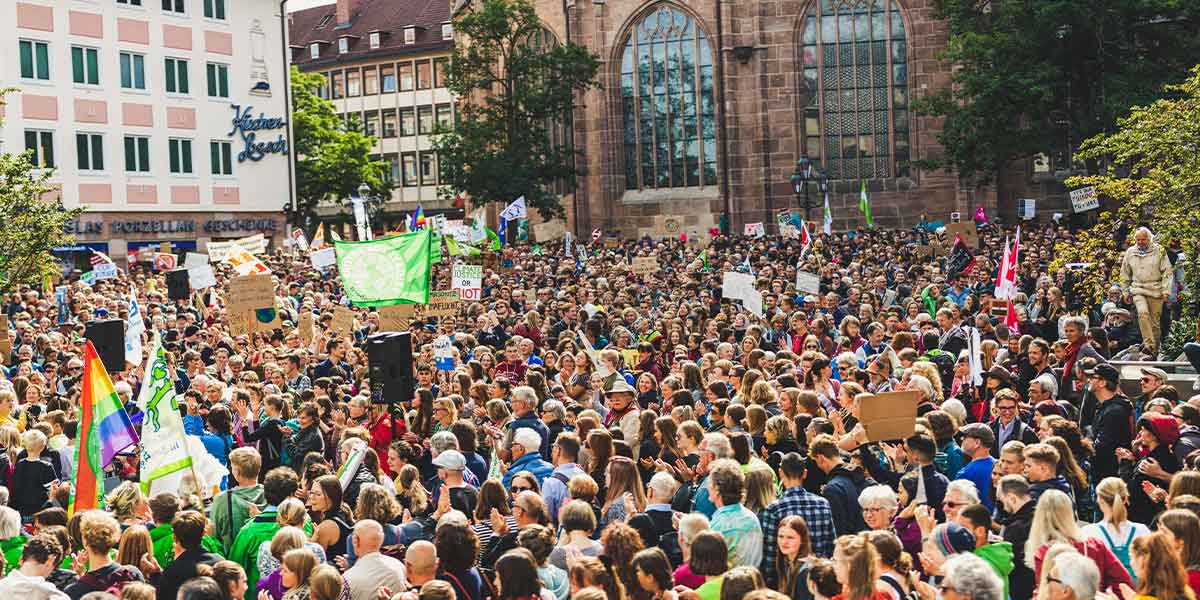
Join a vibrant research community of passionate political thinkers working to affect real social change.

We'll help you develop a wide range of research skills, including qualitative, quantitative or mixed methods, to support your growing expertise.
You'll receive disciplinary and professional development training from the Department and the York Graduate Research School.
You'll also have access to cross-university interdisciplinary training and experience opportunities via the White Rose Doctoral Training Partnership.

This course is run by the Department of Politics and International Relations, based in Derwent College on Campus West. Most of your training and supervision meetings will take place here, though your research may take you further afield. Within the Department, you'll also have access to a designated postgraduate study space and social and kitchen areas.
We also offer the option of enrolling in a PhD in Politics by distance learning. You'll have the flexibility to work from anywhere in the world. Supervisions will take place remotely using video-conferencing (eg Zoom). Distance learning students are required to visit York for an induction visit.
Our PhD courses are designed as structured, flexible and individual preparation for becoming a professional researcher. They help you to develop the core and specialised skills of a professional researcher which are highly valued by both academic and non-academic employers.
Our dedicated careers team offer specific support including a programme of professional researcher development and careers workshops and one-to-one career support sessions. They will help you to build up your employability portfolio and to engage in activities that will build up your skills and experience within and outside of your research work.
Admission to the PhD programme is normally based on a good performance at undergraduate level (usually a 2:1 or a First) and a Masters degree with a minimum 60% award mark; at least one of these will be in a social science-related subject. In exceptional cases, the Department may consider students from non-social science backgrounds, where the student can clearly demonstrate equivalent experience and knowledge and this is supported by academic references.
Applicants whose first language is not English may need to satisfy language requirements.
Check your English language requirements
Apply for the PhD in Politics (Distance Learning)
Take a look at the supporting documents you may need for your application.
Find out more about how to apply.
Before being admitted, you'll also attend an application interview. An interview is offered when the Director of Postgraduate Research and your potential supervisors have reviewed your application and are satisfied that you meet the minimum entry requirements.
The research proposal is the main way in which we evaluate the quality of your research plans.
A PhD thesis makes a substantive contribution to knowledge or understanding in the chosen field. When applying, you should take care to indicate as clearly and fully as possible the nature and scope of the proposed research, outlining why you think it's both original and important. You should aim to make your proposal about 1,500-2,000 words long.
You should not use generative AI to write any aspect of your application as per the University of York's policy on research degrees.
In your proposal, you should consider the following: