New funding for York scientist developing 'touchless' biosensors
Posted on Tuesday 23 June 2026
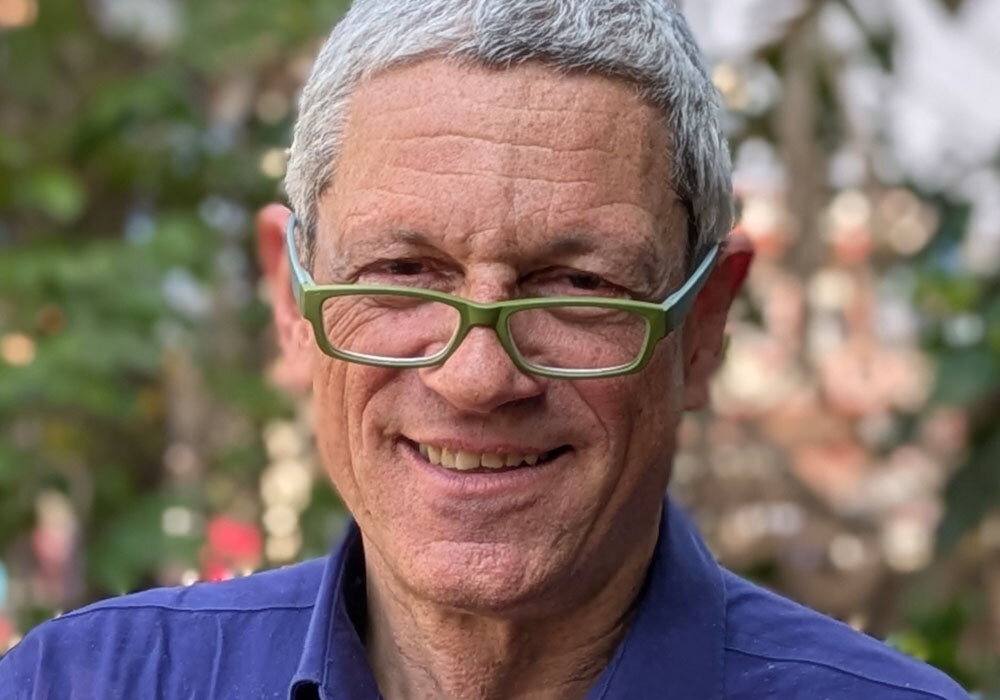
Professor Thomas Krauss, from the Department of Physics, Engineering and Technology, has been awarded the five-year Advanced Grant to fund his project, TOUCHLESS (Touchless Optical Ultraviolet CHemical resonantLy Enhanced Sensor Systems).
The initiative aims to develop non-invasive sensor systems capable of providing detailed information about health, the environment, and industrial processes without requiring complex sample processing or surface attachments like antibodies.
An unexplored field
The project will explore "UV Nanophotonics," which is an advanced field of science involving the use of ultraviolet (UV) light at an incredibly small scale (the nanoscale). This area remains largely unexplored because it requires "nanofabrication" – the ability to design and build structures at an ultra-small, microscopic level.
Professor Krauss said: “Many molecules found in diseases, industrial processes, or water systems leave a distinct "spectroscopic signature" in UV light, which acts like a unique chemical fingerprint. “By combining our team’s expertise in fundamental photonics, nanofabrication and instrumentation we will be able to build completely new, tiny structures to detect these fingerprints.”
'Touchless' technology
Most traditional biosensors rely on "recognition molecules," such as antibodies, which act like chemical hooks to catch specific targets on a surface. This usually requires complex chemical preparation and manual sample processing.
“What makes the TOUCHLESS project different is that it bypasses these chemical hooks entirely,” said Professor Krauss. “Instead, it relies purely on reading the natural light signatures left by the target molecules themselves. Because no physical attachment or complex processing is needed, liquids can flow straight through the system, making the technology completely ‘touchless’.”
Real-world applications
The team will develop custom-built, nanoscopic structures to dramatically boost the light signals given off by molecules so they are easier to read.
They will explore this in three ways – boosting light signals without background interference, improving the sensors to become 100 times more sensitive and reducing cost and complexity by identifying multiple targets using just a single UV LED light.
Professor Krauss said: “These automated, touchless sensors will be designed for critical real-world tasks, such as tracking drinking water quality, studying biofilms, and identifying infectious bacteria. We are grateful to the ERC for this crucial funding which will open up new frontiers in nanophotonics.”
Frontier research
President of the European Research Council, Prof. Maria Leptin, said: “The new Advanced Grant projects demonstrate the creativity, ambition, and intellectual boldness that frontier research requires. The ERC’s role is to support researchers who are asking difficult scientific questions and want to venture into unexplored territory in pursuit of new knowledge.
“Congratulations to all our new grantees. They are of 33 different nationalities - testament to Europe's strength as a destination for outstanding scientific talent, regardless of origin. We need to step up investment for Europe to lead in science and innovation.”
Further information
The ERC Advanced Grant competition is one of the most prestigious and competitive funding schemes in the EU. It gives senior researchers the opportunity to pursue ambitious, curiosity-driven projects that could lead to major scientific breakthroughs. The new grants are part of the EU’s Horizon Europe programme.