Legendary lost printing type used for first time in 110 years
Posted on Monday 15 June 2026
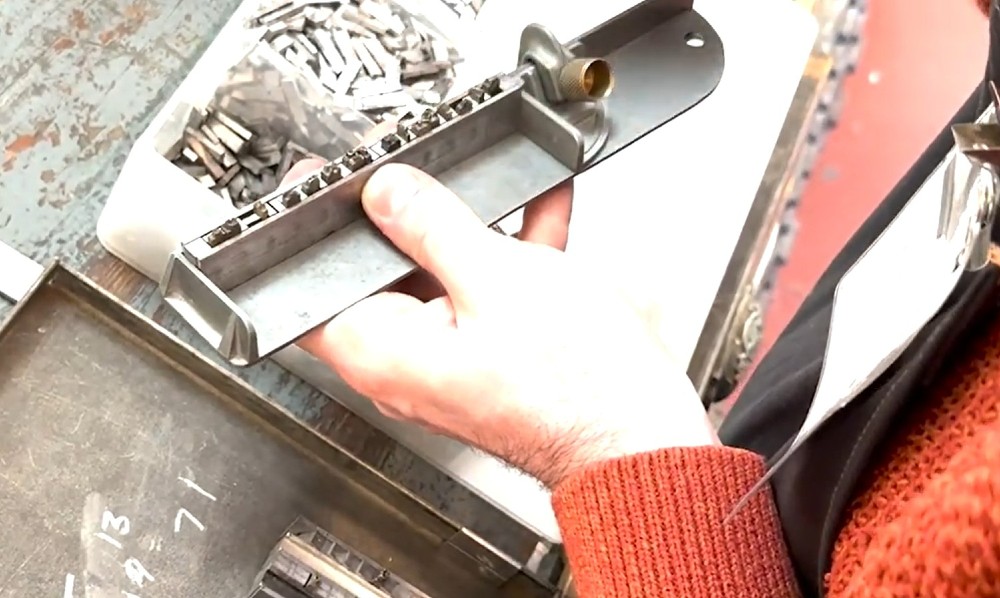
The "Doves Type" was created at the turn of the 20th Century in a bid to create the world's most beautiful typeface.
But it was secretly dumped into the river in 1916 by its co-creator, who was determined his business partner should never use it.
Now, mudlarked pieces of the type have been recovered and are being used by the University of York’s Thin Ice Press to produce a book of poetry.
The Doves Press was co-founded in London in 1900 by printer Thomas Cobden-Sanderson and his partner Emery Walker. They aimed to create a typeface based on 15th-century Venetian designs, with their five-volume Doves Bible later hailed as one of the finest examples of book printing in the UK.
After the partnership dissolved in 1909, a bitter argument broke out over who owned the unique metal type. A legal agreement stated that Cobden-Sanderson could use the type until his death, at which point it would revert to Walker.
Professor Helen Smith, Director of Thin Ice Press, said: “It’s a deeply human story. Instead of honouring the deal he struck with his former partner, Cobden-Sanderson spent his evening walks over the summer of 1916 secretly throwing the type, handful by handful, over Hammersmith Bridge into the Thames.”
Their fate became the subject of legend, and as such a target for history scavenger hunts, known as mudlarking. The letters lay at the bottom of the Thames until Angus McArthur, the director of the York Ghost Merchants, managed to recover 53 pieces of the lost type.
The type has now been catalogued and loaned to Thin Ice Press, where the team has used the historic metal letters to print a new chapbook of poetry composed by writer Lydia Kennedy.
The collection, titled The Marker Committee, explores themes of fragmentation and loss, with a central poem called 'Doves' directly inspired by the story of the lost typeface. The final letters of this poem have been printed with the mudlarked type.
Professor Smith said: “It was a magical moment seeing the type on the press and being used again after so many years beneath the river. It’s extraordinary to see how well the type has endured, and to witness it meeting ink and paper once again.”
The completed book and a limited-edition broadside print were launched as part of the York Festival of Ideas.
Further information
The University of York is a hub for heritage research excellence. Centred in the historic Heslington Hall – the new home of our Humanities Research Centre – our expertise spans from the Middle Ages to the modern day.
By making sense of our past, heritage research provides the essential context we need to tackle today’s social challenges and navigate our collective future. It is a living, breathing part of our identity.