Treetop drones and targeted genetics: York scientists to develop new technologies for nature recovery
Posted on Tuesday 16 June 2026
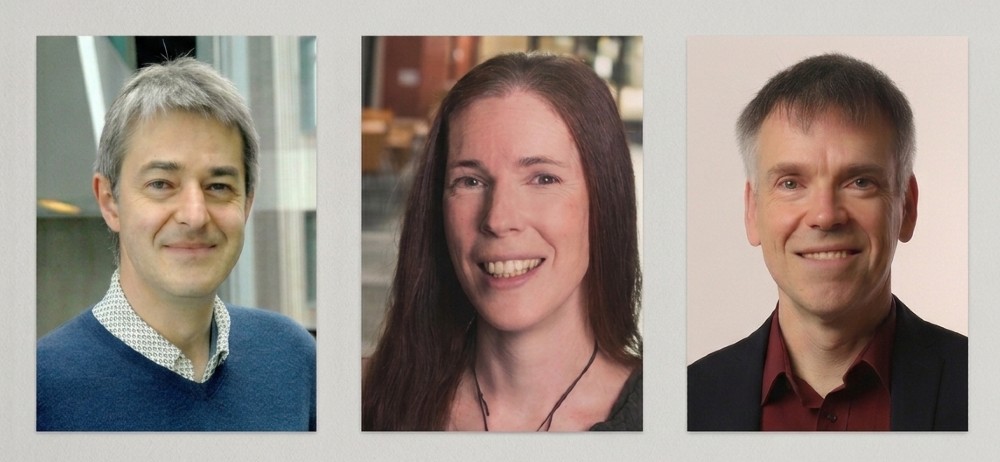
The two projects led by scientists at the University of York have secured funding from the UK’s Advanced Research + Invention Agency (ARIA). Selected as part of 14 “Opportunity Seeds” nationally, each project receives funding worth up to £500,000 through ARIA’s Engineering Ecosystem Resilience programme.
The first project, ARISE, is led by Professor Elva Robinson from the Department of Biology and Professor Radu Calinescu from the Institute for Safe Autonomy (ISA) and the Department of Computer Science.
Forest Restoration
Bringing a forest back to life takes more than planting trees; it means restoring the wildlife that keeps the woodland healthy. Wood ants are vital to this process, acting as nature's architects by creating environments where hundreds of other species can thrive. However, because these insects are often unable to spread into new areas on their own, conservationists have to physically move entire colonies into new woodlands.
Colony survival depends on a hidden partnership up to 40 metres above ground, where ants protect canopy-dwelling aphids in exchange for sugary fuel. Scientists currently have no way to monitor this from the ground, leaving them guessing whether relocated colonies have successfully established a new partnership to enable them to survive.
The ARISE project will address this by sending drones into the treetops. The drones will gather tiny samples which will complement “hyperspectral” images, looking beyond what the naked eye can see to read the chemical health of the trees and insects. Machine learning will then analyse the data, giving researchers a clear picture of canopy life from the ground. While the team is testing the technology on wood ants native to the UK and Europe, the system is designed to help monitor and protect forests worldwide.
Precision ecology
Professor Elva Robinson from the Department of Biology at the University of York said: “Wood ants are vital to the health of our forests, but we cannot easily see or measure the canopy-based food networks they rely on to survive. This project integrates ecological fieldwork with advanced technology to give conservationists the data they need to ensure relocated colonies thrive, ultimately making forest restoration efforts much more reliable.”
Professor Radu Calinescu from ISA added: “Building on embodied-AI technologies advanced through recent UKRI-funded research at our Institute for Safe Autonomy, ARISE will move from reactive conservation to precision ecology. This scalable solution will provide automated, data-driven insights to help manage complex ecosystems effectively, demonstrating how advanced engineering can directly support biodiversity goals.”
The second project, led by Professor Luke Alphey from the Department of Biology, focuses on creating new genetic tools to manage invasive non-native species.
Invasive species
The environmental and economic damage caused by invasive species is a major global challenge. In a UK biodiversity context this includes invasive animals such as grey squirrels, signal crayfish, rodents targeting nesting birds on island sanctuaries, and invasive pathogens such as the mosquito-borne West Nile virus and Usutu virus. Current management approaches rely heavily on chemical toxins, which carry risks of contaminating the wider environment and harming non-target wildlife.
Existing genetic population control methods, like those developed for disease-carrying mosquitoes, require the time-intensive micro-injection of individual embryos. This technical barrier makes it difficult to scale the technology or adapt it quickly to other species during an environmental crisis.
Fewer side effects
Professor Alphey’s team will develop a new method by targeting genetic material that sits outside species’ main chromosomes. Because this method bypasses the main genetic blueprint, it could provide a framework that is more easily transferred from one pest species to another. The system is designed to be adapted to counter both disease-bearing organisms and invasive pests in ecologically sensitive areas worldwide.
Professor Luke Alphey said: “Invasive species cause severe ecological damage to UK countryside and islands. By using genetic systems rather than broad-spectrum chemical toxins, we can target specific pest species with far fewer side effects. This funding allows us to explore a much faster, more adaptable framework for conservation that protects vulnerable native wildlife without damaging the surrounding ecosystem.”