Restoring wildlife habitats in wealthy nations could drive extinctions in species-rich regions, experts warn
Posted on Tuesday 18 February 2025
Researchers from the Universities of York and Cambridge, and over a dozen institutions worldwide, have come together to call on the global community to acknowledge the “biodiversity leak” - a displacement of nature-damaging human activities caused by ring-fencing certain areas for protection or restoration.
They argue that rewilding productive farmland or forestry in industrialised nations that have low levels of biodiversity may do more harm than good on a planetary scale.
Exploratory analysis by the team suggests that reclaiming typical UK cropland for nature may be five times more damaging for global biodiversity than the benefit it provides local species, due to the displacement of production to more biodiverse regions.
Nature reserves
While this “leakage” has been known for decades, it is largely neglected in biodiversity conservation, say the researchers. They argue it undermines actions ranging from establishing new nature reserves to the EU’s environmental policies.
Jonathan Green, from Stockholm Environment Institute (SEI) York, said: “This is a really important topic that rarely makes it outside of academia. It is a complex problem to address in practice, but it is a really important one and the more we talk about it, the more we can try to counter it.”
Writing in the journal Science, the experts point out that even the UN’s landmark Global Biodiversity Framework – aiming for 30% of the world’s land and seas to be conserved – makes no mention of the leakage problem.
Food and wood
Professor Andrew Balmford, from the University of Cambridge’s Department of Zoology, said: “As nations in temperate regions such as Europe conserve more land, the resulting shortfalls in food and wood production will have to be made up somewhere.
“Much of this is likely to happen in more biodiverse but often less well-regulated parts of the world, such as Africa and South America. Areas of much greater importance for nature are likely to pay the price for conservation efforts in wealthy nations unless we work to fix this leak.”
‘Leakage’ is already a major issue for carbon credits tied to forest preservation, say researchers. But they argue it’s a real problem for biodiversity conservation efforts too.
Logging
While protected areas can slow deforestation inside their borders, there’s evidence it can simply shift to neighbouring areas. Production can also be displaced much further. Efforts to protect the Pacific Northwest’s old-growth forests resulted in increased logging in other North American regions, for example.
Yet a survey of site managers of tropical conservation projects found that 37% had not come across the concept of leakage, and less than half of the projects were attempting to curb any displacement damage.
The researchers explored how leakage caused by protected areas could affect global biodiversity by applying real-world food and biodiversity data to two hypothetical conservation projects.
Soybean farms
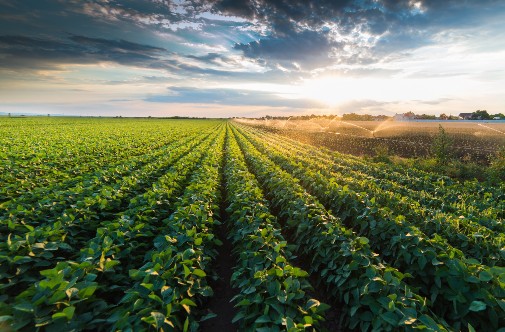
They found that rewilding a sizeable area of Brazilian soybean farms would push production to nations such as Argentina and USA, but because Brazil is so important for biodiversity, the local conservation gains could be around five times greater than the displacement harms.
The opposite would be true if the equivalent area of UK arable farmland was reclaimed for nature. Here, production would be displaced to Australia, Germany, Italy and Ukraine.
As the UK has fewer species than these other countries, damage from ‘leakage’ could be five times greater than the local benefit to British biodiversity.
Limit leakage
The experts offer a number of ways to help plug the biodiversity leak. They call on governments and the conservation sector to take leakage far more seriously when making environmental policy at national and global level.
They also point out that leakage could be reduced if conservation projects work with others to reduce demand – especially for high-footprint commodities such as red meat.
There’s scope to limit leakage by targeting conservation to areas high in biodiversity but where current or potential production of food or timber is limited, say researchers. One example is restoring abandoned tropical shrimp farms to mangroves.