Study suggests 'local practitioners' needed for policies on coexistence with large carnivores
Posted on Monday 24 February 2025
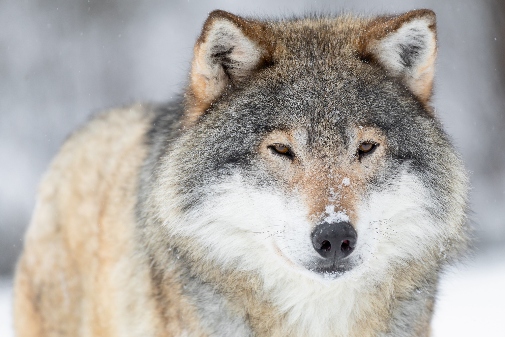
In a new study at the University of York, researchers argue that in contrast with Indigenous groups, who are clearly defined, what is meant by ‘local people’ is less clear, and policies on large carnivore management, which claim to include local knowledge, have been hindered.
The research comes ahead of the next UN Biodiversity Conference, which is taking place in Rome between February 25th and 27th, and could be used to inform future discussions on shaping policy on coexistence with large carnivores.
Many communities see the recovery of carnivores as a positive thing, but it has caused increased attacks on livestock, pets and - in the case of bears - people. It has also led to conflicts over how these issues should be managed in the short and long term.
Protection status
These conflicts are now coming to a head in debates about species and restoration plans in the EU - with wolves’ protection status being re-negotiated alongside a host of rewilding projects and measures.
Dr Hanna Pettersson, from the University of York's Leverhulme Centre for Anthropocene Biodiversity, said: “Our paper can guide the planning and organisation of community engagement efforts. We are calling for better recognition of Indigenous Peoples and traditional local communities as stewards of biodiversity because these situated forms of knowledge are too often overlooked and marginalised.
“This research is particularly important to pastoral areas in Europe, where populations of large carnivores such as wolves are currently expanding. Who is ‘local’ there? What constitutes ‘local knowledge’? And what can this knowledge contribute to carnivore management?
“Policy in these areas continue to rely primarily on information provided by natural scientists and conservationists, but knowledge of pastoralists and other traditional resource users are often overlooked.”
Spacing conservation
To tackle these challenges, researchers propose “spacing” conservation planning by investing in networks of emplaced practitioners, all tasked with coordinating relevant local knowledge and producing locally adapted strategies for coexistence.
The Global Biodiversity Framework, adopted in Montreal in 2022, set out a vision for living “in harmony with nature” by 2050. One of its targets mandates efforts to deal with human-wildlife conflicts and demands recognition of “Indigenous Peoples and local communities” in the management of nature.
Both targets are relevant for Europe, where the numbers of large carnivores are on the rise. This is being enabled by increasingly strict conservation legislation, changing land-use and a growing number of rewilding projects across the continent.
Better outcomes
Dr Petterson said: “A common suggestion by policy makers is that shepherds should adopt the methods their forefathers used to prevent carnivore attacks, but the world has changed a lot since then, often meaning that these methods no longer make sense.
“Building on local knowledge in carnivore management goes beyond incorporating prevention methods of the past. It requires a better recognition and braiding of different kinds of knowledge and skills, new as well as old, to produce better outcomes for people and nature."
The research is published in the journal People and Nature.