The early roots of carnival? Research reveals evidence of seasonal celebrations in pre-colonial Brazil
Posted on Wednesday 5 February 2025
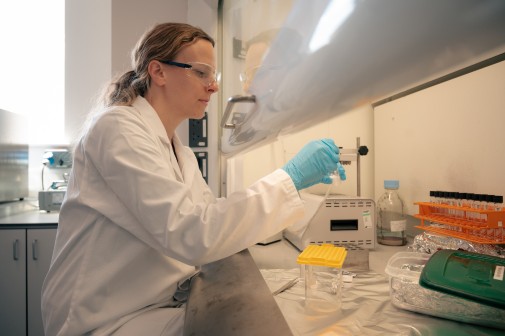
An international team – involving scientists from the University of York, UK; the Universitat Autònoma de Barcelona, Spain, and the Universidade Federal de Pelotas in Brazil –analysed pottery fragments dating back to between 2300 and 1200 years ago which were discovered around the Patos Lagoon in Brazil.
The shores of the Lagoon are characterised by settled earthen mounds, known as “Cerritos” which were built by pre-colonial ancestors of Pampean Indigenous groups called the Charrua and Minuano.
Earliest evidence
The researchers tentatively identified some of the earliest evidence of alcoholic drink production in the region, with cutting-edge analysis of the pottery revealing traces of beverages made using vegetables – likely to have been tubers, sweetcorn and palm. Other pottery fragments contained evidence of the processing of fish.
The discovery adds evidence to the researchers’ belief that pre-colonial people may have gathered around the mounds – which held symbolic significance as burials, territorial markers, and monuments – to celebrate and feast on seasonally abundant fish. An earlier study using isotope analysis of ancient human remains unearthed in the area indicated that the inhabitants had diverse diets, suggesting that people may have travelled to the Lagoon from the wider region.
Drawing communities together
Lead author of the study, Dr Marjolein Admiraal, who carried out the research while at the Bioarchaeology laboratory (BioArCh) at the University of York, suggests seasonal gatherings at the mounds were important cultural events, drawing dispersed communities together to exploit and celebrate the return of migrating fish – such as the Whitemouth croaker – which likely required collective effort to process.
“We see examples of such practices around the world, often related to seasonal abundance of migratory species. These events provide an excellent opportunity for social activities, such as funerals and marriages, and hold great cultural significance”, she says.
“Our findings – supported by a combination of biomolecular and isotopic approaches in organic residue analysis – provide compelling evidence for the use of fermented beverages in these ancient communities and show that pottery played a crucial role in feasting and social activities.”
One step closer
Professor Oliver Craig from BioArCh at the University of York said “Through detailed chemical analysis we were able to determine what products were present in the Cerritos pottery vessels but also how people prepared these products, through heating, storage and potentially fermentation. This brings us one step closer to understanding the culinary role of different foodstuffs in past societies”
The discovery sheds new light on the lifeways of these pre-colonial groups, highlighting the multifaceted purposes of the Cerritos and their role in the social and economic life of the mound builders, the researchers say.
Co-author of the research, Rafael Milheira from the Universidade Federal de Pelotas in Brazil said: “The Cerritos are a combination of ritual and domestic places, and their elevated design may have been influenced by the local environment; these places were likely important to the people and raising them above potential erosion by seasonal high waters would have protected them.
“We know that large gatherings and feasts were important cultural events in the past (and today), throughout the world. And we suggest prehistoric people in the area would have invested in pottery production in anticipation of these gatherings which drew people to Patos Lagoon to feast on seasonal aquatic resources.”
Unlocking information
André Colonese, from the Universitat Autònoma de Barcelona, Spain, co-author of the research and Principal Investigator of the ERC project TRADITION, highlights: “This study reinforces the power of molecular archaeology in unlocking information from common artefacts, such as pottery sherds, that was previously inaccessible through conventional archaeological methods. Moreover, a key message from the paper is that preserving the Cerritos as unique Pampean cultural heritage is of high priority if we want to learn from past societies how to sustainably live in such a dynamic environment”.
As research continues, these insights into the Cerritos and their cultural significance offer a glimpse into the early traditions and social practices of the Pampean Indigenous groups, enriching our understanding of prehistoric life in southern Brazil.