Pilot project provides free school meals to thousands more children
Posted on Wednesday 23 October 2024
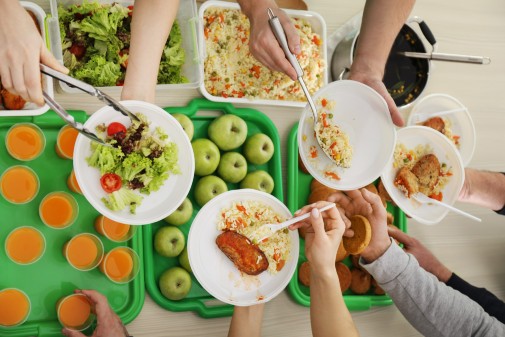
The initiative, which has been rolled out in collaboration with dozens of local councils, aims to identify and automatically register children who are eligible but previously unregistered for free school meals.
Currently, families must register their children for free school meals even if they meet the eligibility criteria. This process often leaves many children without access due to language barriers, misunderstandings about eligibility, or the stigma associated with sharing financial information. The Department for Education has urged all eligible families to register, but many still miss out.
No child misses out
Team behind the pilot – from the University of York, food policy consultancy Bremner and Co and the charity The Food Foundation – advocate for a nationwide automatic enrolment system, allowing families to opt out rather than opt in. This approach could save families approximately £500 per year in lunch costs and ensure that no child misses out on a nutritious meal at school.
Professor Maria Bryant from the FixOurFood research group and the Hull York Medical School at the University of York, said: “Providing a daily nutritious meal for children at schools not only supports health, it enables them to concentrate on learning and improves attendance. We know that at least 10% of families who are entitled to free school meals do not apply to receive them”.
Significant success
The programme has already seen significant success, with about 20 local authorities implementing the trial scheme. Preliminary data from surveys indicates that around 20,000 previously unregistered children are now receiving free school meals. This increase in registrations has also brought millions of pounds in additional funding for schools through pupil premium grants, which provide £1,455 per primary pupil and £1,035 per secondary pupil annually.
Local councils participating in the scheme include North Yorkshire, County Durham, Wakefield, Lambeth and Middlesbrough, each registering hundreds to thousands of additional children. The programme’s success has prompted another 40 councils to explore the possibility of implementing similar schemes.
Despite the positive outcomes, the process requires extensive paperwork and data analysis to identify eligible families. Fix Our Food is calling on the government to streamline this process by integrating datasets from various departments, making it easier and quicker to enrol eligible children.
Gaining traction
The issue is gaining traction in parliament, with a private members’ bill introduced on October 16th. While the government has yet to commit to a nationwide rollout, it is considering long-term solutions to child poverty, including the expansion of free breakfast clubs in primary schools starting in April 2025.
Currently, all children in England receive free school meals up to Year 2. In Wales and London, all primary school children are automatically eligible, while in Scotland, the provision extends to pupils up to P5. Northern Ireland has a higher income threshold for eligibility, set at £15,000 per year after tax.
Systemic changes
The FixOurFood programme continues to push for systemic changes to ensure that every eligible child receives the support they need, highlighting the critical role of nutritious meals in children’s health, education, and overall well-being.
Professor Bryant added: “Delivering research like this, where we can see the difference it's making to children, families and schools is incredibly important to us. I'm also hopeful that our evidence will support national decision making so that a central process can be used instead of burdening already busy local authorities to pick up the work".