UK first in ‘clean hydrogen’ production and carbon capture
Posted on Monday 11 November 2024
Hydrogen is considered to be a cleaner and safer alternative to oil and gas for heating and some modes of transport, but the production of hydrogen can release carbon dioxide into the atmosphere resulting in environmental concerns.
In a landmark achievement for the UK’s green energy sector, researchers are now looking to expand the potential of the new technology to support the UK's net zero ambitions. In order to produce ‘clean hydrogen’, experts have been investigating how to produce the quantities of gas needed whilst also capturing the carbon dioxide.
Everyday waste
The H2Boost project, in partnership with the University of Leeds and funded by the government’s £1 billion Net Zero Innovation Portfolio (NZIP), was achieved by transforming everyday waste into clean hydrogen through a unique process called dark fermentation, which converts pre-treated organic waste into biohydrogen.
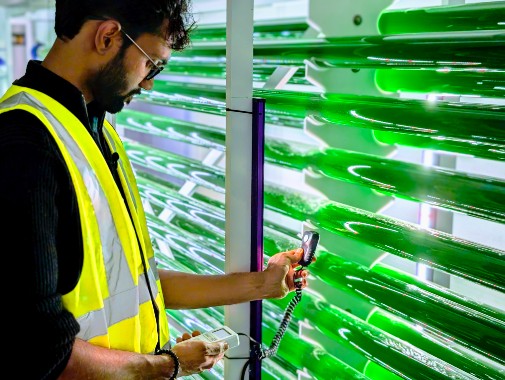
The system then captures and reuses all by-products, whereby the waste material generates additional energy through anaerobic digestion; cultivated algae and bacteria capture carbon emissions. This approach means that virtually nothing goes to waste in the production of hydrogen.
Novel approach
Penny Cunningham, Programme Operations Manager at the Biorenewables Development Centre, said: "Successfully demonstrating integrated hydrogen production with carbon capture represents a significant technical breakthrough for the H2Boost project.
“Our novel approach to producing clean hydrogen from waste while removing CO2 is not only technically feasible but also holds significant promise for large-scale sustainable energy solutions in the future."
The H2Boost project, an initiative under the Department for Energy Security and Net Zero's Hydrogen BECCS Innovation Programm, aims to develop a commercially viable and sustainable process for producing biohydrogen from organic waste.
Experts and industry leaders believe that new technologies have the potential to play a crucial role in decarbonising the UK's transport sector, with low-carbon hydrogen technologies expected to provide up to 35% of the UK's energy requirements by 2050.