Researchers to explore benefits of forest school on children’s mental health
Posted on Wednesday 9 October 2024
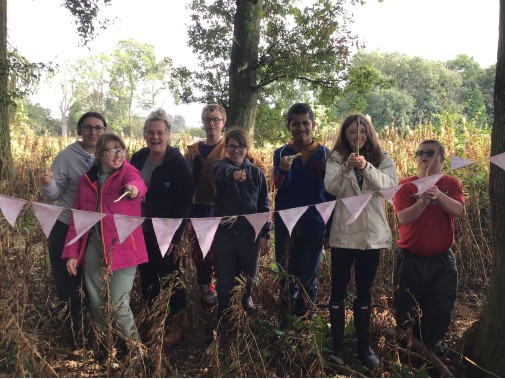
Developed from the Scandinavian tradition of “Friluftsliv”, literally meaning “free air life”, forest schools allow children to connect with nature through child-led activities including fire skills, using tools, navigation, cooking and growing food, den building and nature appreciation.
The researchers leading the study, which is funded by NIHR (The National Institute for Health and Care Research), have recruited eight schools in the Yorkshire and Humber region to take part in the research.
Mental health crisis
They aim to study how Forest Schools could best be delivered to children aged between seven and eleven years as part of efforts to tackle the UKs growing mental health crisis among children and young people.
Research suggests one in five children in England have a probable mental health condition and demand for services is the highest on record. Between April-September 2021, there was an 81% increase in referrals for children and young people’s mental health services compared to the same period in 2019.
Connected with nature
Co-Lead researcher Dr Hannah Armitt, Clinical Research Psychologist at Humber NHS Teaching Foundation Trust and the Institute for Mental Health Research at the University of York, said: "There is a growing body of evidence which highlights how individuals who feel more connected with nature tend to experience greater happiness and a sense of purpose in life.
“However, many children currently have limited access to green spaces and the benefits they offer for play and connection with nature. The COVID-19 pandemic has exacerbated existing inequalities, with children from ethnic minority backgrounds and low-income households disproportionately affected.
“Forest schools provide an immersive, child-led environment that contrasts with traditional classroom settings. By allowing children to explore their interests and experiment, forest schools foster self-esteem and purpose beyond academic achievement. Teachers report improved school attendance and enjoyment, with some children attending school exclusively on forest school days."
Teenage years
The research will focus on key stage two children because, although many pre-school children attend and benefit from forest schools, researchers have observed a significant decline in nature connection during the early teenage years.
The research aims to establish which aspects of Forest School are the most useful and how schools can be supported to establish them, even in cases where there is limited outside space.
Pivotal
Co-lead researcher, Professor Peter Coventry from the Department of Health Sciences and the Mental Health and Addiction Research Group at the University of York added: “Children in Key Stage 2 are at a pivotal developmental stage, and school-based interventions can facilitate early identification of mental health needs and support transitions, such as the move to secondary school.
“Educational approaches embedded in outdoor spaces including woods, rivers, fields, and the sea, can be particularly beneficial for children from deprived communities and those with special educational needs and disabilities (SEND). These students may face challenges accessing a solely classroom-based curriculum, making outdoor learning opportunities essential for their development.
“In the long term, Forest Schools could play a crucial role in addressing health and educational disparities, but it is crucially important to generate robust evidence for their benefits so that we can appeal to policy and decision makers with credible findings.”