Brazil’s Ministry of Health signs partnership agreement with University
Posted on Tuesday 20 December 2022
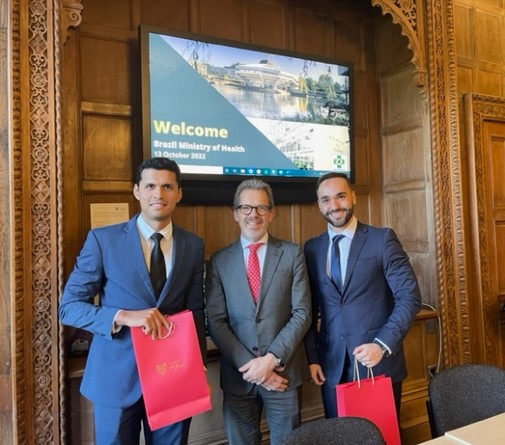
The Memorandum of Understanding (MoU) was signed over Zoom on 19 December and was attended by senior figures from both institutions, including Mr Marcelo Queiroga, the Minister of Health of Brazil and Professor Matthias Ruth, the University of York’s Pro-Vice Chancellor for Research.
The partnership aims to create a health economics programme, jointly implemented by the Brazilian Ministry of Health and the University of York.
Focus
The programme will be carried out over a five-year period and will focus on the development of applied health economics research, analytical tools for health system analysis, and training on key health economics topics.
Mr Queiroga said: “It is an honour and a privilege to be signing this agreement, to work together in partnership with the University of York. The partnership will bring mutual benefits and develop solutions in science.”
Opportunity
Professor Ruth said: "I would like to thank our Brazilian colleagues for the opportunity to work together to start this longer-term partnership.
“The University of York prides itself on being a University for Public Good, which means that we are very heavily focused on action-orientated research, new knowledge, and insights to achieve our vision. Partnerships like this one will bring the knowledge to the rest of the world, but also to learn about issues that they are tackling and find new ways of creating knowledge and solutions to tackle those challenges.”
Aims
Professor Yvonne Birks, Associate Dean for Research for the Faculty of Social Sciences, said: “The aims of this strategic partnership align very closely with those of our faculty strategy, particularly in relation to building strong partnerships and building communities that tackle the big challenges of our time.”
“Our new social change academy stresses the importance of work that will build skills and will be linked to real-world impact. The work that will be done between York and Brazil very much contributes to our aims.”
“We look forward to supporting this partnership in the immediate and the longer-term future that it promises.”
Role
Professor Mark Sculpher, Director of York’s Centre for Health Economics, said: We have a wide breadth of interest in the field of health economics. As well as evaluating policy, we have a role in designing policy.
“We have a growing interest and commitment to global health research, including health finance and resource allocation and we have strong links with other research universities, including in Brazil and this new partnership will only strengthen this.”