Medieval containers hint at thriving wine trade in Islamic Sicily
Posted on Tuesday 23 February 2021
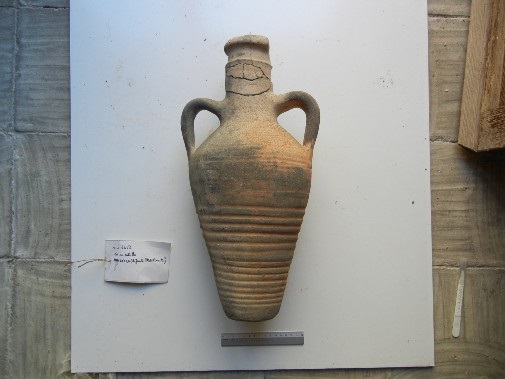
They found that a type of container from the 9-11th century, called amphorae, traditionally used for transporting wine contained chemical traces of grapes and were found as far away as Sardinia and Pisa, suggesting that the wine was exported across the Mediterranean.
Working with researchers from the University of Rome Tor Vergata, the research team from the University of York’s BioArch facility analysed the content of the amphorae by identifying chemical traces trapped in the body of the container, and found compounds comparable to those found in ceramic jars used by some producers today for maturing wine.
Together with a comparison of wine-soaked sherds degraded in the ground, the team concluded that the fruit trapped in the vessel was indeed grapes implying wine production.
Economic growth
The Islamic empire expanded into the Mediterranean regions during the 7-9th century AD into regions of the world that produced and consumed wine on a large scale.
Professor Martin Carver, from the University of York’s Department of Archaeology, said: “Alcohol did not - and still does not - play a major role in the cultural life of Islamic society, so we were very interested in the question of how this medieval community had thrived in a wine-dominated region.
“Not only did they thrive, but built a solid economic foundation that gave them a very promising future, with the wine industry one of the core elements of their success.”
Export business
A wine trade existed in Sicily prior to Islamic occupation, but it appears to have mostly been imported wine, with the emphasis on consumption rather than production. This new archaeological evidence suggests that the Islamic community had seen the opportunity of this, and turned their attention to production and export.
There is no evidence, however, to suggest that members of the community actually drank the wine they were trading. Direct evidence for the consumption of alcohol is difficult to demonstrate in the archaeological record, and there are no historic sources in Sicily at this time to determine what the community was drinking.
Dr Léa Drieu, a postdoctoral research assistant at the University of York's Department of Archaeology, who carried out the analysis, said: “We had to develop some new chemical analysis techniques in order to determine that it was grape traces we were seeing and not some other type of fruit, but the tell-tale organic residues found in the amphorae in Sicily, Palermo and elsewhere showed the content was almost certainly wine.”
Wine brand
Islamic wine merchants appear to have given Sicilian wine a new ‘branding’ by using a particular type of amphorae that researchers can now trace around the country and beyond to identify their trade routes.
The team’s wider research in this area shows great prosperity during this period, powered not only by the wine trade, but new crops, exchange of salted fish, cheese, spices and sugar. The trade routes show increased production and commercial links between the Christian and Islamic worlds, bringing in a new era of prosperity, which worked alongside the existing ‘old’ industries of Sicily.
Professor Oliver Craig, who directs the BioArCh centre where the research was carried out, said: “Now that we have a quick and reliable test for grape products in ceramic containers, it will be interesting to investigate the deeper history, and even prehistory, of wine production and trade in the Mediterranean.”