Human challenge study to lay the foundations for vaccine development for neglected tropical disease
Posted on Thursday 18 November 2021
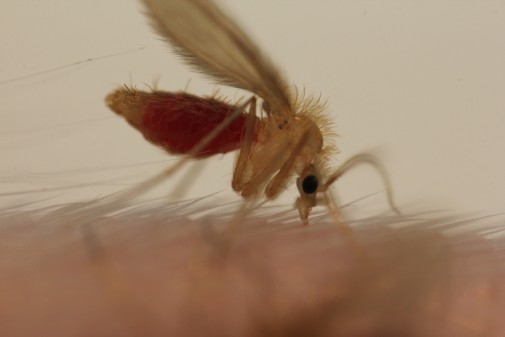
Building on significant achievements by the University of York and its partners, a study developing a new controlled human infection model for leishmaniasis is now recruiting volunteers.
Disease burden
Leishmaniasis, caused by a microscopic parasite called Leishmania, is transmitted by the bite of sand flies, and affects over a million people globally every year. The diseases caused by these parasites vary from skin lesions that have the potential to cause disfiguration to potentially fatal organ damage.
Researchers are hoping to recruit up to 18 people to take part in this vital research study. The study uses a parasite species that causes one of the mildest forms of leishmaniasis, limited to a localised skin lesion at the site of a sand fly bite. This lesion can be excised at an early stage and several known additional treatments exist.
Lead investigator, Professor Paul Kaye from the Hull York Medical School, said: “We have developed a vaccine against leishmaniasis that is being tested for the treatment of patients with one form of disease, but to have maximum global health impact it is vital we find out whether this vaccine can also protect people from becoming infected. One of the ways to do this is to develop a controlled human infection model”.
Controlled human infection studies
Controlled human infection models have been used to support the development of vaccines for cholera, malaria, influenza, dengue fever and most recently COVID-19. After establishing how the immune system of healthy volunteers responds to the controlled infection, researchers can then design clinical trials to determine whether a new vaccine can prevent infection. By monitoring closely how the immune system responds to the infection in these controlled settings, researchers can also learn how to improve vaccines.
No vaccines are currently approved for preventing leishmaniasis but with new candidate vaccines now available, including one developed at the University of York, a challenge model to test them is of increasing urgency.
Researchers hope that the project will result in the development of an effective Leishmania human challenge model that will prove invaluable in testing new vaccines and in understanding how immunity to infection arises.
Dr Vivak Parkash, who is the doctor running the clinical study, said “Over the past two years we have put together all the pieces required to develop a safe and effective controlled human challenge model. Our volunteers will play a major role in finalising the development of this model so that it can be used to improve the health of millions worldwide.”
The research is a collaboration between the Hull York Medical School, the University of York, the Department of Parasitology at Charles University in Prague, the Department of Microbiology and Immunology at McGill University in Montreal,the Center for Geographic Medicine and Tropical Diseases at Sheba Medical Ctr. & Tel Aviv University and the Hebrew University-Hadassah Medical School in Jerusalem.
The project is funded by the UK Medical Research Council and the Department for International Development.
Further information
For more information on the project visit: leishchallenge.org and to get involved contact leishchallenge-project@york.ac.uk. Volunteers must be aged between 18 and 50 years old. Participants will be reimbursed for taking part in the study.