Former Education Minister on campus to see our work on social mobility
Posted on Thursday 15 October 2020
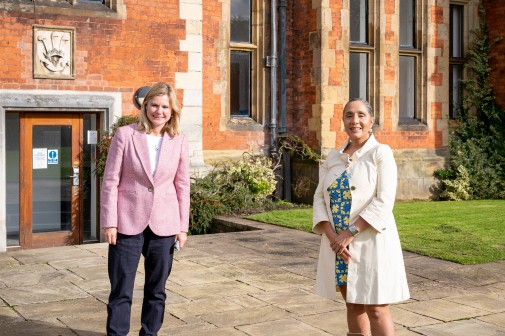
The former Education Minister and Conservative MP met with Vice-Chancellor, Professor Charlie Jeffery; Pro-Vice-Chancellor for Partnerships and Engagement, Professor Kiran Trehan, and other senior members of staff at the University, to see first-hand the work we are doing around social mobility, lifelong learning and access and outreach.
Ms Greening, who served as Secretary of State for Education and held the International Development and Transport briefs, is founder of the social mobility pledge.
During her visit to campus, Ms Greening heard about:
- Our access and outreach programmes: Delivered locally and nationally for pupils in primary school through to college and sixth form, these help learners to realise their potential and aspirations
- Our evening classes and online courses available to the wider public that have reached over 20,000 learners since lockdown, providing a real opportunity for people to experience a taster of higher education from their homes
- A transformational project we have delivered to support youth offenders to explore their potential, discover ways of realising their goals and gain a second chance
- The support provided to care-experienced learners in accessing HE and making the most of their time at York
- Our work with partners across the city including All Saints School, Future HY, and the City of York council
Professor Jeffery said: “The University of York was one of the earliest signatories of the social mobility pledge and I am delighted that we are part of this crucial campaign. It chimes so much with what we want to do and what we are already doing.”
“One of our founding principles was our commitment to public good, sharpened by our deep concern about inequality.
“The Covid pandemic has deepened those existing inequalities across society, and now, more than ever, there is a pressing need and opportunity to act and make a difference.”
Ms Greening said: “Levelling up Britain is about laying the foundations now for a high-skilled, high-wage economy of the future and the University of York is playing a central role in that.
“I was especially impressed with their programmes engaging young offenders and the children of military personnel at Catterick, as well as supporting students with care experience.
“Social mobility happens when universities and businesses engage with their local communities. The University of York is living proof of that in action and the life-changing effects that it can have on young people’s access to opportunity.”