Lost 'botanical hotspot' identified at University of York campus
Posted on Monday 17 August 2026
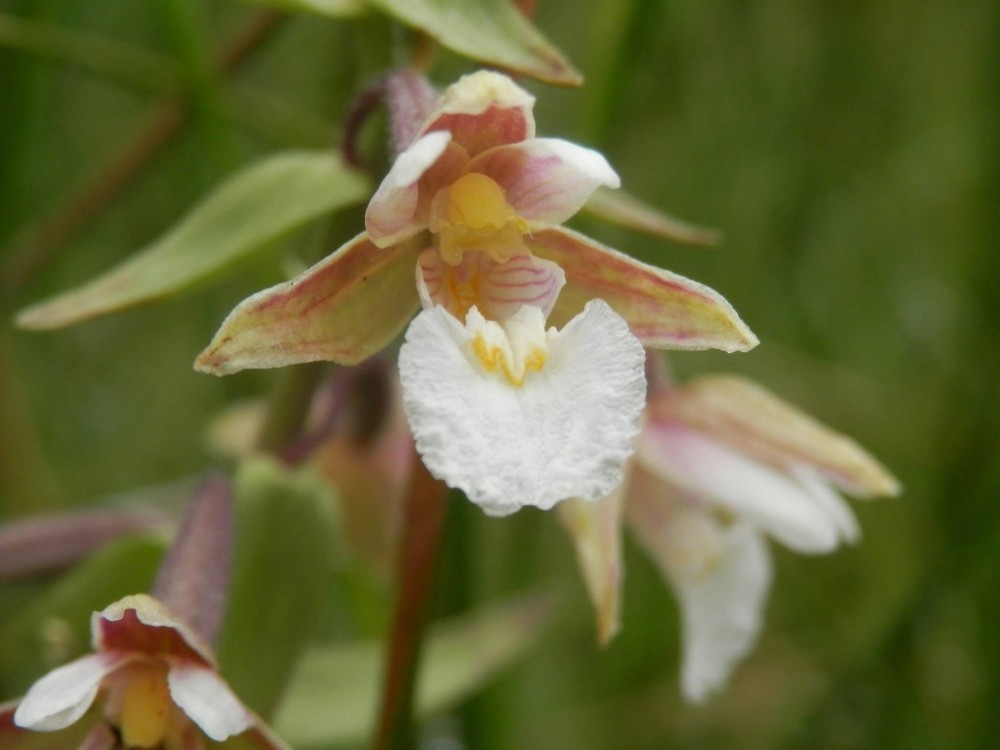
The grounds, now occupied by the University of York’s Campus East, and parts of Campus West, were once part of Heslington Fields, an open field system rich in rare plants, fens, and wetlands.
A new study by a University of York researcher and published in The Naturalist, has revealed that before the land was enclosed for farming in 1857, the area was a nationally recognised biodiversity hotspot.
Ecologists now believe some of the site's lost flora could be reintroduced to boost local wildlife.
Farming
Dr Peter Mayhew, from the University of York’s Department of Biology, said: “Before the landscape was privatised, over 90% of Heslington Fields was used for growing crops such as cereals, potatoes, flax, and mustard.
“But unploughed grassy strips between fields and wet glacial hollows, known as kettle holes, provided ideal habitats for delicate wild species. The flora was very special even for the time, and many species found there are now extremely rare in Great Britain.”
In the latter half of the 1800s the land was enclosed for more intensive agricultural use, and in the process the money from higher rents to tenant farmers assisted in improving Heslington Hall and other village facilities.
Nature walk
Dr Mayhew said: “Many of these species declined rapidly across the UK following the introduction of modern fertilizers, chemical weedkillers, and automated seed cleaning.”
Some of the habitats found in the study are now being recreated on Campus East as part of the University’s ecological management, and Dr Mayhew has developed a self-guided walking trail for members of the public interested in learning more about the landscape.
Among the plants historically recorded at the site were Grass-of-Parnassus, Dyer’s Greenweed, Pepper Saxifrage, Saw-wort, and Small Scabious.
Victorian science
The study also highlights how the site became a hub for Victorian science, due to its accessibility to scholars and students of science for field trips. Its proximity to York made it a popular excursion for students at the Friends School on Lawrence Street - now Bootham School.
Founded in the 19th Century, the school's natural history society remains the longest-running active school society in the UK.
Dr Mayhew said: “The area's unusual plant variety was created by its unique geology. Heslington Fields sat on the York moraine, a ridge of debris left behind by melting glaciers, across the low-lying Vale of York.
“This created a dramatic mix of dry soils and waterlogged bogs within a very small area. Named bogs like Smathorn and Narrow Mill survived well into the 19th century.”
Seed banks
Conservationists are now looking at whether seeds of species recorded historically could be sourced from regional seed banks and planted back onto the campus grounds.
Some species, including Devil’s-bit Scabious, Bogbean, and Yellow Loosestrife, have already naturally returned or been planted in created wetland areas. Experts say adding missing species could help protect rare plants from regional extinction.
Visitors and local residents are now being encouraged to help monitor the site's ongoing recovery. Wildlife sightings across the campus can be logged via the iNaturalist app to assist University researchers with future conservation work.
Further information
The University of York is a hub for heritage research excellence. Centred in the historic Heslington Hall – the new home of our Humanities Research Centre – our expertise spans from the Middle Ages to the modern day.
By making sense of our past, heritage research provides the essential context we need to tackle today’s social challenges and navigate our collective future. It is a living, breathing part of our identity.