Edible insects offer scientists food for thought
Posted on Tuesday 9 May 2017
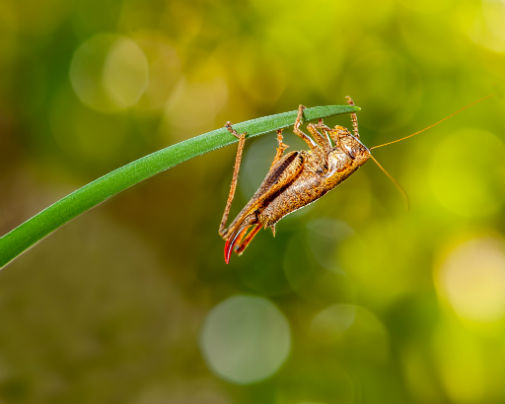
On the menu: crickets
Replacing half of the meat eaten worldwide with crickets and mealworms would cut farmland use by a third, substantially reducing emissions of greenhouse gases, according to the study which included researchers from the University of York.
The paper, ‘Could consumption of insects, cultured meat or imitation meat reduce global agricultural land use?’ studied several substitutes for animal products as sources of both protein and energy.
Using data collected primarily by the UN’s Food and Agriculture Organization, scientists have compared the environmental impacts of conventional meat production with those of alternative sources of food. It is the first study to do so.
Greenhouse gases
Scientists at the N8 Research Partnership, University of Edinburgh and Scotland’s Rural College considered a scenario in which half of the current mix of animal products are replaced by insects, lab-grown meat or imitation meat.
They found that insects and imitation meat – such as soybean-based foods like tofu – are the most sustainable as they require the least land and energy to produce. Beef is by far the least sustainable, the team says.
The group of scientists, which included Professor Dominic Moran of the N8 Research Partnership’s AgriFood programme, says halving global consumption of animal products by eating more insects or imitation meat would free up 1680 million hectares of land – 70 times the size of the UK.
The study explained that introducing edible insects into our diets regularly could improve many of the environmental issues caused by livestock production, such as reducing agricultural land footprints and atmospheric greenhouse gases.
Professor Moran, N8 AgriFood’s chair in Resilient Food Supply Chains at the University of York, said: “The N8 AgriFood programme focuses on how we can adapt food supply systems to deliver increased resilience and nutrition while reducing environmental impacts. This paper found that we could potentially alleviate some of this pressure by introducing meat alternatives into our everyday diets.”
Consumer behaviour
Entomophagy, the technical term for eating insects, can be traced back thousands of years and provides high sources of fat, protein and macronutrients.
Lead author Dr Peter Alexander, of the University of Edinburgh’s School of GeoSciences and Scotland’s Rural College, said: “A mix of small changes in consumer behaviour, such as replacing beef with chicken, reducing food waste and potentially introducing insects more commonly into diets, would help achieve land savings and a more sustainable food system.”
The research, published in the journal Global Food Security, was supported by the UK’s Global Food Security Programme and the European Union's Seventh Framework Programme. It was carried out in collaboration with Scotland’s Rural College, the University of York (part of the N8 Research Partnership), Karlsruhe Institute of Technology and the Centre for Australian Weather and Climate Research.