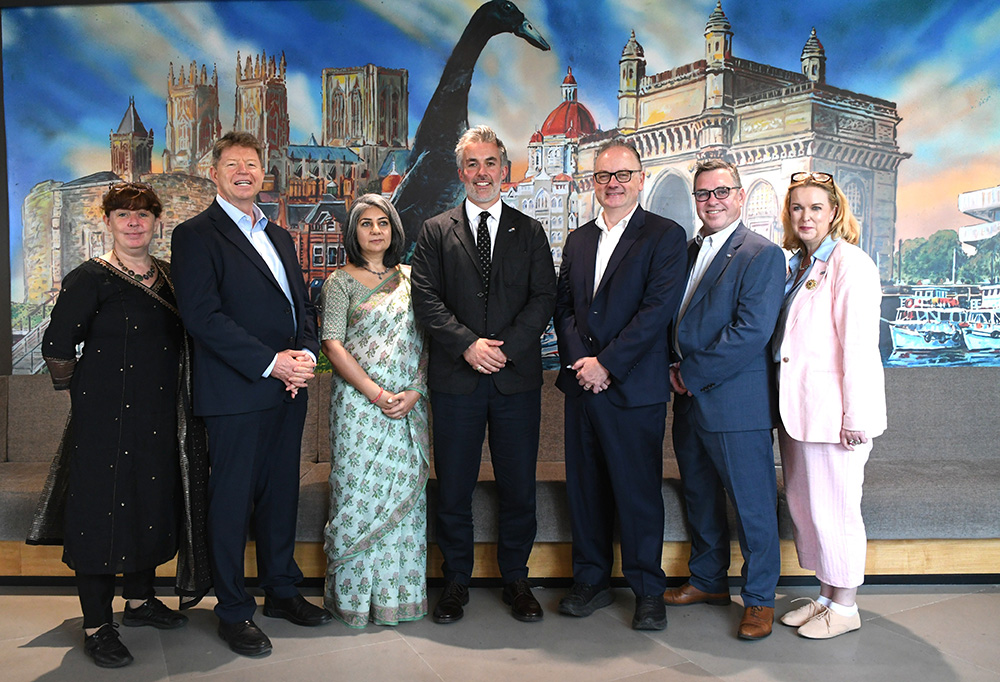
University aims to achieve international environmental accreditation
News
Posted on Tuesday 20 January 2015
The University of York is aiming to achieve ISO 14001 - an international recognised environmental management standard.
The accreditation covers a wide range of activities, such as energy usage, waste disposal, biodiversity, awareness raising and sustainable building design.
In 2015, the University’s Sustainability Working Group will pilot ISO 14001 in three departments at York, with the aim of rolling it out throughout the University by 2017.
Specific activities include:
- Implementing a new specific Environmental Manager role
- Creating a new Environmental Management System targeting ISO14001 certification
- Student Switch Off – energy saving campaigns across colleges
- Green Impact – embedding sustainability across academic and staff departments
- BREEAM ratings for new buildings – minimum of Very Good certification
- Green Flag Award – recognising biodiversity works across campus grounds
- New online “Sustainable York Guide” – increasing communication of sustainability to students
- Sustainable commercial catering – local suppliers, ethical purchasing, etc.
- Implementation of Sustainable Procurement Framework
- Provision of British Heart Foundation ‘bins’ for improved reuse of unwanted items
- Edible Uni – organised by the students for the students for growing free food on campus
- Increasing recycling capabilities for student halls and expanding to academic areas
- Implementation of food waste segregation for diversion from landfill to energy and compost
- Wide variety of award winning sustainable travel initiatives and promotions – cycling, bus, car sharing
- Enhancing sustainability through academic research
- Integrating sustainability through undergraduate and postgraduate academic courses
- Implementation of extensive metering providing more accurate energy monitoring
- Improved building management system to run campus more energy efficiently
- Use of SALIX funding to support energy efficiency improvements across campus
“York has also achieved significant reductions in waste disposal to landfill – with the support of students and staff at every level, we now divert 91 per cent of our waste away from unsustainable landfill. We are now in the process of setting challenging but achievable targets in this and other areas for the coming years.”
Further information
- The University’s Sustainability Working Group comprises academic representatives, professional staff from Estates & Campus Services, and members of the Senior Management Group, including the University’s Sustainability Champions, Professor Deborah Smith (Pro Vice Chancellor: Research) and David Duncan (Registrar & Secretary).
- Download the University’s Sustainability Strategy