
Enhanced microbes for sustainable agriculture
Context
Researchers in CNAP and The Biorenewables Development Centre (BDC) have partnered with agricultural technology startup CroBio in a £670k project funded by the Department for Environment, Food and Rural Affairs (Defra) Farming Innovation Programme and supported by Innovate UK.
The initiative aims to enhance CroBio’s groundbreaking living soil amendment technology, which has shown promising results in improving nutrient retention, water retention, and carbon sequestration in agricultural soils. The technology, which requires only one application per growing season, has demonstrated remarkable results in initial trials, including a 200% improvement in water retention in sandy soil under greenhouse conditions.
The technology works by introducing living microbes that produce bacterial cellulose, creating a natural scaffold around plant roots that can hold up to 1,000 times its weight in water. This process not only improves water retention but also enhances nutrient availability and promotes carbon sequestration in the soil.
With global concerns about soil degradation, water scarcity, and the environmental impact of chemical fertilisers, innovations in soil health management are becoming increasingly critical. This technology offers a sustainable solution that could help farmers adapt to climate change while reducing their environmental footprint, setting a new standard for agricultural practices across the UK and beyond.
The Research
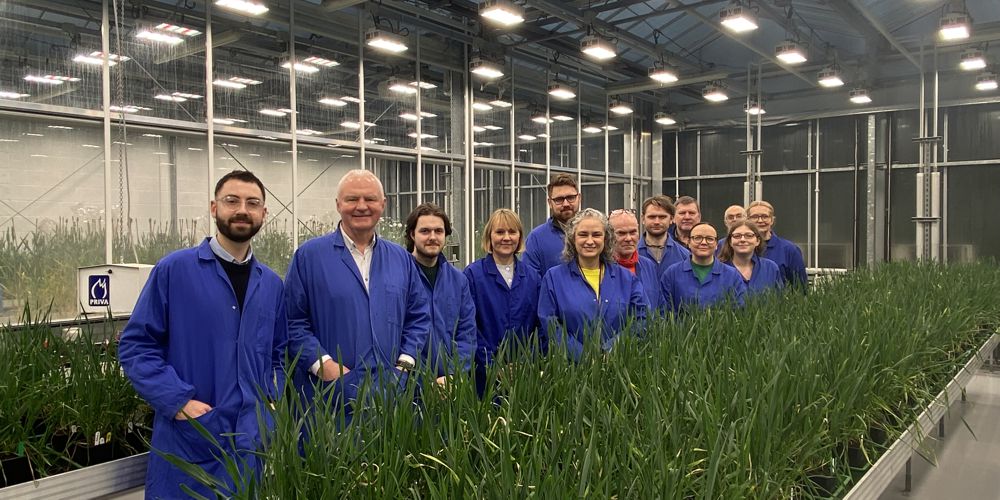
We are performing glasshouse trials and supporting field trials designed to test the effectiveness of a non-GM version of CroBio’s soil amendment, analysing plant and soil health with a focus on metrics relevant to nutrient management.
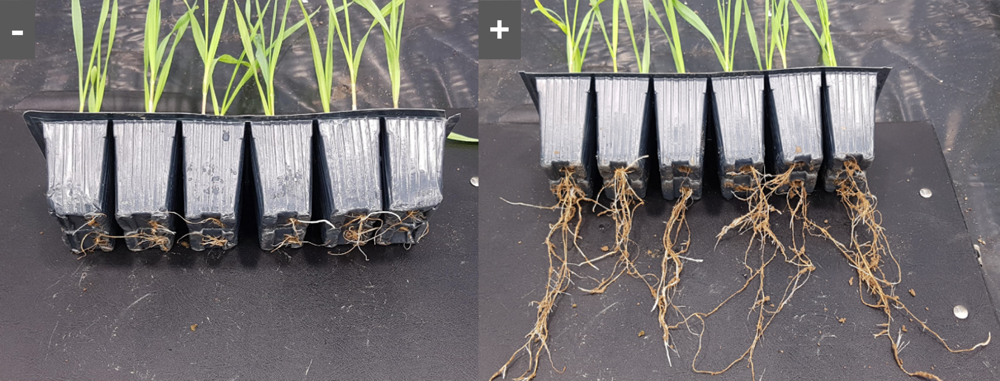
Early glasshouse results showing improved root growth for wheat plants inoculated with CroBio biostimulant (right) compared to the negative control (left).

Dr Andrea Harper
Dr Harper's research focuses on developing statistical genetics approaches which are capable of associating trait variation with different types of genetic markers and flexible enough to be adapted to a range of plant species.